
When a Nursing Home Injury Calls for Legal Help

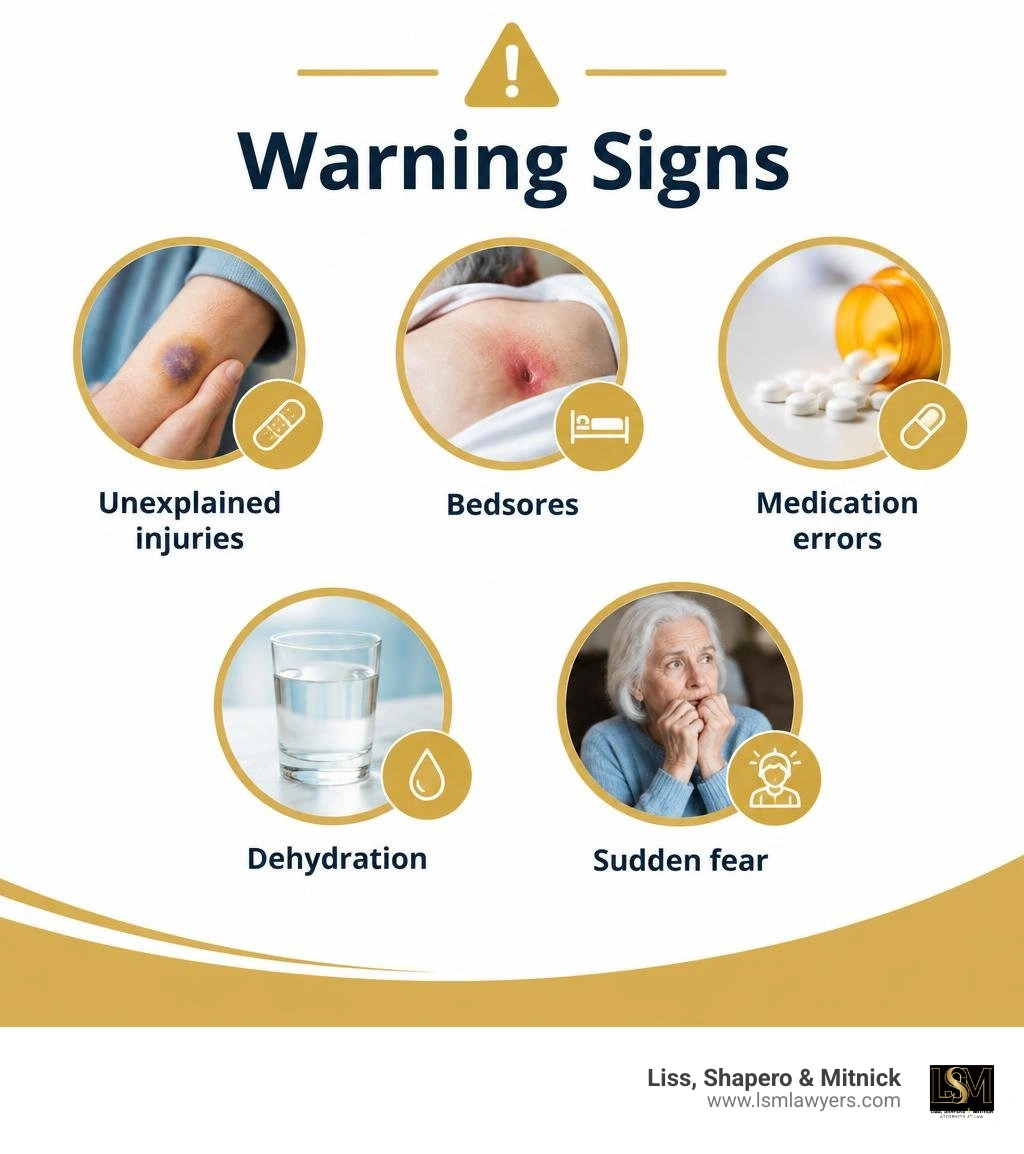
Get legal advice promptly if your loved one has an unexplained injury, new bedsores, missed medication, or signs of dehydration or fear. First, make sure they are safe and get medical care. Then photograph what you see, write down what staff tell you, and ask for the incident report. A Michigan nursing home injury lawyer can help preserve records and video before they are lost and assess whether the facility failed to provide proper care.
I'm Anthony Shapero, managing partner at Liss, Shapero & Mitnick. As a Michigan nursing home injury lawyer, I bring personal injury trial experience and a former insurance-defense lawyer's view of how these claims are challenged.
Learn more about Michigan nursing home injury lawyer:
Critical Warning Signs of Abuse and Neglect in Michigan Facilities
Placing a parent or relative into a residential care facility in Metro Detroit or anywhere across Michigan requires an immense amount of trust. You expect trained professionals to provide dignified, compassionate, and attentive medical care. Unfortunately, corporate nursing homes often cut staffing levels to maximize profits, leaving vulnerable residents at severe risk of preventable harm.
Recognizing the subtle and overt indicators of mistreatment is the first step in protecting your family. Physical abuse in facilities can manifest as unexplained bruising, deep lacerations, or sudden fractures that staff brush off as "minor accidents." In reality, these injuries frequently stem from reckless physical transfers, rough handling, or unmonitored falls.
Equally dangerous is chronic neglect. When facilities fail to implement basic protocols, residents suffer from rapid malnutrition, severe dehydration, and drastic weight loss. Family members who discover bedsores and medication errors during routine visits are often witnessing systemic failures in daily charting, turning schedules, and pharmaceutical oversight.
Physical and Environmental Red Flags to Document
When evaluating your loved one's living conditions, trust your instincts. Physical red flags should never be dismissed as normal consequences of aging. Critical signs of nursing home neglect include:
- Pressure Ulcers (Bedsores): Stage 3 or Stage 4 pressure sores over bony prominences such as the sacrum, heels, or hips indicate a resident was left immobile for prolonged hours without required repositioning.
- Hygiene Failures: Unwashed hair, unchanged soiled undergarments, untreated dental issues, and foul odors point directly to inadequate caregiver attention.
- Unsanitary Living Areas: Cluttered hallways, dirty bed linens, sticky floors, and overflowing trash bins suggest chronic understaffing.
- Dehydration and Malnutrition: Sunken eyes, extreme dry mouth, cracked lips, and unexplained weakness reveal that staff are failing to assist with eating and hydration.
- Frequent, Preventable Falls: Multiple fall incidents without updated care plans, bed alarms, or physical therapy interventions indicate a failure to supervise high-risk residents.
Behavioral Changes Indicating Mistreatment
Physical trauma often leaves clear marks, but emotional trauma can be just as devastating. Abused or neglected residents may not directly report mistreatment due to cognitive impairments, speech difficulties, or fear of staff retaliation.
Pay close attention to sudden psychological shifts, such as:
- Sudden emotional withdrawal or refusing to participate in social activities
- Uncharacteristic fear, anxiety, or flinching when specific caregivers enter the room
- New or worsening symptoms of severe depression and tearfulness
- Agitation or aggressive outbursts that deviate from their baseline personality
- Accelerated cognitive regression that cannot be explained by diagnosed medical conditions
Understanding Resident Rights and Facility Liability Under Michigan Law
Michigan law provides robust protections for individuals living in nursing homes, assisted living centers, and long-term care facilities. Under the Michigan Public Health Code (MCL 333.20201), every resident is entitled to a fundamental "Bill of Rights." This statute mandates that facilities provide adequate and appropriate healthcare, maintain a safe and sanitary environment, and treat every resident with respect and dignity.

When corporate operators violate these statutory duties, they expose themselves to legal liability under principles of elder, disability and negligence law. Establishing liability requires showing that the facility owed a duty of care, breached that standard, and directly caused measurable physical, financial, or emotional harm to the resident.
Medical Malpractice vs. Ordinary Negligence in Care Facilities
A central challenge in Michigan nursing home litigation is properly classifying the underlying legal claims. An incident may fall under general ordinary negligence, specialized medical malpractice, or a combination of both.
Medical malpractice involves professional clinical judgment—such as a physician misdiagnosing an infection, a nurse miscalculating insulin dosages, or a director of nursing failing to order appropriate wound-care regimens. Ordinary negligence, by contrast, involves basic administrative or non-clinical failures, such as a maintenance team leaving a wet floor unmarked or an aide dropping a resident due to pure carelessness.
The distinction matters because Michigan imposes strict procedural hurdles on medical malpractice actions, including mandatory pre-suit notices and sworn expert certifications.
| Legal Element | Ordinary Negligence Claim | Medical Malpractice Claim |
|---|---|---|
| Standard of Proof | Reasonable person standard under common tort law | Professional standard of care for medical specialists |
| Pre-Suit Notice | No formal waiting period or mandatory notice required | 182-day mandatory Notice of Intent (NOI) required |
| Filing Requirements | Standard summons and complaint | Complaint accompanied by a sworn Affidavit of Merit |
| Expert Testimony | Useful, but not always mandatory for obvious hazards | Mandatory expert testimony from qualified medical peers |
| Primary Examples | Slip and falls, broken equipment, physical battery | Medication errors, wound misdiagnosis, charting failures |

Why Hiring a Michigan Nursing Home Injury Lawyer Is Critical for Neglect Claims
Pursuing justice against a healthcare facility is never a simple administrative dispute. Corporate nursing homes are backed by multi-layered insurance carriers and seasoned defense law firms whose sole objective is minimizing liability and reducing payouts.
As former insurance-defense attorneys, our team at Liss, Shapero & Mitnick understands these defense playbooks inside and out. We know how adjusters attempt to blame catastrophic injuries on "natural aging," pre-existing frailty, or inevitable cognitive decline. Understanding these tactics allows us to construct aggressive, evidence-backed claims that demand accountability and full financial recovery.
Timing is also essential. Families must recognize how long do I have to file an injury claim in Michigan before statutory deadlines extinguish their right to seek justice.
How a Michigan Nursing Home Injury Lawyer Proves Facility Fault
Proving that a facility's shortcuts caused your loved one's injury requires deep investigative work and immediate action. Crucial evidence can easily disappear if not preserved right away.
Our investigative process focuses on securing key documentation:
- Electronic Health Records (EHR): We pull audit trails that reveal exactly when care notes were entered, modified, or back-dated by nursing staff.
- Staffing and Shift Logs: State and federal mandates establish minimum nurse-to-resident ratios. We analyze timecards and shift logs to prove whether the floor was dangerously understaffed.
- Preservation of Digital Media: We draft and issue a formal spoliation letter to ensure hallway video footage, keycard entry data, and internal incident logs are preserved.
- Caregiver and Whistleblower Depositions: We interview current and former staff members under oath to uncover corporate pressure, missed training, and chronic safety violations.
- Medical Expert Consultations: We work with board-certified geriatricians, wound-care specialists, and nursing administrators to establish clear deviations from accepted standards of care.
Choosing the Right Michigan Nursing Home Injury Lawyer for Your Family
Your family deserves an advocate who combines fierce trial experience with compassionate, direct communication. When choosing legal representation, look for:
- Substantial Courtroom and Trial Experience: A proven history of taking complex cases through trial rather than settling for lowball insurance offers.
- Defense-Side Insight: Deep familiarity with how insurance adjusters, claims committees, and corporate risk managers evaluate nursing home exposure.
- A Transparent Contingency Fee Model: Legal representation provided with zero upfront out-of-pocket costs, ensuring our firm only gets paid when we secure a financial recovery for you.
- Dedicated, Personalized Service: Direct access to your legal team so your family is never treated like a case file number.
Over our firm's history, Liss, Shapero & Mitnick has served more than 10,000 clients, delivering over 50 years of combined legal experience and achieving multi-million-dollar outcomes across complex injury and wrongful death disputes.
Legal Options, Compensation, and Wrongful Death Actions
When an elderly or disabled resident suffers harm due to corporate misconduct, Michigan law allows victims and their families to seek comprehensive compensation. These damages are designed to cover economic losses as well as non-economic physical and emotional harm.

Recoverable damages in a Michigan nursing home injury claim typically include:
- Medical and Hospital Expenses: Emergency room visits, surgical interventions, prescription therapies, and specialized wound-care treatments required to address the neglect.
- Facility Transfer and Relocation Costs: Expenses associated with safely moving your loved one to a reputable, high-quality care facility.
- Pain, Suffering, and Disfigurement: Compensation for severe physical agony, chronic discomfort, and permanent scarring resulting from pressure ulcers, fractures, or surgical repairs.
- Emotional Distress and Loss of Enjoyment: Financial recovery addressing the fear, depression, humiliation, and loss of dignity inflicted on the resident.
Pursuing Wrongful Death Claims for Fatal Care Neglect
Tragically, severe facility neglect can result in fatal outcomes. Sepsis from infected Stage 4 bedsores, subdural hematomas from unmonitored falls, and acute respiratory failure from unassisted choking are frequently fatal.
When a resident dies as a result of facility wrongdoing, the claim must be brought under the Michigan Wrongful Death Act (MCL 600.2921). Under state law, a wrongful death claim in Michigan must be initiated by the personal representative of the deceased resident's probate estate on behalf of surviving family members.
A successful nursing home wrongful death settlement can recover:
- Medical, hospital, and funeral expenses
- Compensation for the conscious pain and suffering the resident endured between the time of injury and their passing
- Loss of the resident's society, companionship, and emotional support for surviving family members
Frequently Asked Questions About Michigan Nursing Home Injury Claims
What is the statute of limitations for filing a nursing home injury lawsuit in Michigan?
In Michigan, the deadline to file a lawsuit depends on whether your claim involves general negligence or medical malpractice. Standard negligence claims carry a three-year statute of limitations from the date of the injury. However, if the claim is classified as medical malpractice, Michigan law imposes a strict two-year limitation period.
Certain exceptions exist—such as when an injury could not reasonably have been discovered immediately, or when a wrongful death claim allows personal representatives additional time after opening an estate. Because these procedural rules are complex, you should consult an attorney as early as possible to ensure no critical deadlines expire.
What evidence should families secure immediately if neglect is suspected?
If you suspect your loved one is in danger, take these steps immediately:
- Use your smartphone to take detailed, dated photographs and videos of all visible injuries, bedsores, soiled linens, and unsafe room conditions.
- Request copies of all internal incident reports, daily shift notes, physician orders, and medication administration records (MARs).
- Document daily conversations with nurses, aides, and facility administrators in a private notebook, noting dates, times, and specific statements.
- File an official complaint with the Michigan Department of Licensing and Regulatory Affairs (LARA) Bureau of Community and Health Systems to trigger a state inspection.
Can a nursing home be held liable if a resident had pre-existing medical conditions?
Yes. Nursing homes frequently attempt to avoid liability by claiming an injured resident was already frail, elderly, or suffering from chronic illnesses. Under Michigan's long-standing "eggshell plaintiff" doctrine, a negligent defendant must take the victim as they find them.
Facilities cannot escape responsibility simply because a resident's pre-existing osteoporosis, dementia, or diabetes made them more vulnerable to injury. If facility negligence triggered, aggravated, or accelerated a decline in health, the facility is legally liable for the resulting harm.
Conclusion
Placing an aging parent or loved one in a residential care facility is an act of deep trust. When facility administrators betray that trust by cutting staff, ignoring safety protocols, and allowing preventable injuries to occur, they must be held accountable.
At Liss, Shapero & Mitnick, we provide compassionate support to families and aggressive advocacy against corporate healthcare providers and their insurance carriers. If you suspect your loved one has suffered abuse, neglect, or preventable injuries in a Michigan care facility, contact our team today to schedule your free consultation. Discover how our experienced attorneys can deliver comprehensive legal support for injury victims and families throughout Berkley, Metro Detroit, and across Michigan.