.svg)
What "Vehicle Collision" Means and Why the Term Matters

A vehicle collision happens when a vehicle strikes another vehicle, a person, an animal, road debris, or a fixed object such as a tree, guardrail, or building. It can involve one vehicle or many, and it may cause property damage, injury, or death.
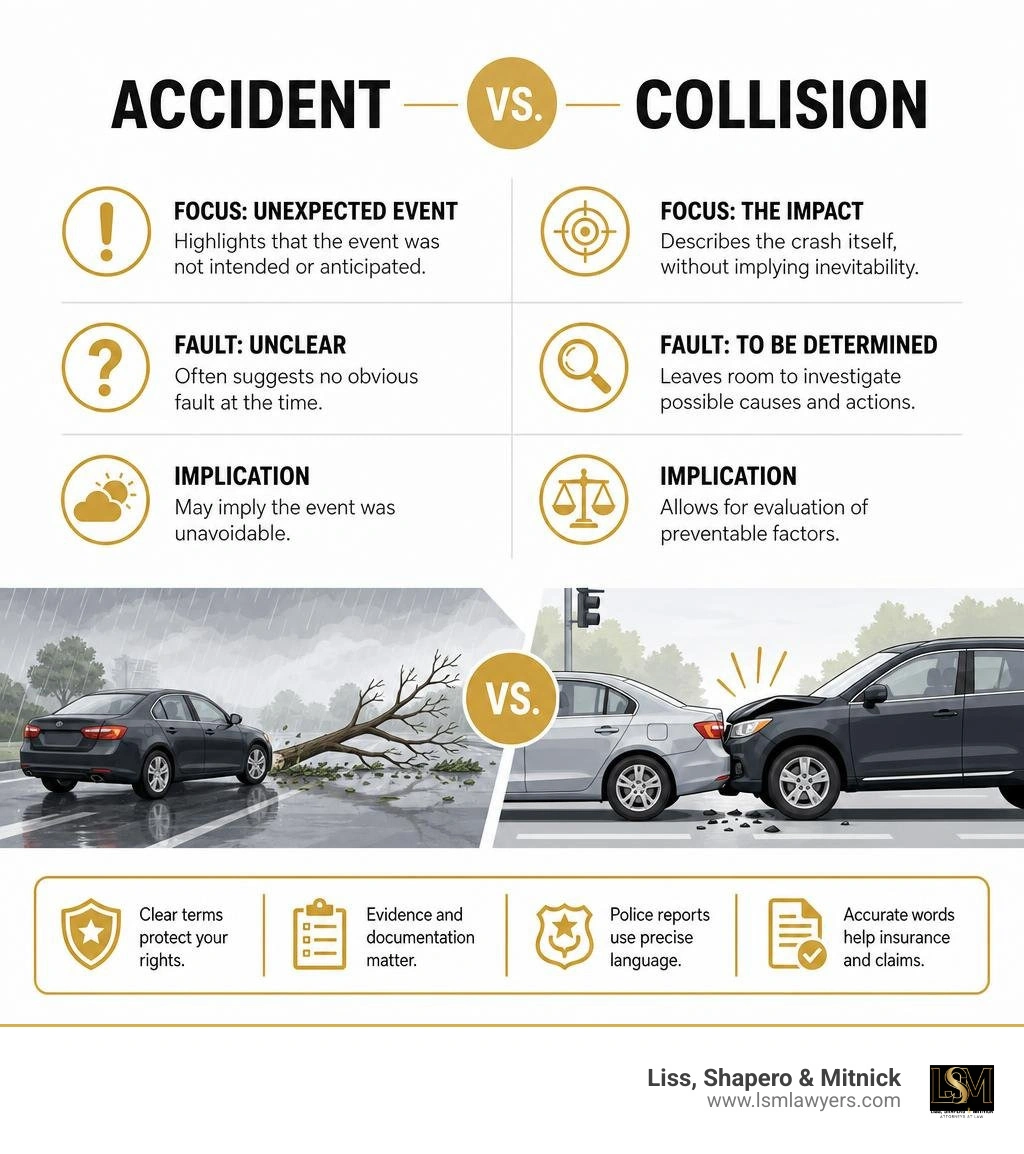
The phrase vehicle collision meaning matters because it describes what occurred without suggesting it was unavoidable. An accident is often used for an unexpected event with no clear fault. A collision focuses on the impact itself and leaves room to examine preventable causes, such as speeding, distraction, impaired driving, failure to yield, or unsafe road conditions.
That distinction can matter after a Michigan crash. Police reports, insurance companies, and injury claims often depend on the evidence of what each driver did before impact. Using clear terms and documenting the scene can help protect your rights while fault and coverage are reviewed.
Vehicle Collision Meaning: Definition and Core Terminology
At its core, understanding the vehicle collision meaning comes down to kinetic physics and the operation of motorized transit. A collision occurs whenever a moving motor vehicle violently contacts another object, transferring immense kinetic energy upon impact. This obstacle can be another motorized passenger car, a commercial truck, a pedestrian, a bicyclist, road debris, or stationary infrastructure like utility poles and concrete barriers.
Lexical authorities emphasize the physical reality of these events. The Collins English Dictionary definition of vehicle collision identifies it as an event where a moving vehicle violently crashes into something else. Similarly, international disaster and safety frameworks, such as the UN Disaster Risk definition of road traffic incidents, treat these events as mechanical and operational incidents occurring on public or private roadways with public access that lead to property destruction, bodily injury, or loss of life.
Statutory Standards and Legal Definitions
Beyond plain-language definitions, the law establishes strict operational criteria for traffic incidents. Under federal regulatory frameworks like 49 U.S.C. § 30166, an incident is legally recognized as an occurrence associated with the maintenance or operation of a motor vehicle or motor vehicle equipment that results in personal injury, death, or property damage.
In personal injury and commercial transportation law, this definition establishes the foundation for civil liability. Whether a crash involves a municipal bus, an 18-wheeler, or an everyday passenger sedan, statutory classifications dictate reporting duties, vehicle safety standards, and actionable grounds for pursuing financial damages when safety protocols are violated.
Accident vs. Collision: Semantics, Preventability, and Negligence
While everyday drivers often use "car accident" and "car crash" interchangeably, the distinction is significant. The word "accident" implies a random, unavoidable twist of fate—an act of nature that could not be prevented. If a healthy tree suddenly falls directly onto a moving car during a windstorm, that event leans toward being an unavoidable accident.
Conversely, the vast majority of motor vehicle incidents are preventable collisions. When someone runs a red light while texting, drives under the influence of alcohol, or follows too closely in heavy Metro Detroit traffic, the resulting impact is not an unpreventable mishap. It is a direct result of human error and negligence.
| Characteristic | Traffic Accident | Vehicle Collision |
|---|---|---|
| Primary Nature | Unforeseen, purely unintentional event | Physical impact between a vehicle and an object/person |
| Preventability | Often unavoidable (e.g., sudden medical crisis, lightning) | Highly preventable through reasonable care and attention |
| Negligence Factor | Typically absent or negligible | Frequently involves driver error, speeding, or distraction |
| Legal Focus | Acts of God or true mechanical anomalies | Breach of duty, civil liability, and legal fault |
| Industry Preference | Phased out by highway safety administrators | Standard term used by law enforcement and litigators |
Why Safety Organizations Reject "Accident" Terminology
Major transportation and safety bodies, including the National Highway Traffic Safety Administration (NHTSA), long ago moved away from using the word "accident" in official communications. Highway safety advocates point out that framing preventable crashes as mere "accidents" excuses negligent behavior, trivializing the choices drivers make behind the wheel.
By adopting terms like "collision" and "crash," traffic officials foster a culture of accountability. When public policy focuses on causal factors—such as reckless speeding, improper road maintenance, or defective brakes—it reinforces systemic prevention rather than treating road trauma as an accepted cost of modern transportation.
Analyzing the Vehicle Collision Meaning in Insurance and Legal Claims
In personal injury litigation and insurance claims, the terminology used directly reflects the legal elements of negligence and liability. To recover damages after an incident, an injured plaintiff must demonstrate that another party owed a duty of reasonable care, breached that duty through action or inaction, and directly caused the impact and resulting injuries.
Insurance adjusters evaluate these claims through a lens of fault and financial exposure. At Liss, Shapero & Mitnick, our attorneys draw directly upon extensive former insurance-defense experience to anticipate how insurance companies evaluate liability. By understanding the exact strategies insurers use to minimize payouts, we hold negligent motorists accountable in all types of motor vehicle accidents.
Primary Causes and Classifications of Traffic Crashes
Research reveals that human behavior contributes wholly or partly to approximately 93% of all motor vehicle crashes. Modern roadways present a complex mix of speed, heavy congestion, and hazardous driver behaviors. In 2018 alone, 9,378 people were killed in motor vehicle crashes involving at least one speeding driver in the U.S., accounting for 26% of all traffic-related deaths that year.

Exploring Vehicle Collision Meaning Across Common Crash Types
Traffic impacts occur in several distinct mechanical configurations, each carrying unique risks for vehicle occupants:
- Rear-End Collisions: Often occurring at intersections or in stop-and-go highway traffic, these impacts frequently stem from tailgating, sudden braking, or inattention.
- Head-On Collisions: Though statistically less frequent, head-on impacts carry extreme fatality rates due to the combined forward velocities of both vehicles.
- Side-Impact (T-Bone) Crashes: Common at intersections when drivers fail to yield or run red lights. Because the sides of passenger cars have less structural crumple space, occupants are particularly vulnerable to severe chest and head trauma.
- Rollover Crashes: These dynamic incidents often involve vehicles with a higher center of gravity, such as SUVs and pickup trucks. About 40% of newer light utility vehicles are manufactured with lower centers of gravity and enhanced electronic stability controls to counteract rollover risks.
- Commercial Truck and Heavy Transport Crashes: Given the immense size disparity, collisions involving tractor-trailers cause catastrophic damage, requiring comprehensive investigation into federal safety compliance during truck accidents.
- Vulnerable Road User Impacts: Pedestrians, cyclists, and riders suffer devastating trauma during a motorcycle bicycle accident, where no metal frame or airbag cushions the kinetic force.
Driver Error, Drowsiness, and Technological Distractions
Technological distractions remain a widespread contributor to roadway collisions. Drivers who text while driving are 23 times more likely to be involved in a crash compared to non-texting drivers. Dialing a phone increases the crash risk by 12 times, while reading or writing text elevates risk tenfold. Even hands-free devices present significant cognitive distraction; studies compiled by the National Safety Council indicate that conversational demands impair the brain's situational awareness regardless of whether hands are on the wheel.
Driver fatigue is equally dangerous. Approximately 41% of U.S. drivers admit to having fallen asleep at the wheel at least once in their lives. Drowsiness contributes to an estimated 15% of fatal crashes—accounting for 10% of fatal daytime wrecks and 24% of nighttime incidents. When driver attention wanders, whether from exhaustion or a smartphone screen, serious distracted driving accidents follow quickly.
Physical, Psychological, and Global Impact of Traffic Collisions
Motor vehicle collisions represent a massive public health challenge. On U.S. roadways, about 100 people lose their lives in crashes every single day. In 2019, 36,096 people died and 2.74 million sustained injuries on American roadways. Beyond the direct physical suffering, collisions carry an enormous financial burden; in the United States, the total societal harm from motor vehicle crashes—combining pure economic losses and lost quality of life—reached an astonishing $870.8 billion in comprehensive costs.
Bodily Trauma, Mechanical Complications, and Injury Outcomes
The violent deceleration of a crash inflicts severe physical forces on human anatomy. High-speed kinetic impacts frequently result in blunt force trauma, leading to traumatic brain injuries (TBIs), spinal cord damage, crushed limbs, internal bleeding, and fractured bones. In rollover accidents or severe structural collapses, vehicle occupants may also suffer mechanical or positional asphyxia if crushed vehicle components compress the chest cavity or obstruct airways.
Survivors frequently experience long-lasting common injuries requiring extensive surgery, rehabilitation, and long-term care. In tragic circumstances where severe impacts prove fatal, families are left to seek accountability and closure through wrongful death litigation.
Global Epidemiology and Societal Harm
Globally, road traffic crashes claim roughly 1.19 million to 1.4 million lives annually and injure over 50 million people, representing about 2.5% of all global deaths. Road traffic injuries are the single leading cause of death worldwide for children and young adults aged 5 to 29.
This global burden is unevenly distributed:
- Low- and middle-income nations suffer roughly 90% to 92% of global roadway fatalities despite possessing only about 50% to 60% of the world's registered vehicles.
- Africa experiences the highest traffic death rate globally at 24.1 fatalities per 100,000 residents, whereas Europe records the lowest regional rate at 10.3 per 100,000.
- Road traffic trauma costs most national economies between 1% and 3% of their annual Gross National Product (GNP).
Legal Rights, Fault Determination, and Post-Crash Procedures

After a crash occurs in Michigan, resolving fault, coverage, and statutory benefits involves navigating distinct state-specific rules. Under statutes like Michigan Legislature Section 500.3037 collision coverage statute, insurers offer specific tiers of collision coverage based on whether a driver was substantially at fault (more than 50% responsible) for the incident.
Determining fault requires examining police crash reports, skid marks, speed telematics, intersection camera footage, witness statements, and vehicle damage patterns. When negligence is disputed, having comprehensive documentation can make all the difference in proving liability.
Navigating Insurance Benefits and Financial Recovery
Michigan operates under a unique auto insurance system. Injured parties are entitled to mandatory Personal Injury Protection (PIP) through Michigan No-Fault Insurance Benefits, which cover reasonable medical expenses, allowable wage loss, and replacement services regardless of who caused the collision.
Navigating these administrative hurdles requires experienced handling of no-fault claims. Furthermore, if another driver caused the crash and inflicted severe, permanent injuries or death, injured individuals can pursue third-party tort claims against the at-fault motorist. To guard against situations where an at-fault motorist carries minimal insurance, reviewing UM UIM 101 ---- Protecting Yourself When the Other Driver Has Minimum Limits is essential for safeguarding your financial stability.
Critical Steps to Take Immediately After a Crash
Taking the right steps immediately after a roadway incident helps protect your physical health and your legal rights:
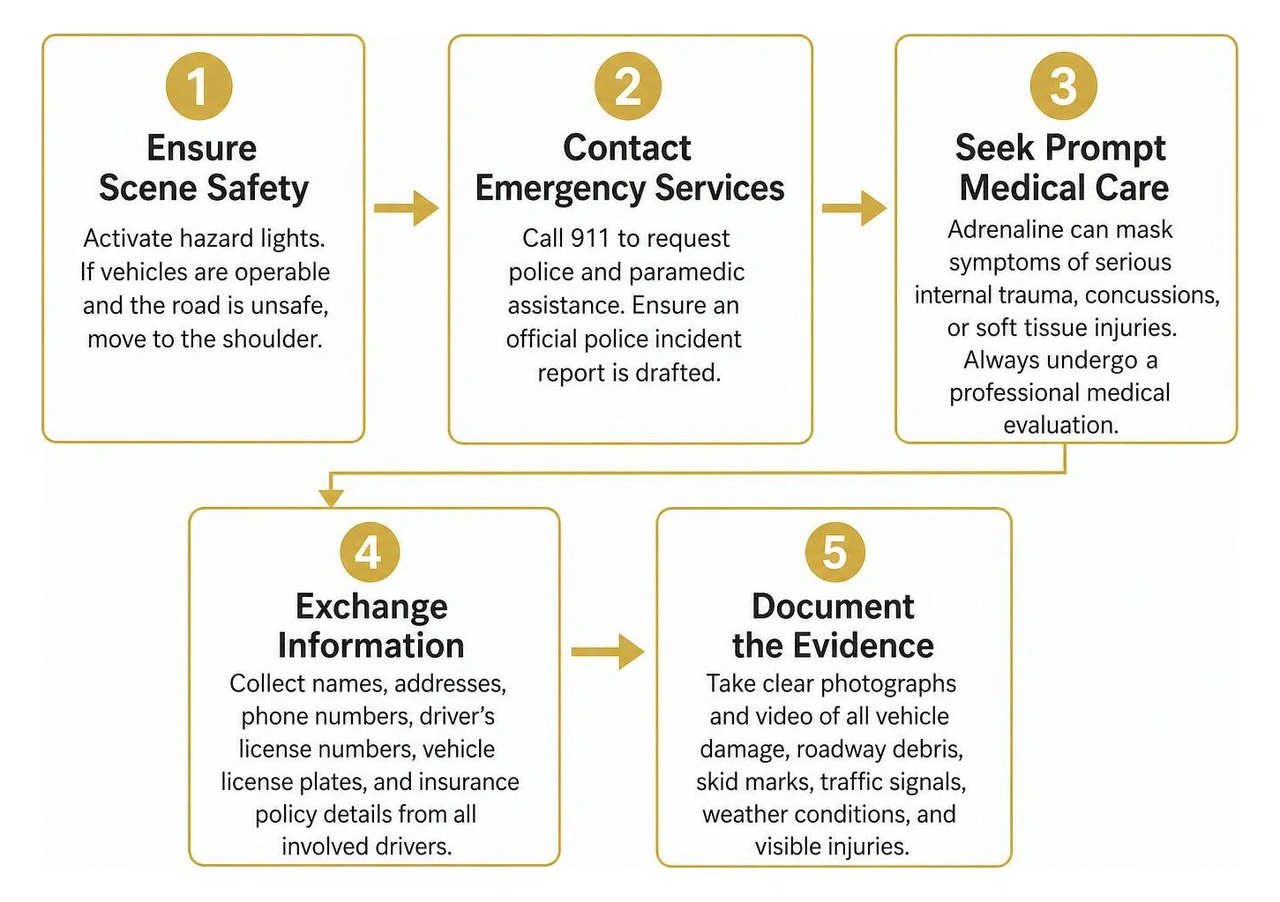
- Ensure Scene Safety: Immediately activate hazard lights. If vehicles are operable and the road is unsafe, move to the shoulder.
- Contact Emergency Services: Call 911 to request police and paramedic assistance. Ensure an official police incident report is drafted.
- Seek Prompt Medical Care: Adrenaline can mask symptoms of serious internal trauma, concussions, or soft tissue injuries. Always undergo a professional medical evaluation.
- Exchange Information: Collect names, addresses, phone numbers, driver's license numbers, vehicle license plates, and insurance policy details from all involved drivers.
- Document the Evidence: Take clear photographs and video of all vehicle damage, roadway debris, skid marks, traffic signals, weather conditions, and visible injuries.
- Identify Witnesses: Gather contact details and statements from eyewitnesses before they leave the area.
- Notify Your Insurer & Consult Legal Counsel: Report the collision to your auto insurance provider promptly, and consult an attorney before providing recorded statements to third-party adjusters.
Frequently Asked Questions About Vehicle Collisions
What is the primary difference between a car accident and a vehicle collision?
An "accident" implies an entirely unforeseen, unavoidable occurrence without clear negligence. A "collision" describes the physical event of vehicles or objects striking each other, typically resulting from preventable human actions such as speeding, distracted driving, or failure to yield.
How do investigators and insurance adjusters determine fault in a collision?
Fault is determined by analyzing traffic laws, police reports, physical evidence from the scene (such as skid marks and point of impact), electronic crash data recorders, dashcam video, and witness statements.
Can a collision occur without involving another moving car?
Yes. Single-vehicle collisions occur frequently when a vehicle strikes stationary infrastructure (guardrails, trees, buildings), encounters road debris, strikes an animal, or collides with a pedestrian or bicyclist.
Conclusion
Understanding the difference between an unavoidable accident and a preventable collision is more than just a matter of words—it is the foundation of establishing legal fault, securing insurance benefits, and protecting your financial future. When a reckless driver causes an impact, you should not have to bear the financial and physical consequences alone.
At Liss, Shapero & Mitnick, our team represents injured individuals throughout Berkley, Metro Detroit, and across Michigan. We utilize our unique background in former insurance defense to anticipate insurer tactics, build compelling claims, and maximize the compensation our clients deserve. If you or a loved one has suffered an injury on the road, reach out to our team for dedicated advocacy from personal injury lawyers for motor vehicle accidents.