.svg)
.avif)


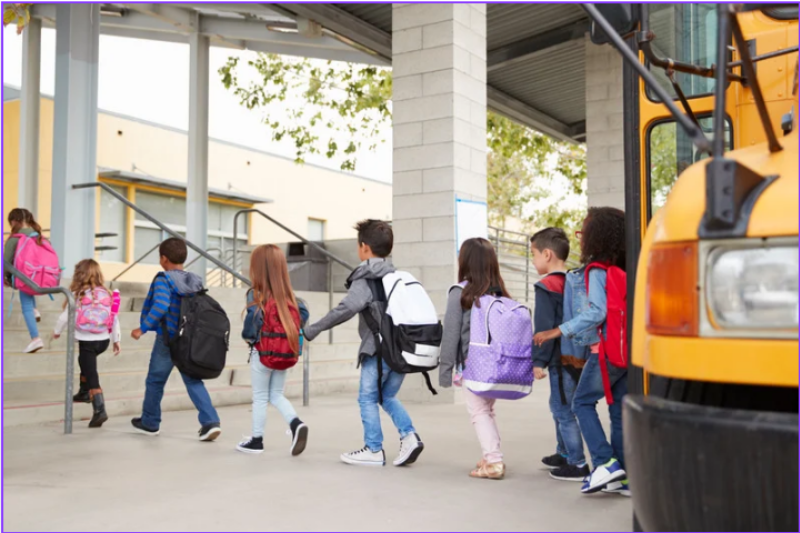
The first week back always feels a little different around Berkley. Coolidge Highway and the neighborhood streets around it fill up earlier in the morning. Kids are walking to school again.
They're riding bikes in packs and waiting at corners for buses that haven't run since June. Drivers are adjusting too, some for the first time in months.
We hear from Berkley families every year around this time, and the stories tend to follow a pattern. A driver rolling through a stop sign because they weren't expecting foot traffic. A close call at a bus stop where a car didn't slow down in time.
Berkley Specific Risk Areas Parents Should Know
School Zones and Crossing Guards
Schools like Berkley High School and Anderson Middle School see heavy foot and vehicle traffic during arrival and dismissal. Crossing guards help, but they can only manage one intersection at a time. Coverage can also vary depending on staffing and time of day.
Parents should treat crossing guard presence as a helpful layer of protection, not a guarantee. Kids still need to look both ways even when an adult is directing traffic.
Bus Stop Blind Spots
The area directly in front of and behind a school bus is one of the most dangerous places for a child to stand. Drivers approaching from either direction sometimes misjudge how close they are. This is especially true when flashing lights are hard to see through trees, parked cars, or morning glare.
- Kids should stand several feet back from the curb while waiting
- Drivers passing a stopped bus with flashing lights create one of the most serious hazards in any school zone
- Morning sun angles in early fall can make it harder for drivers to see a bus's signal lights
Neighborhood Streets vs. Main Roads
Parents often assume quiet side streets are safer than busier roads, and in some ways that's true. But side streets can also lack sidewalks and have limited visibility around parked cars. That false sense of low risk can lead to higher speeds.
A wide road with a crossing guard can sometimes be safer than a quiet street with none of those protections.
Michigan Law on School Buses and Crosswalks
What Drivers Are Required to Do Around a Stopped Bus
When a school bus stops to load or unload children, it activates its flashing lights. Drivers approaching from either direction are generally required to stop and wait until the bus moves again. There are some exceptions depending on road configuration, such as divided highways.
These rules exist because the space around a stopped bus is exactly where children are walking. A driver who doesn't stop in time has very little room for error.
Quick Takeaway
If a school bus has its lights flashing and stop arm extended, drivers in both directions are expected to stop. If you're ever unsure whether a specific incident involved a violation of Michigan law, an attorney can answer that directly.
Pedestrian Right of Way in Crosswalks
Drivers are generally required to yield to pedestrians who are already in a marked or unmarked crosswalk. That responsibility doesn't disappear just because a child darts out unexpectedly. Drivers are expected to be watchful near schools, crosswalks, and residential areas where kids are likely to be present.
That said, pedestrian right of way isn't automatic protection in every situation. Fault often depends on specific facts, including visibility, speed, and whether the driver had reasonable time to react.
What Counts as Negligence in a School Zone Accident
Common Examples of Driver Negligence
- Speeding through a posted school zone or residential street
- Passing a stopped school bus with its lights flashing
- Driving while distracted by a phone, GPS, or other device
- Failing to yield to a pedestrian in a crosswalk
- Rolling through a stop sign near a school without coming to a full stop
When a Driver Isn't Entirely at Fault
Fault isn't always black and white. A child stepping out from between parked cars can complicate the picture. So can a bus stopped in a spot with poor visibility, or weather that limits reaction time. This matters because how fault gets divided can directly affect a family's options afterward.
If Your Child Is Hurt: What to Document Right Away
Immediate Steps at the Scene
- Call 911 and make sure your child receives medical attention, even if injuries seem minor at first
- Get the driver's name, insurance information, and license plate number if possible
- Ask for the responding officer's name and the police report number
- Take photos of the scene, the vehicle, and any visible injuries if you're able to safely do so
Details That Matter Later
Some details feel small in the moment but end up mattering a great deal once a case moves forward. Many parents don't think to gather these until much later, when memories have faded and evidence has disappeared.
- Names and contact information for anyone who witnessed the accident
- The bus route number or bus company, if a school bus was involved
- Weather, lighting, and visibility conditions at the time of the accident
- Whether a crossing guard was present and where they were positioned
Common Mistakes Parents Make
Understandably, most parents have never had to navigate this before. A few mistakes come up often enough that they're worth naming directly.
Waiting too long to see a doctor is one of the most common. Some injuries, especially concussions, don't show obvious symptoms right away. Parents also sometimes speak with an insurance adjuster before fully understanding their rights. Others don't collect witness information because everyone was focused on the child, which is completely understandable.
How These Cases Are Often Different from Typical Car Accidents
Multiple Parties May Be Involved
Depending on circumstances, a case might involve the driver, a bus company, a school district, or even the municipality responsible for road design. Each of these parties may have different insurance coverage and different legal responsibilities.
This is one reason these cases often benefit from an attorney's involvement early on, before the basic facts become harder to piece together.
Why Documentation Matters More With Kids
Young children often can't describe clearly what happened, especially right after a frightening event. They may not remember details accurately, or they may not have the vocabulary to explain what they saw. That makes outside documentation, like witness statements and physical evidence, especially important.
Children's injuries can also present differently than adult injuries. A child who seems fine at first can develop symptoms hours or days later. This is part of why prompt medical evaluation matters so much.
"When a child is hurt near a bus stop, families deserve straight answers, not runaround. That's the standard we hold ourselves to."
Tony Shapero
A Few Practical Safety Habits for Berkley Families
Before the School Year Starts
- Walk or bike the route to school together at least once before the first day
- Point out the safest places to cross, even if they're not the most direct route
- Talk through what to do if a driver isn't stopping the way they should
- Review bus stop rules together, including where to stand and how far back to wait
At Bus Stops
Kids should stand several feet back from the curb while waiting, not on the road itself. It's worth teaching them to wait until the bus fully stops and the driver waves them forward. They should make eye contact with nearby drivers before stepping into the street.
Berkley Families Watching Out for Each Other
Berkley has always been the kind of place where neighbors know each other's kids. Crossing guards recognize the same families year after year, and a driver rolling through a stop sign gets noticed. That sense of shared responsibility is part of what makes this community feel different from a lot of places.
Keeping kids safe on their way to school was never really one family's job alone. It's teachers watching the crosswalk and neighbors slowing down out of habit. It's crossing guards who've stood on the same corner for years. That's worth remembering as another school year gets underway.
If Something Happens, LSM Is Here to Help
When you call LSM, you're not handed off to a call center. Tony Shapero personally calls many new clients himself. Families going through something like this deserve a direct conversation, not a form letter. There's no pressure and no obligation, just a free consultation and honest answers about where things stand.
Toll Free: 1-855-LISS-LAW (1-855-547-7529)
Related reading: Pedestrian & Bicycle Accidents | Child Injuries | Personal Injury
This content is for general informational purposes only and does not constitute legal advice. Results vary by case, and past results do not guarantee future outcomes. Contact LSM for guidance specific to your situation.