.svg)
.avif)

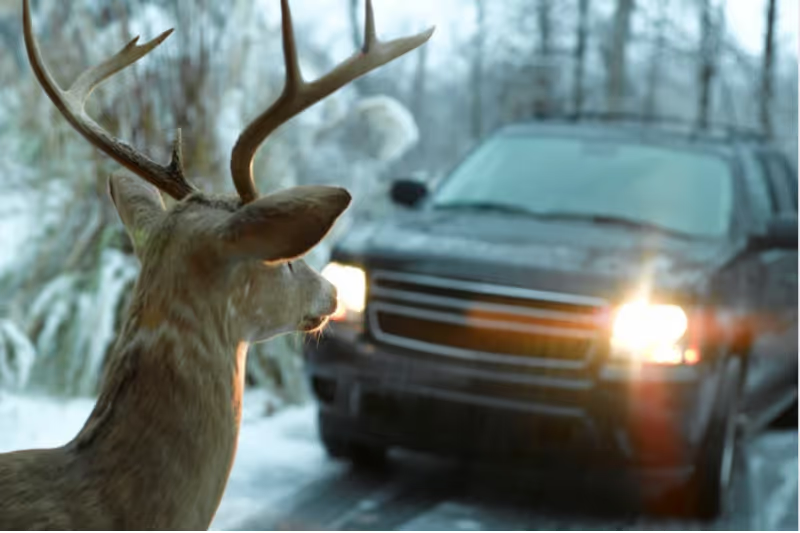
Deer collisions are among the most common causes of single-vehicle accidents in Michigan, often leading not just to vehicle damage but also to serious injuries or multi-vehicle chain reactions. Many drivers are caught off guard by how quickly these situations unfold—and even more surprised by the insurance complications that follow.
Here’s the reality: what your insurance covers depends entirely on how the crash happened. If you hit a deer directly, one type of coverage applies. If you swerve to avoid the deer and end up hitting another car, a guardrail, or rolling your vehicle, completely different insurance rules come into play.
Understanding these distinctions—and how Michigan’s Personal Injury Protection (PIP), collision, and uninsured/underinsured motorist (UM/UIM) coverages interact—is key to protecting yourself and getting the compensation you deserve.
That’s where a deer car accident lawyer in Michigan can help. At Liss, Shapero & Mitnick, our attorneys guide injured drivers through the complex insurance process, ensuring that your rights are protected whether you hit the deer—or took evasive action to avoid one.
What to Do After a Deer-Related Crash
If you’re involved in a deer collision—or swerve to avoid one—what you do next can protect both your safety and your insurance claim.
Here’s what to do immediately:
- Pull over safely and call 911. Even if there are no visible injuries, reporting the incident creates vital documentation for insurance and potential legal claims.
- Do not approach the animal. Deer can be unpredictable and may still be alive, posing a danger to anyone nearby.
- Document the scene. Take clear photos of your vehicle, the road, lighting, and—if safe to do so—the deer itself. These images can help prove whether it was a direct impact or a swerve.
- Get a police report number. This report confirms the nature of the collision and is often required by insurance companies.
- Notify your insurance company promptly, but avoid giving recorded or detailed statements until you fully understand your coverage rights.
Even a “minor” deer crash can lead to delayed-onset injuries like whiplash, back pain, or concussions. It’s important to seek medical attention right away—both for your health and to document injuries that may be linked to the collision.
Hit the Deer: Collision Coverage vs. PIP Benefits
If you hit a deer in Michigan, you might be relieved to know that your no-fault insurance still protects you—even if no one else was involved. Michigan’s Personal Injury Protection (PIP) coverage pays for your medical expenses, lost wages, and replacement services (such as household help or childcare) regardless of who—or what—caused the crash. That means even if a deer suddenly appears in the road and you have no time to react, you’re still entitled to these benefits under the state’s no-fault system.
However, PIP only covers injuries, not your vehicle damage. That’s where your collision coverage comes in.
Collision insurance pays to repair or replace your car after a deer impact, but the deductible and payout rules depend on your specific policy:
- Standard Collision: You pay the deductible, no matter who or what caused the damage.
- Broad Collision: Your deductible may be waived if you weren’t at fault—though in a deer crash, this typically still applies.
- Limited Collision: Only covers damage if another driver was at fault—so it generally doesn’t apply in deer-related collisions.
It’s important to note that a deer strike is not considered an “at-fault” accident under Michigan law. That means it typically won’t cause your insurance premiums to skyrocket the same way a driver-caused collision might.
Example: A driver traveling south on I-75 in Oakland County hits a deer that darts into the lane. The vehicle sustains $5,000 in front-end damage, and the driver experiences whiplash and shoulder pain. In this case:
- PIP covers the driver’s medical treatment and any lost wages from missed work.
- Collision coverage pays for the vehicle repairs, subject to the deductible.
This combination ensures that both medical and property damage claims are handled properly, even though the deer wasn’t a person or another vehicle.
Swerve to Avoid: When Another Vehicle Is Involved
Sometimes, the most dangerous part of a deer encounter isn’t the deer at all—it’s what happens when you try to avoid it.
If you swerve to miss a deer and end up colliding with another car, a tree, a guardrail, or even flipping your vehicle, your insurance situation becomes more complex. Because there was no contact with the animal, insurers often treat these crashes as standard single-vehicle or multi-vehicle accidents, rather than wildlife incidents.
That means your claim might depend on additional coverages such as collision or even uninsured (UM) and underinsured motorist (UIM) coverage. These coverages protect you when another driver indirectly causes the crash—for example:
- A driver in front of you slams on their brakes to avoid a deer, and you’re forced off the road.
- A nearby vehicle swerves into your lane, causing a chain-reaction accident.
If that other driver has no insurance or too little insurance, your UM/UIM coverage steps in to cover medical costs, lost wages, and sometimes pain and suffering damages. Unfortunately, many Michigan drivers are unaware that these policies often require notice within 30 days of the accident to preserve the right to file a claim.
Preserving Evidence and Meeting Claim Timelines
Whether you hit a deer or swerved to avoid one, documentation can make or break your insurance claim. The difference between a straightforward payout and a lengthy dispute often comes down to the details you collect—and how quickly you act.
Here’s what to document right away after any deer-related crash:
- Police Report: Ask the responding officer to note whether the crash involved direct contact with a deer or an evasive maneuver. This distinction determines whether your case is handled as a collision or a standard auto accident.
- Photos and Videos: Take clear images of the roadway, your vehicle, the deer (if present), debris, and skid marks. If you have dashcam footage, preserve it immediately—it can be powerful evidence.
- Insurance Communication: Keep records of when and how you reported the accident. Written confirmation of your claim report date helps avoid disputes over policy deadlines or notice requirements.
Michigan has strict time limits for many insurance-related claims. Certain uninsured or underinsured motorist (UM/UIM) policies require notice within 30 days, and no-fault or collision claims may need to be filed within one year of the date of loss. Missing these deadlines can mean losing your right to coverage altogether.
When to Call a Deer Car Accident Lawyer in Michigan
While deer collisions might seem like open-and-shut cases, the insurance side rarely is. Between coverage disputes, fine print exclusions, and short filing deadlines, even a “simple” claim can turn complicated fast.
You should contact a deer car accident lawyer in Michigan if:
- Your insurance company disputes whether the crash was a “collision” or “comprehensive” claim.
- Your vehicle damage or PIP benefits (medical and wage loss) have been denied or undervalued.
- You or a loved one suffered serious injuries or a fatality in a deer-related crash.
- The crash involved multiple vehicles, unclear fault, or a swerve that caused secondary impacts.
At Liss, Shapero & Mitnick, we handle every step of the process—from investigating coverage and reviewing policies to communicating directly with insurance adjusters and ensuring no benefit is overlooked under Michigan’s no-fault system. We know the tactics insurers use to deny claims and how to counter them with solid evidence and legal precision.
Our attorneys understand that what seems like a straightforward accident often turns into a confusing maze of insurance forms, medical bills, and deadlines. We’re here to cut through that complexity, protect your interests, and make sure you receive the full compensation you’re entitled to.
Don’t Let a Deer Collision Derail Your Life
Even the most careful drivers can find themselves in a split-second accident during Michigan’s busy deer season. But confusion about insurance coverage shouldn’t make your recovery harder. Whether you hit a deer or swerved to avoid one, understanding your rights — and acting quickly — can make all the difference.
At Liss, Shapero & Mitnick, we’re here to guide you through Michigan’s complex no-fault and insurance laws, handle communications with insurers, and make sure you receive every benefit and dollar you’re entitled to. No claim is too small to review, and no question is too minor to ask. Early legal help ensures that evidence is preserved, deadlines are met, and your rights are fully protected from day one.
📞 Call 248-584-1300 or Toll-Free 1-855-LISS-LAW (547-7529)
🌐 Visit lsmlawyers.com
Your Rights. Your Story. Our Fight.