.svg)
.avif)



Dog bite injuries can leave far more than temporary wounds—many victims live with permanent scarring and emotional trauma long after the attack. Scars from dog bites, especially on the face, hands, arms, and legs, can reshape a person’s confidence, affect career opportunities, and create long-term physical and psychological challenges. Unfortunately, dog bite incidents continue to rise across Michigan’s neighborhoods, parks, apartment complexes, and private homes.
For many survivors, the recovery process involves repeated medical appointments, concerns about infection, worries about long-term cosmetic effects, and stressful encounters with insurance companies that often try to minimize the true impact of scarring injuries. Understanding how scars form, how they heal, and how to properly document them is essential—not only for medical care but for protecting your rights in a legal claim. The medical timeline of healing and the quality of photographic documentation are key drivers of compensation in Michigan dog bite cases.
Understanding Dog Bite Scars
Why Dog Bites Often Leave Lasting Scars
Dog bites cause far more damage than a simple cut or puncture:
- Tearing, puncturing, and crushing injuries: Dogs do not bite in a clean, straight line. Their jaws apply force that tears and crushes skin and underlying tissue, making wounds more severe and harder to repair.
- Infection risk: Dog bites introduce bacteria deep into the tissue. Infections can worsen scarring and may require additional medical intervention.
- Deep dermal trauma: Unlike many lacerations, dog bites often penetrate the deeper layers of the skin where long-term scar formation begins.
Common Areas Where Scarring Occurs
Certain body parts are more vulnerable during a dog attack:
- Facial scarring: Children are especially at risk because their height places their face at the level of a dog’s mouth.
- Hands and forearms: These areas are often injured as victims instinctively protect themselves.
- Legs and ankles: Many victims are bitten while walking or jogging, leading to lower-body scarring.
- Multiple-site scarring: In more aggressive attacks, victims may suffer injuries across several body parts.
Types of Scars Seen in Dog Bite Cases
Dog bite scars vary widely depending on the injury and the body’s healing response:
- Hypertrophic scars: Thick, raised scars that stay within the wound boundary.
- Keloids: Overgrown scar tissue extending beyond the wound, more common in darker skin tones.
- Atrophic or depressed scars: Indentations caused by tissue loss.
- Pigmentation changes: Long-term discoloration or uneven skin tone that can persist for years.
The Medical Healing Timeline for Dog Bite Scars
Immediate Phase (First 72 Hours)
The first few days after a dog bite are critical:
- Emergency care and wound closure: Victims may require stitches, steri-strips, surgical glue, or even reconstructive surgery for severe injuries.
- Infection prevention: Antibiotics and proper wound cleaning significantly affect long-term scarring.
- Early medical documentation: Precise medical records from the initial visit help establish the severity of the injury for insurance and legal purposes.
Early Healing Phase (First 2–4 Weeks)
Once the wound closes, the body begins the process of rebuilding tissue:
- Scab formation: The wound begins to protect itself naturally.
- Swelling and redness: This is normal but can look alarming and should be documented.
- Early signs of cosmetic damage: Irregular wound edges, dimpling, and discoloration may start to appear.
Scar Maturation Phase (1–12 Months)
Scar maturation is a months-long process that insurers often rely on before evaluating the permanence of an injury:
- Collagen remodeling: The body strengthens and reorganizes scar tissue over time.
- Changes in appearance: Scars may flatten, lighten, or—depending on the injury—become more raised or pigmented.
- Insurance evaluations: Many insurers insist on waiting months to determine the “final” scar appearance, which can unfairly delay resolution without proper advocacy.
Long-Term Treatment Options for Scarring
Many individuals pursue additional treatment to improve cosmetic or functional outcomes:
- Scar revision surgery: Plastic surgeons can reduce raised scars, smooth depressions, or realign wound edges.
- Laser therapy and dermatological treatments: These can reduce pigmentation differences and improve texture.
- Silicone sheets, massage therapy, and pressure garments: Conservative treatments that may help flatten and soften scars.
- Psychological counseling: Scarring—especially on the face or hands—can trigger anxiety, depression, or social withdrawal. Addressing emotional trauma is just as important as treating the physical injury.
Why Photographs Are Critical in Dog Bite Cases
How Photos Help Prove Injury Severity
Photos create a visual timeline that captures the full story of your injury:
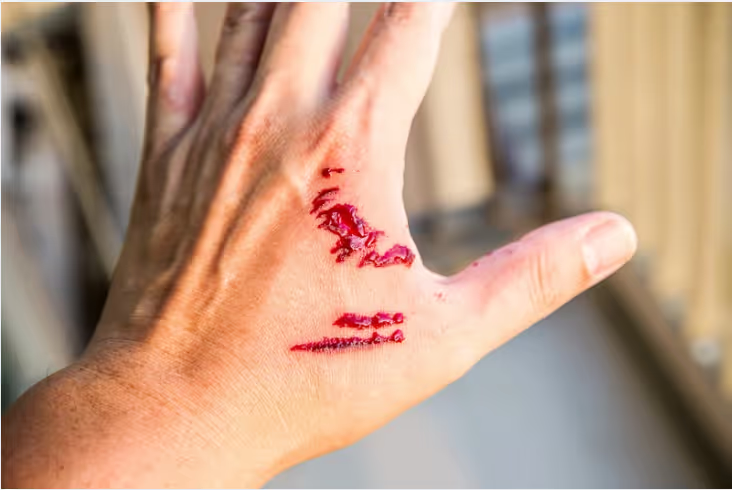
- Progression from fresh wounds to long-term scarring: Early images show the trauma; later images reveal how the scar develops and whether it becomes raised, sunken, or discolored.
- Visible injury details: Swelling, stitches, blood loss, bruising, puncture patterns, and wound depth all help establish the force of the attack and its long-term consequences.
- Showing hardship: Photos also reflect the very real physical and emotional burden of healing—something that medical charts alone cannot fully convey.
These images often make the difference in proving the true impact of a dog bite injury.
Guidelines for Taking Effective Injury Photos
Quality photos strengthen your claim. The following simple steps can make your evidence clear, consistent, and compelling:
- Use natural light whenever possible to avoid shadows that conceal details.
- Keep angles consistent by photographing the injury from the same distance and position.
- Capture both close-up shots that show detail and full-context shots that show where the injury is located on the body.
- Take time-stamped photos at regular intervals: immediately after the attack, daily in the early healing phase, and weekly or monthly as scars form.
Clear, organized photographic evidence tells a powerful story of what you endured.
Photographing the Attack Scene and Dog
In addition to injury photos, documenting the environment surrounding the attack is equally important:
- Location details: Capture fences, gates, leash conditions, or barriers that should have prevented the attack.
- The dog: When it is safe to do so, photographs of the dog involved can help identify breed, size, and distinguishing features.
- Evidence of negligence: Broken fences, open gates, missing locks, or lack of “Beware of Dog” signs can all support liability.
Scene photos help establish precisely how and why the attack occurred.
How LSM Uses Photo Evidence to Strengthen a Claim
At Liss, Shapero & Mitnick, photo evidence is carefully analyzed and incorporated into the legal strategy:
- Healing timeline reconstruction: By studying the progression of photos, the team shows how the injury evolved over time.
- Cosmetic impact: Before-and-after images demonstrate permanent changes to skin texture, shape, and color.
- Expert collaboration: Photos support medical expert testimony regarding scarring severity, permanence, and necessary future care.
This evidence helps build a clear, compelling narrative about the long-term consequences of a dog bite injury.
Claim Value Drivers in Dog Bite Scar Cases
Location and Visibility of Scars
Highly visible scars—especially those on the face, hands, or arms—tend to result in higher compensation because:
- They affect daily social interactions.
- They can create long-term embarrassment or self-consciousness.
- They may impact job opportunities, especially in public-facing roles.
Age of the Victim
Scarring has different consequences depending on age:
- Children often receive higher compensation because scars may grow and stretch as they age.
- Long-term emotional harm is also more common in young victims.
Level of Medical Treatment Required
Claims increase in value when treatment is extensive:
- Emergency care
- Stitches, surgery, or wound management
- Scar revision procedures
- Dermatology visits or laser treatments
- Mental health therapy
Projected future care is also factored into compensation.
Psychological Trauma
Dog bites often cause emotional injuries that are just as real as physical scars:
- PTSD
- Fear of dogs
- Social anxiety
- Embarrassment or loss of confidence
Documented psychological harm can dramatically increase claim value.
Impact on Employment and Daily Life
Injuries that interfere with work, school, or personal independence are major value drivers:
- Reduced ability to perform job duties
- Challenges in careers requiring fine motor skills
- Time away from work due to treatment or recovery
Functional limitations often increase both economic and non-economic damages.
Comparative Negligence Arguments and How LSM Overcomes Them
Insurance adjusters often try to reduce payouts by blaming the victim. Common defenses include:
- False claims of provocation
- Allegations of trespassing
- Suggestions that the victim acted “unreasonably”
Liss, Shapero & Mitnick counters these tactics through:
- Witness interviews
- Expert opinions
- Scene analysis
- Detailed photographic evidence
A well-built case prevents insurers from unfairly shifting blame.
Your Recovery Deserves Compassion and Skilled Advocacy
Even after the physical wound heals, a dog bite scar can serve as a lifelong reminder of trauma. These injuries affect far more than appearance—they can undermine confidence, interrupt daily functioning, and create lasting emotional challenges. If you or your child is living with scars from a dog attack, you deserve a legal team that understands both the medical realities of scarring and the legal strategies necessary to pursue full and fair compensation.
Liss, Shapero & Mitnick is dedicated to helping victims rebuild, recover, and move forward with strength. Our team brings decades of experience, a deep understanding of Michigan dog bite law, and a commitment to treating every client like family.
Contact Liss, Shapero & Mitnick Today
Liss, Shapero & Mitnick
2695 Coolidge Highway
Berkley, MI 48072
Phone: 248-584-1300
Toll-Free: 1-855-LISS-LAW (1-855-547-7529)
Fax: 248-584-1323