.svg)
.avif)

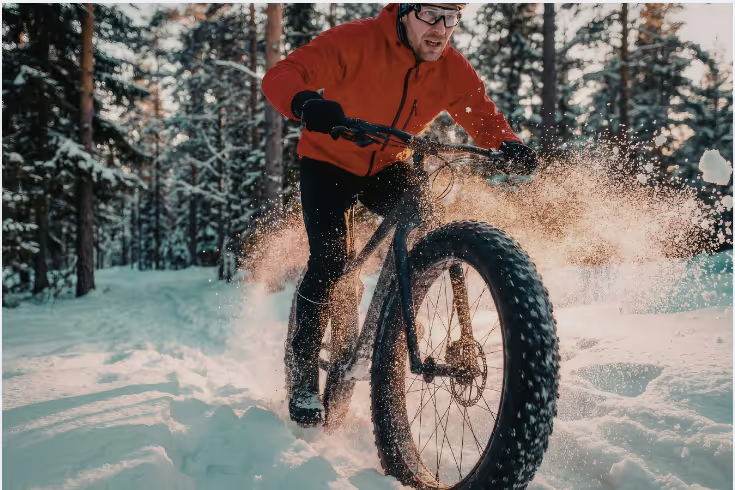
E-bikes have become one of Michigan’s fastest-growing forms of transportation, offering commuters, recreational riders, and outdoor enthusiasts a convenient and eco-friendly way to travel year-round. But winter brings a unique set of challenges. Snow, ice, freezing rain, and extended low-light conditions make winter riding riskier than any other time of year.
Reduced visibility, slippery roads, and unpredictable driver behavior dramatically increase the likelihood of collisions—particularly in busy urban areas or poorly maintained bike lanes. Many e-bike riders assume they’re protected if an accident occurs, but the reality is that most carry little to no insurance coverage, leaving them exposed to overwhelming medical bills and repair costs after a crash.
The aftermath can be physically and emotionally draining: emergency care, ongoing treatment, loss of mobility, months without riding, and frustrating disputes with insurance companies. Understanding the risks and legal considerations of winter e-bike riding is essential for protecting yourself and your rights.
Winter Visibility Challenges for E-Bike Riders
Low-Light Conditions in Michigan Winters
Michigan winters are defined by short days and long stretches of dusk, making visibility a constant challenge. Combined with snow glare, fog, and thick cloud cover, riders become significantly harder for drivers to see. Even when using headlights, the reflection off snow can distort depth perception, causing both riders and drivers to misjudge distances and speed.
Common Visibility-Related Crash Scenarios
Many winter e-bike collisions occur not because riders are careless, but because drivers simply do not see them:
- Intersection collisions: Drivers fail to notice riders approaching through dimly lit areas.
- Left-turn crashes: Motorists underestimate the speed of an e-bike and turn directly into its path.
- Rear-end collisions: Snow-covered windshields, fogged windows, and winter sun glare reduce a driver’s awareness of the road ahead.
These scenarios are among the most common causes of severe winter cycling injuries.
Improving Visibility Through Equipment
Proper lighting and reflective gear can make the difference between being seen—or being struck.
- High-lumen headlights and taillights increase visibility in snow, fog, and nighttime riding.
- Reflective vests, ankle straps, and helmet stickers alert drivers from multiple angles.
- Wheel and frame reflectors improve side visibility, especially at intersections.
- Studded tires with reflective strips help both traction and visibility.
- Daily battery checks ensure lights stay bright in freezing temperatures, where battery life declines quickly.
Road Conditions That Reduce Rider Visibility
Visibility challenges aren’t just about lighting—they’re also about the condition of the roads themselves:
- Snowbanks piled at intersections often block sightlines between drivers and riders.
- Ice and slush cover pavement markings, creating confusion about lane boundaries and crosswalks.
- Plow trucks can suddenly throw up clouds of snow, creating instant whiteout conditions that obscure riders.
These hazards highlight why winter riding requires extra caution—and why drivers must operate responsibly around e-bike riders.
Understanding Fault in Winter E-Bike Accidents
Michigan’s Comparative Negligence Principles
Michigan applies a comparative negligence system, meaning fault can be shared between the rider and the driver. Even if the rider is found partially responsible—for example, for not using lights—a claim for damages may still be valid. Compensation is simply adjusted based on each party’s percentage of fault.
Driver Negligence in E-Bike Collisions
Winter conditions do not excuse dangerous driving. Motorists often contribute to e-bike crashes through:
- Failure to clear snow or ice from windows and mirrors.
- Speeding or tailgating on slippery roads.
- Distracted driving, which worsens in poor visibility conditions.
- Impaired driving, which remains a leading cause of winter crashes.
- Violating Michigan’s 3-foot passing rule, placing riders directly in harm’s way.
When a driver fails to adjust their behavior for winter conditions, that negligence can make them fully or majority at fault.
Rider Responsibilities Under Michigan Law
E-bike riders must also follow Michigan law to protect themselves and preserve their legal rights:
- Use bike lanes when available and safe.
- Obey traffic lights and signs just as any motorist would.
- Use required lighting at night or during low visibility.
- Ride with reasonable care on icy or uneven surfaces.
Following these rules strengthens your claim if a crash occurs.
Infrastructure Failures That Contribute to Crashes
Sometimes the cause of an accident isn’t the rider or the driver—it’s the road itself:
- Unplowed bike lanes force riders into vehicle traffic.
- Poor street lighting makes cyclists nearly invisible.
- Large potholes hidden by snow cause sudden loss of balance or ejection.
- Drainage issues create unexpected ice patches.
- Under certain circumstances, municipalities may be liable, though these cases require specialized legal evaluation.
Understanding the full picture of fault helps ensure injured riders receive the compensation they deserve.
Insurance Gaps Facing E-Bike Riders
Misconceptions About Coverage
Many e-bike owners assume that their existing insurance policies offer automatic protection, but this is rarely the case:
- Homeowner’s or renter’s policies typically do not cover liability if a rider injures someone while operating an e-bike.
- Some insurers do not classify e-bikes as “bicycles” because of their motor-assist capabilities, disqualifying them from bicycle-related coverage.
- Certain policies exclude devices that exceed specific wattage or speed thresholds, meaning many popular e-bike models fall outside coverage limits.
These misunderstandings often surface only after a crash—when riders need help the most.
What Auto Insurance Covers—and Doesn’t
Michigan’s auto no-fault laws provide important protections, but they do not apply universally to e-bike crashes:
- No-fault Personal Injury Protection (PIP) benefits are available when an e-bike rider is struck by a motor vehicle.
- However, if no car is involved, PIP does not apply—leaving riders responsible for their own medical costs.
- If a rider is found at fault, or if the e-bike exceeds statutory classifications, coverage may be limited or denied outright.
Understanding these distinctions is essential for avoiding unexpected financial burdens.
Homeowner’s & Renter’s Policy Gaps
Most home and rental policies offer minimal protection for e-bikes:
- Many policies exclude motorized bicycles, leaving no coverage for injuries or property damage caused by the rider.
- Coverage may be available for theft, but only to a limited dollar amount.
- Modifications—such as battery upgrades or custom motors—can void coverage entirely.
In many cases, these gaps leave riders without any liability protection at all.
Optional E-Bike Insurance Policies
To address these coverage problems, specialized e-bike insurance policies have emerged:
- Liability protection for injuries to pedestrians or damage to property.
- Collision coverage for repairing or replacing the e-bike after a crash.
- Medical payments riders to help pay for treatment regardless of fault.
- Uninsured/underinsured motorist coverage (UM/UIM) to protect riders in hit-and-run incidents or collisions with uninsured drivers.
These policies offer critical safety nets that many riders are unaware exist.
Why Insurance Gaps Put Riders at Risk
When winter riding injuries occur, insurance gaps can create serious financial hardship:
- High out-of-pocket medical bills, especially for fractures or head injuries.
- Lost income when a crash leads to missed work.
- Costly repairs or replacement of a damaged e-bike.
- Liability exposure if a rider hits a pedestrian or damages property.
Without proper coverage, a single winter crash can lead to long-term financial strain.
Evidence Riders Should Gather After a Winter Crash
Photos and Video Documentation
Photographs help establish what really happened:
- Tire tracks, ice patches, and skid marks show how the crash occurred.
- Snowbanks or plowed piles that blocked sightlines.
- Lighting conditions demonstrating poor visibility.
- Road surface conditions, including slush, black ice, or uneven pavement.
These images help reconstruct the sequence of events accurately.
Bike Damage and Gear Condition
Equipment damage often reveals the severity and cause of the crash:
- Helmet impact points show the direction and force of impact.
- Damage to lights, reflectors, or clothing helps establish winter visibility issues.
- Broken frames or components demonstrate crash intensity.
This evidence supports both fault analysis and compensation claims.
Witness Information
Reliable testimony can make or break a case:
- Drivers, pedestrians, or nearby residents who saw the crash.
- Delivery drivers or snow-removal crews, who are often firsthand witnesses in winter incidents.
Witness statements help corroborate visibility issues, driver behavior, and road conditions.
Police and EMS Reports
A crash should be documented—even when injuries seem minor:
- Police reports capture road conditions, vehicle statements, and diagrammed scenes.
- EMS records document immediate injuries, which are crucial for insurance claims.
- Winter crashes are often misunderstood without formal documentation.
Prompt reporting strengthens both medical and legal claims.
Protect Yourself Before the Next Winter Ride
Michigan’s winters make e-bike riding uniquely challenging. Low visibility, icy roads, and significant insurance gaps leave riders far more vulnerable than many realize. A single crash caused by poor road conditions, an inattentive driver, or an uninsured motorist can result in serious injuries, unexpected medical bills, and months of recovery.
If you were injured in an e-bike accident—or if you have questions about your rights, fault determinations, or available insurance coverage—Liss, Shapero & Mitnick is here to help. Our team brings decades of experience advocating for injured cyclists and riders throughout Michigan. We take pride in treating every client with the compassion, dignity, and respect they deserve, while fighting tirelessly to secure the compensation they need to move forward.
Contact Liss, Shapero & Mitnick Today
Liss, Shapero & Mitnick
2695 Coolidge Highway
Berkley, MI 48072
Phone: 248-584-1300
Toll-Free: 1-855-LISS-LAW (1-855-547-7529)
Fax: 248-584-1323