.svg)
.avif)


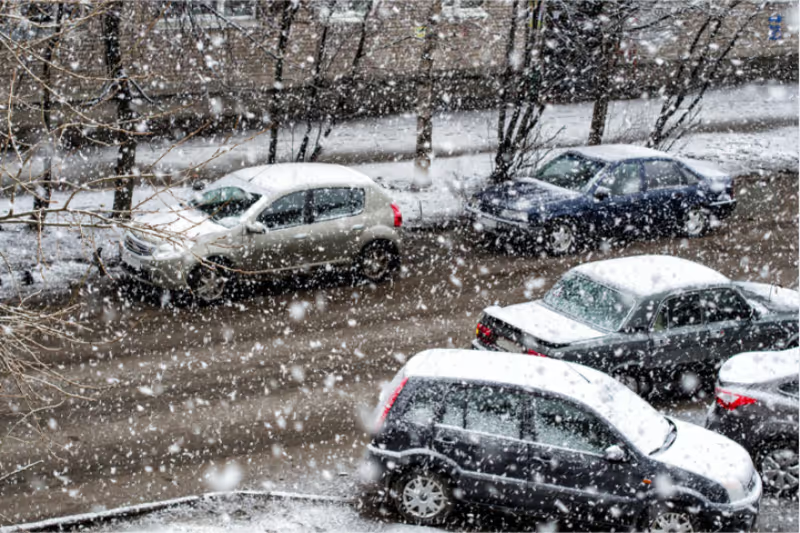
The first snow in Michigan is as predictable as it is beautiful — and often, so are the first crashes that come with it.
Drivers who’ve spent all summer on dry roads suddenly find themselves navigating slick intersections, black ice, and falling snow that cuts visibility in half. The same roads that felt routine just days before can turn treacherous overnight.
Every winter, law enforcement and towing companies report a spike in accidents after the first measurable snowfall, even among experienced drivers. Quick stops turn into skids, minor bumps multiply on highways, and cars slide through intersections despite everyone’s best efforts.
While you can’t control the weather, you can control what happens next. Knowing what to do after a first snow car accident in Michigan helps protect both your safety and your right to collect full benefits under the state’s no-fault insurance system.
Michigan’s no-fault laws are designed to help drivers recover from accidents — covering medical expenses, lost wages, and essential household services — but these benefits depend on taking the right steps immediately after a crash.
Safety First and Call 911
In snowy conditions, one of the most dangerous places to be is outside your vehicle on a slippery road. After a crash, stay calm and take these steps:
- Check for injuries to yourself and passengers first. If anyone is hurt, call 911 right away.
- Move vehicles out of traffic if it’s safe to do so, especially if you’re blocking a lane or visibility is poor.
- Even if the damage appears minor, call 911 and request an officer to respond. Snow, sleet, and black ice can cause secondary collisions within minutes, and emergency responders are trained to secure the scene safely.
Tip: Don’t rely on exchanging information with other drivers alone. Without a police report, insurance companies may dispute who was at fault or how the accident occurred — especially when snow or ice are involved.
Capture Photo and Video Evidence
In a Michigan winter, evidence doesn’t last long. Tire tracks vanish, snowplows move debris, and lighting changes fast — which is why photos and videos are crucial after a snow-related crash.
If it’s safe to do so, take clear, wide shots before moving your vehicle. Focus on:
- Vehicle positions and damage from multiple angles.
- Tire tracks or skid marks in the snow — these can show speed and direction of travel.
- Roadway and weather conditions, including ice patches, visibility, and snow accumulation.
- Traffic lights, stop signs, and surrounding signage that establish right-of-way.
- Close-ups of license plates and any debris or vehicle parts left behind.
These images can help prove whether the crash was caused by another driver’s negligence, unsafe speed, or poor road maintenance. They also help document how quickly conditions changed — a key factor in Michigan winter accident cases.
File a Police Report and Notify Insurance Promptly
After the first snow accident, one of the most important steps you can take is to file a police report — even if the damage seems minor or no one appears injured. Under Michigan’s no-fault system, the report serves as an official record of what happened, when it happened, and who was involved. Without it, your insurer may question key details or even delay processing your claim.
A police report documents critical facts, including:
- The date, time, and exact location of the crash.
- Road and weather conditions, such as snow, ice, or visibility.
- Statements from drivers and witnesses that clarify how the collision occurred.
Once the report is complete, contact your insurance company promptly to start the claim process. However, avoid giving a detailed recorded statement until you’ve had a chance to review your coverage and rights. Even honest mistakes or uncertain answers can complicate how your claim is classified.
Remember: Michigan’s Personal Injury Protection (PIP) claims have strict deadlines. In most cases, you must file a written claim for benefits within one year from the date of the accident — or risk losing access to essential medical and wage-loss coverage.
Understand Your Michigan No-Fault PIP Benefits
Michigan’s no-fault insurance system is designed to protect accident victims — even if the roads are icy or no one else is involved. After a snow-related crash, your Personal Injury Protection (PIP) benefits can provide critical financial support while you recover.
Here’s what PIP typically covers:
- Medical Expenses: Doctor visits, physical therapy, hospital stays, prescriptions, and long-term rehabilitation.
- Wage Loss: Up to 85% of your lost income for up to three years, subject to the current statutory cap.
- Replacement Services: Compensation for help with daily activities — such as house cleaning, cooking, childcare, or errands — if you’re unable to perform them due to your injuries.
- Mileage Reimbursement: Payment for travel to and from medical appointments related to your treatment.
These benefits apply regardless of who was at fault, meaning even a single-car crash caused by black ice or poor visibility may qualify. However, the amount and timing of payment can depend on how your auto insurance policy coordinates with your health insurance.
Coordinating Health Insurance and No-Fault Coverage
One of the most confusing aspects of Michigan’s no-fault system is how health insurance and auto insurance work together. Whether your auto insurer or health plan pays first depends on how your policy is written — and getting it wrong can delay medical payments or lead to unnecessary out-of-pocket costs.
Here’s the key difference:
- Coordinated Coverage: Your health insurance pays first for medical expenses, and your auto insurer covers remaining eligible costs. This can reduce premiums but may involve additional paperwork or billing delays.
- Uncoordinated Coverage: Your no-fault insurance pays first, ensuring faster access to care without waiting for health insurance approval.
Mistakes in coordination can cause denied or delayed medical payments, especially when hospitals or insurers misinterpret who’s responsible. To avoid this, keep copies of all bills, explanation-of-benefit (EOB) forms, and communication with providers and adjusters.
Document Wage Loss and Work Restrictions
When icy roads lead to a crash, the physical recovery can be tough — but the financial stress of missing work can make it even harder. That’s why wage loss benefits are one of the most important parts of Michigan’s no-fault PIP coverage.
Under Michigan law, no-fault insurance pays 85% of your gross wages for up to three years if accident-related injuries prevent you from working. This compensation can make a major difference for families facing medical bills and day-to-day expenses.
To receive these benefits, you must provide documentation, including:
- A statement from your employer verifying your position, pay rate, and missed workdays.
- Recent pay stubs to establish your income.
- Medical records or a doctor’s disability note confirming that your injuries prevent you from performing your job duties.
Even after a “minor” winter crash, injuries such as whiplash, back strain, or frost-related exposure can make working unsafe or impossible. Don’t assume you’ll heal quickly — report all symptoms to your doctor and follow medical advice closely.
Know When to Call a Michigan Car Accident Attorney
After the first snow, even small accidents can create complex insurance disputes — especially when multiple vehicles are involved or road conditions make fault unclear. That’s when the guidance of an experienced Michigan car accident attorney becomes essential.
You should contact a lawyer if:
- There’s disagreement over fault or liability, particularly in multi-car or chain-reaction pileups.
- Your PIP, wage loss, or repair claims are denied or delayed.
- You’ve suffered serious or permanent injuries requiring long-term care.
- There are coordination issues between your health insurer and auto insurance company.
At Liss, Shapero & Mitnick, we handle every aspect of the process so you don’t have to. Our attorneys communicate directly with insurance adjusters, gather medical and wage documentation, and ensure that clients receive every benefit they’re entitled to under Michigan’s no-fault laws.
Get Guidance Before the Ice Melts: Protect Your Rights After a Snow Crash
Even the most careful drivers can be caught off guard by Michigan’s first snow. Slippery intersections, hidden ice, and poor visibility turn everyday commutes into hazards — but you still have rights and protections under Michigan’s no-fault insurance laws.
The Michigan no-fault system can be confusing — especially when health insurance, deductibles, and multiple coverage types are involved. Getting advice early ensures that no deadline is missed and no coverage is overlooked.
If you’ve been hurt or suffered loss after the first snow car accident in Michigan, don’t wait to get help. The experienced attorneys at Liss, Shapero & Mitnick will guide you through every step — from documenting your claim to recovering full medical and wage benefits under Michigan’s no-fault system.
📞 Call 248-584-1300 or Toll-Free 1-855-LISS-LAW (547-7529)
🌐 Visit lsmlawyers.com
Your Rights. Your Story. Our Fight.