.svg)
.avif)


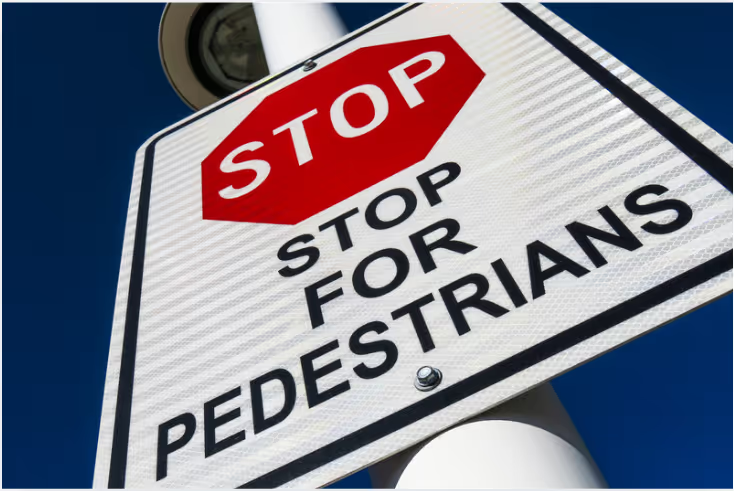
Delivery trucks, vans, gig-economy drivers, and freight vehicles are now constant fixtures in Michigan neighborhoods, retail centers, apartment complexes, and business districts. With the rise of online shopping and food delivery services, pedestrians must navigate areas never designed for heavy delivery traffic—loading docks, crowded alleys, blocked sidewalks, and unpredictable drop-off points.
These environments create a heightened risk of being struck. Drivers operate in tight spaces, often with significant blind spots. Many are rushing to meet deadlines, performing sudden turns, backing up repeatedly, or using scanning devices and navigation apps while driving. During Michigan winters, snowbanks, icy pavement, and low visibility make these hazards even more dangerous for pedestrians.
When a pedestrian is hit in a delivery zone, the consequences can be devastating. Victims frequently face emergency medical treatment, time off work, long-term pain, trauma from the sudden impact, and overwhelming confusion about fault—especially when multiple companies, contractors, and insurance policies may be involved. Delivery zones bring unique legal complexities, and understanding the risks is the first step toward protecting your rights.
Steps Michigan Pedestrians Should Take Immediately After Being Hit
Get Medical Care Right Away
Even if your injuries appear minor, you should seek emergency medical attention immediately. Delivery-zone crashes often involve:
- Hidden soft-tissue injuries
- Concussions or head trauma
- Internal injuries that aren’t immediately visible
A prompt medical examination not only protects your health—it also creates critical documentation that supports your future claim.
Call Police and Ensure an Official Report Is Made
An official police report is essential in delivery-related pedestrian crashes. Officers will document:
- The identity of the delivery driver
- The company or gig-app they were working for
- The vehicle's license plate and insurance information
This report becomes foundational evidence when determining fault—especially when corporate insurers become involved.
Gather Evidence at the Scene
If you can safely do so, collecting evidence immediately helps preserve details that might be lost within minutes:
- Photos of the delivery vehicle’s position
- Layout of the delivery zone, including loading docks, paths, or blocked sidewalks
- Crosswalk markings and traffic control signs
- Skid marks, icy patches, or snowbanks
- Images of your injuries
Capturing the delivery area as it appeared at the time of the crash is invaluable, especially if the pedestrian path was obstructed or poorly marked.
Collect Witness Statements
Witnesses can clarify exactly how the crash occurred. This may include:
- Other pedestrians
- Store or restaurant employees
- Security personnel
- Other delivery workers
Ask for names and contact information—these statements often become key in proving negligence.
Secure Driver and Employer Information
Delivery accidents often involve complex employer relationships. Gathering detailed information early prevents confusion later:
- Delivery company name (Amazon, FedEx, UPS, USPS, etc.)
- Driver identification or badge number
- Whether the driver is an employee or a contractor
- Gig-app screenshots showing whether the driver was “on the job” (DoorDash, Uber Eats, Instacart, etc.)
These details determine which insurance policies apply—and which companies may be liable.
Avoid Speaking With Corporate Insurance Adjusters
Large delivery companies and gig platforms often reach out quickly after an incident. Their goal is simple: limit their liability. Do not give a recorded statement. Do not discuss injuries. Do not accept early settlement offers. Pedestrians should speak with an attorney first to ensure their rights are protected and their claim is not undervalued.
Understanding Fault in Delivery-Zone Pedestrian Crashes
Driver Negligence
Drivers may be held liable when they:
- Fail to check mirrors or backup cameras before reversing
- Speed through pedestrian-heavy areas
- Drive while distracted by scanning devices, phones, or app notifications
- Ignore crosswalks and pedestrian right-of-way
Rushed or distracted driving is a leading cause of delivery-zone crashes.
Company Liability
The employer may share responsibility if:
- The driver was poorly trained
- The company imposed unrealistic delivery deadlines
- The vehicle was not properly maintained
- Safety protocols were insufficient or ignored
Corporations often try to shift blame onto the driver, but their policies and oversight play a major role in these crashes.
Premises Liability
The property owner or business may also be at fault when unsafe delivery layouts contribute to the crash:
- Poorly designed loading zones
- Lack of pedestrian pathways or warning signage
- Snow and ice buildup in walkways
- Obstructed sidewalks that force pedestrians into traffic
Many delivery areas were not designed with pedestrian safety in mind, creating preventable hazards.
Municipal Responsibility
In some cases, local governments may be responsible for:
- Improperly designed sidewalks or crosswalks
- Missing or inadequate signage
- Poor lighting conditions
- Failure to maintain safe walking surfaces in winter
Municipal claims have strict timelines and notice requirements, making early legal guidance essential.
Insurance Coverage in Delivery-Zone Pedestrian Accidents
Commercial Auto Insurance
When the driver works for a traditional delivery company—such as FedEx, UPS, USPS, or a private freight carrier—the vehicle should be covered by a commercial auto insurance policy. These policies typically offer:
- Higher policy limits than standard personal auto insurance
- Coverage for bodily injury, property damage, and employer liability
- Potential for multiple insurers (driver’s employer, subcontractor, or fleet owner)
However, commercial insurers often dispute claims aggressively, making legal representation essential.
Gig-Economy Insurance Complexities
Accidents involving food-delivery or app-based drivers (DoorDash, Uber Eats, Instacart, Shipt, Amazon Flex, etc.) present additional challenges:
- Coverage depends on whether the driver is “on-app” (actively delivering or en route) or “off-app.”
- If the driver is not actively working when the crash occurs, coverage may be limited or denied entirely.
- Coverage layers often include:
- The driver’s personal auto insurance
- The gig platform’s contingent liability policy
- Optional supplemental coverage carried by the driver
Navigating these overlapping policies requires careful evaluation of app data, timing, and the driver's work status.
Michigan No-Fault Benefits for Pedestrians
Under Michigan’s No-Fault system, pedestrians hit by a motor vehicle are entitled to Personal Injury Protection (PIP) benefits—even if they do not own a vehicle or have insurance. PIP benefits include:
- Medical coverage for necessary treatment
- Lost wages for up to three years
- Replacement services, such as help with household chores
- Mileage reimbursement for medical appointments
No-fault benefits apply regardless of who caused the crash, providing immediate support during recovery.
Third-Party Liability Claims
For serious injuries, pedestrians may also pursue third-party claims, including:
- Pain and suffering damages for long-term disability, mobility loss, scarring, or emotional trauma
- Claims against:
- The delivery driver
- The employer or contracting company
- The property owner where the delivery occurred
- A municipality responsible for unsafe road or sidewalk design
Because these claims often involve corporate defendants and multiple insurers, they require strong legal advocacy to achieve full compensation.
How Liss, Shapero & Mitnick Help Michigan Pedestrians Hit in Delivery Zones
Rapid Investigation
Time is critical. Evidence in delivery zones can disappear within minutes. LSM acts fast to:
- Obtain surveillance footage from stores, loading docks, and nearby cameras before it is overwritten
- Secure delivery logs, GPS data, and driver route records
- Analyze weather conditions, lighting, and winter hazards that contributed to the crash
A prompt investigation strengthens the foundation of a successful claim.
Identifying All Sources of Liability
Delivery-zone injuries often involve more than one responsible party. LSM investigates all potential defendants, including:
- The delivery driver
- The driver’s employer (corporation or subcontractor)
- Gig-app platforms and their layered insurance policies
- Property owners for unsafe delivery layouts or snow/ice conditions
- Municipal entities when poor road design contributes to the crash
Identifying every liable party maximizes the available compensation.
Maximizing Compensation
In severe pedestrian crashes, compensation must reflect both immediate and long-term consequences. LSM pursues recovery for:
- Emergency and ongoing medical bills
- Lost wages and diminished earning capacity
- Replacement services during recovery
- Pain and suffering damages
- Compensation for permanent disability, scarring, or mobility issues
- Future medical care, therapy, or assistive devices
The firm ensures injury victims receive the full financial support they need to rebuild their lives.
Protecting Pedestrians From Corporate Insurance Tactics
Corporate insurers often work quickly to minimize or deny claims. LSM protects clients by:
- Handling all communication and recorded statements
- Preventing insurance companies from blaming the victim
- Challenging attempts to downplay injury severity
- Ensuring accurate application of Michigan No-Fault law and corporate liability rules
Pedestrians should not have to face large delivery companies or aggressive insurers alone—LSM stands firmly in their corner.
Protect Your Rights After a Delivery-Zone Injury
Michigan delivery zones are busy, unpredictable, and often poorly designed for pedestrian safety. When a delivery driver’s negligence—or a company’s unsafe policies—causes an injury, you deserve a legal team with the experience, compassion, and determination to stand up for you. The aftermath of a pedestrian collision can be overwhelming, but you do not have to navigate it alone.
Liss, Shapero & Mitnick fights for injured pedestrians across Michigan, helping clients rebuild their lives with dignity, stability, and the full measure of justice the law allows. Our team understands the complex layers of liability and insurance involved in delivery-zone crashes, and we work tirelessly to protect your rights from day one.
Contact Liss, Shapero & Mitnick Today
Liss, Shapero & Mitnick
2695 Coolidge Highway
Berkley, MI 48072
Phone: 248-584-1300
Toll-Free: 1-855-LISS-LAW (1-855-547-7529)
Fax: 248-584-1323