.svg)
.avif)
.avif)


December is one of the most dangerous months for Michigan motorists. Between holiday travel, early sunsets, unpredictable snow squalls, and sudden bursts of freezing rain, road conditions can shift from safe to hazardous in a matter of minutes. Among the biggest threats this time of year is black ice—the nearly invisible glaze that forms when temperatures hover around freezing. Because it blends seamlessly with the pavement, drivers often don’t realize it’s there until they’ve lost control.
These winter hazards don’t just make travel stressful—they also complicate what happens after a crash. Michigan’s No-Fault insurance system and the state’s “Mini-Tort” law both determine what drivers can recover after an accident caused by icy roads or negligent drivers.
At Liss, Shapero & Mitnick, our team brings more than 50 years of combined experience helping injured drivers throughout Michigan navigate these exact issues. As a long-standing Berkley law firm with deep ties to the community, we approach every case with the same philosophy: your rights first—a client-centered value rooted in the culture built by our firm over decades.
Michigan’s No-Fault Law: What It Covers After a Winter Crash
Personal Injury Protection (PIP) Benefits
After a black-ice or winter-weather crash, PIP may cover:
- Medical bills related to your injuries
- Rehabilitation and physical therapy
- Attendant care, when you need help with daily activities
- Mileage and household replacement services, including help with chores and transportation
These benefits can be life-changing after severe winter collisions, especially those involving rear-end crashes, spinouts, or multi-vehicle pileups.
What No-Fault Does Not Cover
Many drivers are surprised to learn that No-Fault insurance has limits. It does not cover:
- Full vehicle repairs when you are not at fault
- Pain and suffering, unless your injuries meet Michigan’s legal threshold
- Damage to another driver’s vehicle beyond what the Mini-Tort allows
To recover those losses, Michigan law relies on fault-based claims—most commonly, the Mini-Tort.
Understanding the Michigan “Mini-Tort” Claim in 2025
What the Mini-Tort Is Designed For
The Mini-Tort is a limited property-damage claim that allows you to recover up to $3,000 (unless the legislature adjusts this amount) from the at-fault driver’s insurance. It covers:
- Your vehicle damage that your own insurance didn’t pay
- Only property damage—never injuries
When Mini-Tort Applies in Winter Collisions
Even in black-ice crashes, negligence still matters. Mini-Tort may apply if:
- You were not at fault, or only partly at fault
- The other driver’s negligence caused the crash, even if weather played a role
- The at-fault vehicle was insured
- You have out-of-pocket repair costs not covered by your policy
Common examples include drivers who fail to slow down for conditions, tailgate on slick roads, or lose control because they were simply going too fast for the ice.
Common Black-Ice Scenarios Where Mini-Tort Applies
LSM frequently sees Mini-Tort involvement in winter crashes such as:
- Rear-end collisions where the at-fault driver slid into another vehicle
- Lane-sliding accidents where a driver drifts into your lane
- Parking-lot collisions, which still involve negligence despite icy surfaces
- Chain-reaction pileups, where determining fault may require careful investigation
Even when black ice is present, drivers are legally responsible for adjusting their speed and maintaining control. Weather does not excuse negligence.
What Proof You Need for a Mini-Tort Claim
To recover Mini-Tort damages, it helps to gather:
- A police report
- Photos or videos of black ice, skid marks, and vehicle damage
- Repair estimates from a licensed shop
- Insurance information for the at-fault driver
Our team helps clients collect, preserve, and present this evidence properly—something that’s especially important when ice makes fault less obvious.
Deadlines & Important Tips
- Michigan has a statute of limitations for Mini-Tort claims—waiting too long can forfeit your rights.
- Documenting the scene immediately strengthens your claim.
- LSM can handle the full Mini-Tort process, including communication with insurers who may minimize or deny black-ice liability.
Can You Still Recover for Injuries After a Black-Ice Crash?
Threshold for Suing the At-Fault Driver
To pursue pain and suffering damages or other non-economic losses, your injuries must meet the legal threshold under Michigan law. This includes:
- Permanent serious disfigurement
- Serious impairment of body function, such as long-term mobility loss or reduced ability to work
- Wrongful death, when a loved one is tragically lost in a winter-weather crash
These thresholds can be met even in crashes that occur at low speeds—something common in black-ice incidents where a small slide can lead to severe harm.
Common Winter Crash Injuries LSM Frequently Sees
Winter collisions often produce injuries that are far more significant than they appear at the scene. Our attorneys routinely help clients suffering from:
- Traumatic brain injuries (TBI), including concussions
- Spinal cord injuries & paralysis
- Back injuries, including herniated discs
- Shoulder, knee & wrist injuries, often caused by bracing during impact
- Psychological injuries, such as PTSD, anxiety, and depression
- Permanent scarring, including burns from deploying airbags or lacerations from shattered glass
In Michigan’s icy conditions, even a seemingly “minor” slide can lead to lasting injuries requiring months—or years—of medical care.
Why Weather Doesn’t Excuse Negligence
Drivers have a legal duty to adjust their behavior to road conditions. Black ice is not a free pass for dangerous driving. Negligence may still be found when a driver:
- Fails to reduce speed when temperatures are near freezing
- Does not brake in time or brakes too harshly for the conditions
- Follows too closely, leaving no room for sliding on ice
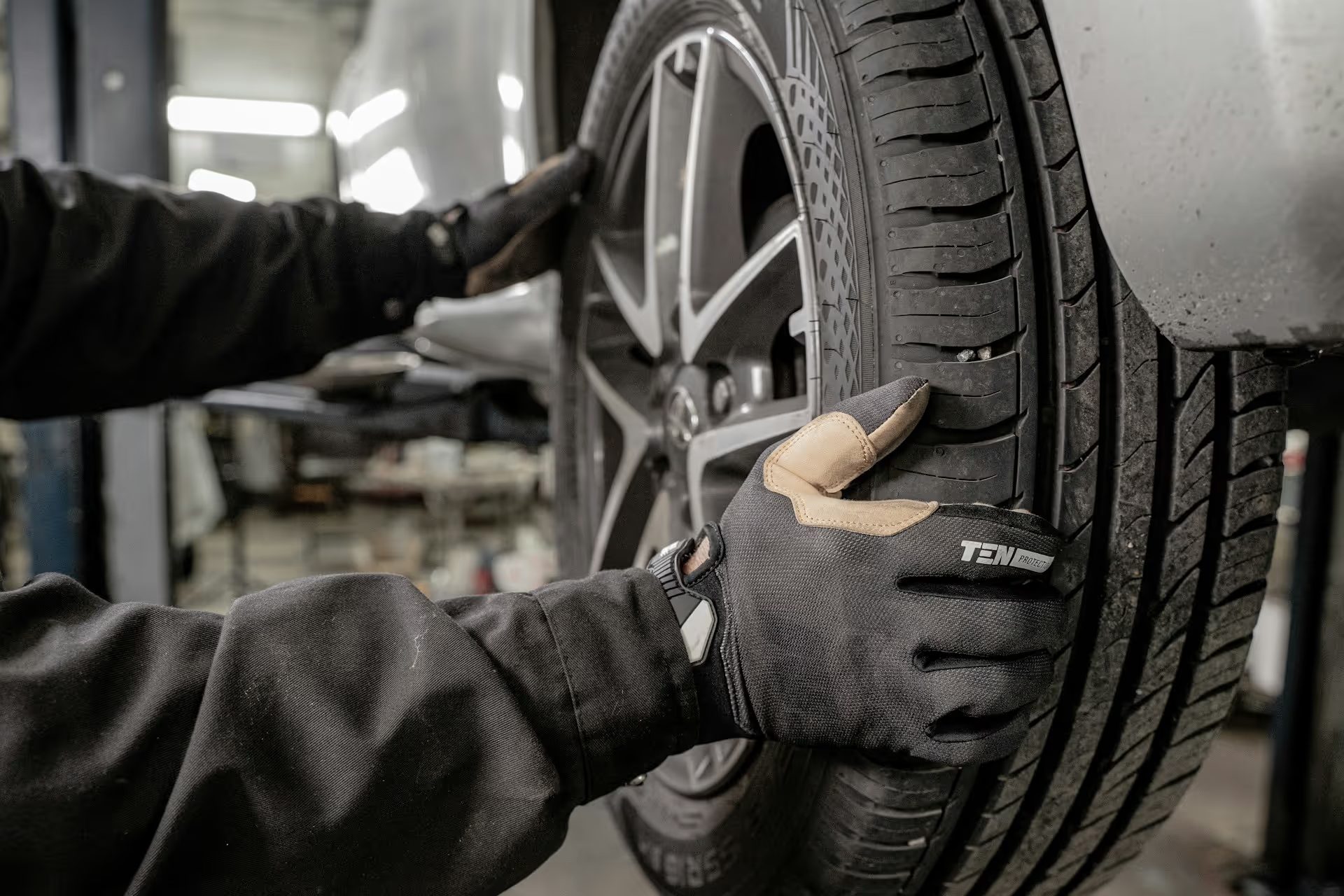
- Drives with improper tire maintenance, such as worn treads
When another driver fails to take reasonable precautions, they may still be held responsible for your injuries—even if the road was icy.
LSM’s Team-Based Approach to Proving Liability
At Liss, Shapero & Mitnick, clients receive the strength of the entire team, not just a single attorney—something deeply ingrained in the firm’s culture. Every person in the office contributes to each case, ensuring no detail is missed and clients feel known, supported, and heard.
To build a strong claim, our team often:
- Obtains expert testimony, including accident reconstruction specialists
- Investigates road conditions, weather reports, and maintenance records
- Analyzes vehicle data, such as speed and braking activity
- Interviews witnesses and works closely with medical providers
This collaborative approach has helped LSM achieve exceptional results in complex, difficult winter-liability cases that other firms might decline.
What Drivers Should Do Immediately After a Black-Ice Accident
Safety First
- Move out of the roadway if it is safe to do so
- Turn on hazard lights to warn approaching drivers
- Call 911, even if the vehicles are drivable—black-ice crashes often involve delayed injuries
Preserve Legal Evidence
Evidence disappears quickly in winter weather. Ice melts, visibility changes, and tire tracks vanish. To protect your rights:
- Photograph black-ice patches, the roadway, skid marks or the lack of them, and damage to all vehicles
- Document visibility conditions, including snowfall or fog
- Collect witness names and contact information
- Photograph your injuries as early as possible
These details often make the difference in proving negligence when ice is involved.
Notify Your Insurance Company
When reporting the crash:
What to say:
- State the basic facts: location, time, vehicles involved.
- Mention that conditions included possible black ice.
What not to say:
- Avoid guessing about fault.
- Avoid statements like “I’m fine” before receiving medical evaluation.
Insurance companies may use your early statements to minimize your claim later. Speaking to an attorney first helps prevent misunderstandings.
Contacting an Attorney Early Protects Your Rights
There are many steps an experienced attorney can take immediately after a black-ice crash to strengthen your case. Early legal guidance helps:
- Prevent lowball vehicle repair offers that don’t reflect true damage
- Ensure No-Fault medical benefits are properly processed
- Stop insurers from wrongly assigning fault, which is common in icy-road collisions
LSM’s client-first philosophy means we not only handle the legal work—we make sure you understand every step, giving you clarity and peace of mind during a stressful time.
Michigan Winters Are Tough—Your Legal Team Should Be Tougher.
December in Michigan brings both beauty and danger. Black ice is unpredictable and can cause life-changing injuries in seconds. Navigating Michigan’s No-Fault system, Mini-Tort claims, and insurance obstacles during winter only adds to the challenges.
At Liss, Shapero & Mitnick, we believe in clarity, transparency, and treating every client like family—because you deserve a team that puts your rights first, not your file. You don’t have to navigate this alone. We’re here to help you reclaim stability, security, and justice after a winter crash.
If you or someone you love was injured in a winter crash—whether caused by black ice, a negligent driver, or unsafe road conditions—contact the team that Metro Detroit has trusted for more than two decades.
Liss, Shapero & Mitnick, Personal Injury Attorneys 📍 2695 Coolidge Highway, Berkley, MI 48072
📞 248-584-1300
📞 Toll-Free: 1-855-LISS-LAW (1-855-547-7529)
Your consultation is always free.
Your story matters. And at LSM, your rights come first.