.svg)
.avif)



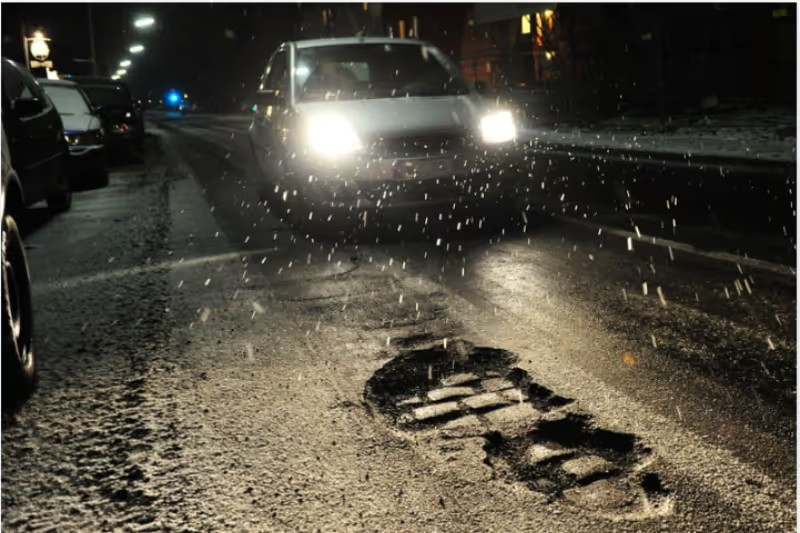
In Michigan, winter does not end when the snow melts. As temperatures swing from freezing to thawing—sometimes within the same day—roads begin to break apart. Water seeps into cracks, freezes, expands, and then collapses the pavement from the inside out. By late winter and early spring, potholes appear seemingly overnight.
What begins as a normal commute can quickly become dangerous. Drivers hit deep potholes without warning, vehicles swerve to avoid road defects, and sudden impacts cause loss of control. For motorcyclists and bicyclists, a single pothole can mean an immediate crash. Even cautious drivers can find themselves injured or facing thousands of dollars in vehicle damage.
The consequences of road defects extend far beyond inconvenience. Victims may suffer physical injuries, unexpected repair costs, missed work, and long-term safety concerns. In some cases, these incidents are not just unfortunate—they are the result of dangerous road conditions that should have been addressed.
What Is a Road-Defect Claim Under Michigan Law
A road-defect claim is a specific type of legal action that allows injured individuals to seek compensation when a dangerous road condition causes injury or property damage.
A road-defect claim arises when:
- A roadway is not kept in reasonable repair
- The condition poses an unreasonable risk to travelers
- A government entity responsible for that road fails to address the danger
Unlike claims against private individuals, these cases involve public agencies.
Legal Duty to Maintain Safe Roads
Michigan law imposes a duty on government entities to maintain roads in a condition that is reasonably safe for public travel. This duty applies to:
- Drivers
- Motorcyclists
- Bicyclists
- Pedestrians
However, this duty is limited and closely regulated by statute.
Road-Defect Liability vs. Ordinary Negligence
Road-defect claims differ from standard negligence cases in key ways:
- Government entities are generally protected by sovereign immunity
- Liability exists only when specific statutory requirements are met
- Strict notice deadlines apply, often far shorter than typical injury claims
Why These Claims Are Treated Differently
Because public agencies are involved, road-defect claims are narrowly defined and aggressively defended. Missing a procedural requirement—even with clear injuries—can permanently bar recovery. These cases are less about proving fault in the traditional sense and more about meeting exact legal standards.
Who May Be Responsible for a Dangerous Road Condition
State Responsibility
The State of Michigan is generally responsible for:
- State highways
- Freeways and trunklines
- Certain major connecting roads
Claims involving these roads are governed by different procedures than local road claims.
County Road Commissions
County road commissions typically maintain:
- County-designated roads
- Many suburban and rural thoroughfares
These agencies operate independently from cities and townships.
City and Township Responsibility
Cities and townships are usually responsible for:
- Local residential streets
- Neighborhood roads
- Certain sidewalks and pedestrian pathways
Responsibility can change at city limits or intersections, making precise location critical.
Why Identifying the Correct Agency Matters
Each government entity has:
- Its own notice address
- Its own legal deadlines
- Its own defense strategies
Filing a claim against the wrong agency—even by mistake—can result in dismissal, regardless of how serious the injuries are.
Common Mistakes That Derail Claims
Road-defect claims often fail due to:
- Assuming the city is responsible for a state road
- Naming multiple agencies incorrectly
- Missing notice deadlines while determining jurisdiction
Accurately identifying the responsible agency early is essential to preserving a valid claim.
The “Notice Requirement” That Makes or Breaks a Claim
Strict and Short Notice Deadlines
Michigan law requires injured individuals to provide written notice to the responsible government agency within a very short window—often within 120 days of the incident, and sometimes sooner depending on the roadway and agency involved. This deadline is absolute and unforgiving.
What the Written Notice Must Include
The notice is not a general complaint. It must contain specific details, including:
- The exact location of the defect, often down to the nearest cross streets or mile markers
- The nature of the defect, such as the size, depth, and condition of the pothole
- The type of injuries or damages suffered, whether personal injuries, vehicle damage, or both
Vague or incomplete notices are frequently challenged and dismissed.
Why Missing the Deadline Is Fatal
If notice is late, incomplete, or sent to the wrong agency:
- The claim may be dismissed immediately
- Courts will not excuse the error, even for severe injuries
- Government entities do not have to prove they were prejudiced
In road-defect cases, procedure matters as much as proof. Missing the notice requirement can permanently bar recovery, regardless of fault.
Proving a Valid Pothole or Road-Defect Case
Showing the Defect Was Dangerous
Not every pothole qualifies. The defect must be:
- Of a size, depth, or condition that posed an unreasonable risk
- More than ordinary wear and tear
- Dangerous to a reasonably careful driver or pedestrian
Photographs, measurements, and witness testimony are often critical at this stage.
Proving Knowledge or Constructive Notice
A government entity is generally liable only if it:
- Knew about the defect, or
- Should have known about it through reasonable inspection and maintenance
This is known as actual or constructive notice.
Prior Complaints and Repair Records
Evidence often includes:
- Prior complaints from residents or drivers
- Maintenance logs
- Work orders or delayed repair schedules
These records can show how long the pothole existed and whether officials ignored it.
How Long the Defect Must Exist
Liability usually depends on whether the defect existed long enough that the agency had a reasonable opportunity to fix it. A pothole that formed hours before an incident may not qualify, while one that existed for weeks or months often does.
Common Defenses Used by Government Entities
“Open and Obvious” Arguments
Agencies frequently claim the pothole was:
- Clearly visible
- Easily avoidable
- Not unreasonably dangerous
They argue that drivers should have seen and avoided the defect, even on damaged or poorly lit roads.
Claims the Defect Was Too Minor
Another common defense is that:
- The pothole was too small
- The depth or condition did not meet the legal threshold
- It was normal road wear rather than a dangerous defect
Disputes Over Timing
Agencies often argue:
- The pothole formed shortly before the incident
- There was no reasonable opportunity to repair it
- Weather conditions caused sudden damage
Shifting Blame to the Driver
Government defendants frequently attempt to reduce or eliminate liability by claiming:
- The driver was speeding
- The driver was distracted
- The vehicle was improperly maintained
Sovereign Immunity and Statutory Protections
Finally, agencies rely heavily on sovereign immunity, which shields them from liability unless every statutory requirement is met precisely. These protections make road-defect cases uniquely challenging and highly technical.
Evidence That Matters in Road-Defect Claims
Documenting the Defect Immediately
Strong claims often begin with:
- Photographs of the pothole or defect taken as soon as possible
- Images showing the defect from multiple angles
- Photos that include nearby landmarks, signs, or addresses
Measuring Size, Depth, and Location
Measurements help establish that the defect was dangerous. Important details include:
- Depth and width of the pothole
- Length of damaged pavement
- Exact location, including street name and nearest intersections
Repair Records and Prior Complaints
Evidence that the defect existed before the incident is often decisive, including:
- Prior complaints to the road agency
- Maintenance logs
- Delayed or incomplete repair records
Police Reports and Witness Statements
Police reports can document:
- Road conditions at the time of the incident
- Statements from drivers, riders, or pedestrians
- Observations about the defect’s severity
Witnesses may also confirm how long the defect existed.
Medical Records and Repair Estimates
Claims must be supported by:
- Medical records linking injuries to the incident
- Vehicle repair invoices or estimates
- Documentation of missed work or ongoing treatment
Together, this evidence helps prove both liability and damages.
Act Quickly Before the Deadline Closes
Pothole-related injuries and vehicle damage are not just frustrating inconveniences. They are often the result of dangerous road conditions that should have been identified and repaired before someone was hurt. In Michigan, however, road-defect claims are treated very differently than ordinary accident cases. Strict notice requirements, short deadlines, and aggressive defenses by government agencies mean that even valid claims can be lost on technicalities.
Contact Liss, Shapero & Mitnick Today
If you were injured or your vehicle was damaged because of a pothole or dangerous road condition, do not wait. Time-sensitive notice requirements apply, and evidence can disappear once repairs are made. Let our team identify the responsible agency, preserve critical evidence, and ensure every legal deadline is met before it’s too late.
Liss, Shapero & Mitnick
2695 Coolidge Highway
Berkley, MI 48072
📞 Phone: 248-584-1300
📞 Toll Free: 1-855-LISS-LAW (1-855-547-7529)
📠 Fax: 248-584-1323