.svg)
.avif)


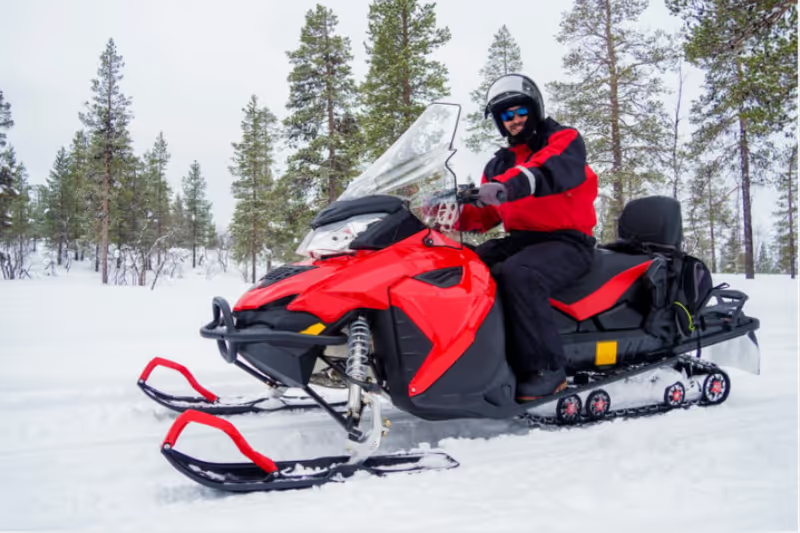
Snowmobiling and winter off-road vehicle (ORV) use are deeply woven into cold-weather life across rural areas, resort towns, and trail systems throughout Michigan. When snow falls and lakes freeze, riders take to trails, fields, and frozen waterways for recreation, transportation, and sport. These outings are often viewed as routine winter activities—until something goes wrong.
Seasonal conditions make winter ORV riding uniquely dangerous. Ice, snowdrifts, low light, and sudden weather changes reduce visibility and traction. Trails may be poorly marked or altered by storms, and frozen lakes can conceal pressure cracks or thin ice. Combined with high speeds and limited reaction time, even experienced riders face serious risks.
What starts as a recreational ride can become a medical and financial emergency in seconds. Severe injuries, emergency transport, long recoveries, and insurance confusion often follow winter ORV crashes. Determining who is at fault—and which insurance policies apply—can be far more complicated than most riders expect.
Snowmobiles and Winter ORVs: What Falls Under the Law
What Qualifies as a Snowmobile or Winter ORV
In general terms:
- Snowmobiles are motor-driven vehicles designed for travel over snow and ice
- Winter ORVs may include ATVs or side-by-side vehicles used in snowy conditions, depending on configuration and use
These vehicles are treated differently under the law than standard passenger vehicles.
Differences Between Snowmobiles, ATVs, and Side-by-Sides
Key distinctions include:
- Snowmobiles are purpose-built for snow and ice
- ATVs are often seasonal but sometimes used in winter conditions
- Side-by-side vehicles may blur the line between recreational and utility use
Each classification carries different insurance and liability implications.
Where Winter ORVs Are Commonly Operated
Snowmobiles and winter ORVs are frequently used on:
- Designated trails, maintained by clubs or government entities
- Private property, including farmland and wooded acreage
- Frozen lakes and fields, where hazards are often hidden
The location of the accident plays a major role in determining who may be responsible and which policies apply.
Determining Fault in Snowmobile and ORV Injury Cases
Operator Negligence vs. Unavoidable Accidents
Liability may arise when a rider:
- Operates at unsafe speeds
- Fails to maintain proper lookout
- Ignores trail markings or warnings
- Operates under the influence of alcohol or drugs
Not every winter crash is unavoidable simply because conditions were icy or snowy.
Shared Fault Among Multiple Riders
Many accidents involve:
- Collisions between snowmobiles
- Group rides where spacing and speed differ
- Poor communication among riders
In these cases, fault may be shared, and multiple insurance policies may come into play.
Liability of Trail Operators and Property Owners
Responsibility may extend beyond riders when:
- Trails are improperly maintained or marked
- Known hazards are not addressed
- Property owners permit riding despite unsafe conditions
Landowner liability and recreational use statutes often become contested issues.
Safety Violations and Reckless Operation
Violations such as excessive speed, riding outside designated areas, or carrying passengers improperly can significantly impact fault determinations. Insurers frequently rely on these factors to deny or reduce claims, even when another party’s negligence played a major role.
Homeowner’s Insurance
When Homeowner’s Insurance May Apply
Homeowner’s insurance may provide coverage when:
- A snowmobile accident occurs on private property
- A property owner’s actions or conditions contributed to the injury
- The claim involves liability, not damage to the snowmobile itself
This coverage is typically tied to the homeowner’s responsibility for conditions on their land.
Injuries on Private Property
Claims often arise from:
- Unsafe terrain or hidden hazards
- Unmarked obstacles such as fences, cables, or debris
- Permission to ride despite known dangerous conditions
When guests are injured, property owners may face liability under their homeowner’s policy.
Liability Protection for Property Owners
Homeowner’s insurance generally provides:
- Liability coverage for bodily injury claims
- Defense costs if a lawsuit is filed
However, coverage depends on policy language and exclusions.
Common Exclusions and Limitations
Insurers often argue that coverage is excluded due to:
- Recreational vehicle exclusions
- Business or commercial use of property
- Organized events or trail use
- Alcohol-related conduct
These exclusions are often broadly interpreted and aggressively enforced.
Why Coverage Disputes Are Common
Insurers frequently deny claims by asserting that snowmobiling is an assumed recreational risk or that the policy was never intended to cover motorized vehicle injuries. Determining whether homeowner’s coverage applies often requires close legal analysis.
Auto Insurance UM/UIM Coverage
What UM/UIM Coverage Is
UM/UIM coverage protects injured individuals when:
- The at-fault party has no insurance
- The at-fault party’s coverage is insufficient
- The responsible party cannot be identified
This coverage is optional and defined by policy language.
When UM/UIM May Apply to Snowmobile Accidents
UM/UIM coverage may be triggered when:
- A snowmobile is struck by a motor vehicle
- A collision occurs on or near a roadway
- A hit-and-run vehicle forces a snowmobile crash
In some cases, the snowmobile rider may be considered a “pedestrian” or covered person under the policy.
Uninsured Riders and Hit-and-Run Situations
Snowmobiles are often uninsured. When an uninsured rider causes a serious crash, UM/UIM coverage may be the only viable recovery path for an injured victim.
The Importance of Policy Language
UM/UIM claims often hinge on:
- How “motor vehicle” is defined
- Whether off-road incidents are excluded
- Definitions of insured persons and covered locations
Small wording differences can determine whether coverage exists.
Coordinating UM/UIM With Other Coverage
UM/UIM benefits may need to be coordinated with:
- Homeowner’s insurance
- Health insurance
- Rental or commercial policies
Insurers often dispute priority and attempt to reduce payouts through offset arguments.
Rental and Commercial Policies
Rental Agreements and Insurance Provisions
Rental contracts typically include:
- Limited liability coverage
- Broad waiver and release language
- Restrictions on where and how snowmobiles may be used
These agreements are often signed quickly, without full explanation.
Coverage Provided by Rental Companies
Rental insurance may:
- Cover damage to the snowmobile
- Provide minimal liability limits
- Exclude certain injuries or conduct
In many cases, coverage is far less comprehensive than riders assume.
Liability Waivers and Their Limitations
While waivers can limit claims, they are not absolute. Courts may scrutinize:
- Whether the waiver was clear and enforceable
- Whether gross negligence or unsafe practices were involved
- Whether the injured person truly assumed the risk
Waivers do not protect against every type of misconduct.
Commercial Operators and Guided Tours
Outfitters and tour operators owe heightened duties when:
- Leading group rides
- Providing equipment and instructions
- Selecting routes and conditions
Failures in supervision, training, or equipment maintenance may give rise to liability.
When Waivers May Be Challenged
Waivers may be challenged when:
- Safety rules were ignored
- Equipment was defective or poorly maintained
- Riders were encouraged to exceed safe limits
In these cases, commercial insurance policies may provide significant coverage.
Evidence That Matters in Snowmobile and Winter ORV Injury Claims
Accident Scene Documentation
Critical evidence includes:
- Photographs and videos of the crash scene
- Snow conditions, ice, and visibility
- Damage to vehicles and surrounding terrain
Because snow melts and trails change quickly, early documentation is vital.
Trail Conditions and Signage
Claims may depend on:
- Whether trails were properly marked
- Warning signs for hazards or crossings
- Maintenance or grooming records
Poorly maintained trails can shift liability beyond individual riders.
Vehicle Inspection and Maintenance Records
Evidence may include:
- Mechanical condition of the snowmobile or ORV
- Throttle, brake, or steering issues
- Maintenance logs or rental service records
Mechanical failures are often overlooked but can be decisive.
Helmet and Safety Equipment Evidence
Helmet use, condition, and fit can affect:
- Injury severity
- Fault arguments
- Insurance defenses
Preserving damaged helmets and gear is often critical.
Witness Statements and Incident Reports
Statements from:
- Other riders
- Bystanders
- Rental staff or guides
can clarify how the accident occurred and who was responsible.
Medical Documentation
Strong claims require detailed medical records documenting:
- Emergency treatment
- Diagnostic imaging
- Long-term prognosis
Medical evidence connects the accident to the full scope of damages.
Protecting Your Rights After a Winter ORV Injury
Snowmobile and winter ORV accidents are often dismissed as assumed risks of recreation, but serious injuries frequently tell a different story. Many crashes involve negligence, unsafe trail conditions, defective equipment, or insurance companies that are quick to deny responsibility. When injuries are severe, the financial consequences can be just as overwhelming as the physical ones.
Contact Liss, Shapero & Mitnick Today
If you or a loved one has been injured in a snowmobile or winter ORV accident, do not assume insurance coverage is unavailable or that liability is unclear. These cases often involve multiple policies and aggressive insurance defenses. Let our team investigate every potential coverage source and pursue the full compensation you deserve.
Liss, Shapero & Mitnick
2695 Coolidge Highway
Berkley, MI 48072
📞 Phone: 248-584-1300
📞 Toll Free: 1-855-LISS-LAW (1-855-547-7529)
📠 Fax: 248-584-1323