.svg)
.avif)



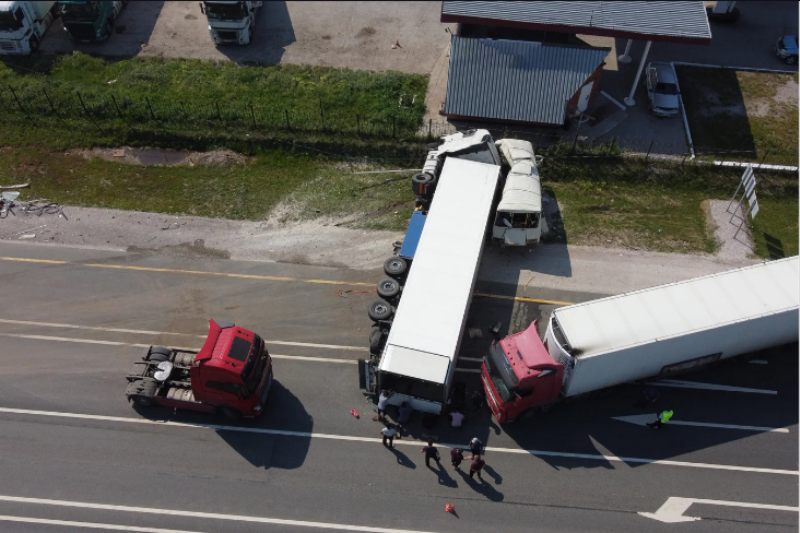
As spring arrives in Michigan, road conditions improve—but the risks associated with commercial truck traffic often increase. Construction zones expand, shipping activity rises, and more commercial vehicles fill highways and local roads. With this seasonal shift comes a heightened risk of serious truck accidents, many of which involve complex factors beyond a typical motor vehicle crash.
Truck accidents are rarely simple. They often involve multiple layers of responsibility, including drivers, trucking companies, maintenance providers, and equipment manufacturers. When something goes wrong—whether it’s driver fatigue, mechanical failure, or improper maintenance—the consequences can be severe, especially given the size and weight of commercial vehicles.
At Liss, Shapero & Mitnick, we understand that uncovering the truth in truck accident cases requires a detailed and strategic approach. From analyzing electronic data to reviewing maintenance histories, every piece of evidence plays a critical role in determining what happened and who is responsible.
Key Evidence in Truck Accident Cases
Electronic Data Sources
Modern commercial trucks generate and store a significant amount of digital information. In many cases, this electronic data provides the most accurate and objective account of how a crash occurred.
Key considerations include:
- Importance of digital evidence in modern trucking cases
Electronic records can reveal driver behavior, vehicle performance, and compliance with safety regulations in ways that traditional evidence cannot. - Time-sensitive nature of data preservation
Critical data may be overwritten, deleted, or lost if not preserved quickly. Acting early is essential to ensure that valuable information remains available for investigation.
ELD Logs
ELD logs (Electronic Logging Devices) are required in most commercial trucks and are used to track a driver’s hours of service. These logs play a central role in determining whether a driver was operating within legal limits.
ELD data can help identify:
- What ELD logs are and how they track driver activity
These devices automatically record driving time, rest periods, and on-duty status. - Hours-of-service compliance and violations
Violations may indicate that a driver exceeded legal driving limits or failed to take required breaks. - Identifying fatigue and overdriving
Patterns within the logs can reveal whether fatigue may have contributed to the crash.
ECM Black Box Data
In addition to ELD logs, many commercial trucks are equipped with an ECM black box (Engine Control Module), which records detailed information about the vehicle’s operation.
This data may include:
- Speed, braking, throttle, and crash data
The ECM captures real-time performance metrics leading up to and during a collision. - How this data reconstructs the moments before impact
Investigators can use this information to determine whether the driver attempted to brake, how fast the vehicle was traveling, and how the crash unfolded. - Objective insight into driver and vehicle behavior
Unlike witness testimony, ECM data provides a factual, data-driven account of events.
Maintenance Records and Their Role in Liability
Required Maintenance Documentation
In commercial trucking, maintenance is not optional—it is a legal and safety requirement. Trucking companies are expected to keep detailed records that reflect the condition and upkeep of their vehicles.
Key documentation typically includes:
- Inspection reports
Regularly scheduled inspections to identify potential safety issues before they become dangerous. - Repair histories
Records of any mechanical work performed, including parts replaced and issues addressed. - Routine service logs
Documentation of ongoing maintenance such as brake checks, tire rotations, and system evaluations.
Common Maintenance Failures
When maintenance is neglected or improperly performed, the risk of serious accidents increases significantly. In many cases, these failures are preventable and point to systemic issues within a trucking operation.
Common problems include:
- Worn or defective components
Tires, brakes, and suspension systems that are not replaced in time can fail under normal operating conditions. - Failure to perform required inspections
Skipping or delaying inspections allows hazards to go unnoticed. - Ignoring known mechanical issues
Continuing to operate a vehicle despite identified problems can lead to catastrophic outcomes.
Why Maintenance Records Matter
Maintenance records play a critical role in truck accident cases by helping establish whether safety standards were followed.
They can:
- Establish whether a trucking company followed safety standards
Consistent and complete records may show compliance—or reveal violations. - Reveal patterns of neglect or oversight
Repeated issues or gaps in documentation may indicate systemic problems. - Link mechanical failure to the cause of the crash
When equipment fails, maintenance records can help determine whether the failure was preventable.
Wheel-Off Accidents: Warning Signs and Causes
What Is a Wheel-Off Accident
A wheel-off accident occurs when a wheel or tire assembly detaches from a moving truck and becomes a dangerous projectile. These incidents are particularly hazardous due to the speed and force involved.
Detached wheels can:
- Strike other vehicles
- Cause drivers to lose control while attempting to avoid debris
- Lead to multi-vehicle collisions
Common Causes of Wheel-Off Incidents
Wheel-off accidents are rarely random. They are often the result of maintenance failures or improper servicing.
Frequent causes include:
- Improper installation of wheels or lug nuts
Incorrect tightening or installation can lead to gradual loosening over time. - Lack of torque checks
Failing to verify proper torque after installation increases the risk of detachment. - Corrosion or component failure
Rusted or weakened parts can compromise the integrity of the wheel assembly.
Red Flags in Wheel-Off Cases
Certain warning signs may indicate negligence or improper maintenance in a wheel-off case. Identifying these red flags is critical in building a strong claim.
Key indicators include:
- Missing or incomplete maintenance records
Gaps in documentation may suggest that required inspections or repairs were not performed. - Recent service or repair work before the incident
Improper work performed shortly before the crash may point to liability. - Prior complaints or issues with the vehicle
A history of similar problems can demonstrate that risks were known but not addressed.
The Importance of a Spoliation Letter
What Is a Spoliation Letter
In truck accident cases, timing is everything—especially when it comes to preserving evidence. A spoliation letter is a formal legal request sent to trucking companies and other involved parties, instructing them to preserve all relevant evidence related to a crash.
This letter is typically directed to:
- The trucking company
- The driver
- Maintenance providers
- Any third parties involved in the operation or servicing of the vehicle
Why It Is Critical
A spoliation letter plays a vital role in protecting the integrity of a case. Without it, key evidence may be overwritten or discarded—sometimes within days of the accident.
This includes:
- Preventing destruction or alteration of key evidence
- Preserving digital data that may automatically reset or delete
- Protecting access to ELD logs, ECM black box data, and maintenance records
When It Should Be Sent
Timing is crucial. A spoliation letter should be sent:
- Immediately after a crash
Early action ensures that no critical evidence is lost. - Before data is overwritten or lost
Many electronic systems automatically overwrite data after a certain period, making delays especially risky.
What to Do After a Truck Accident
Immediate Steps
The moments following a truck accident are often chaotic, but the actions you take can have a lasting impact on both your health and your legal rights. Prioritizing safety and proper documentation is essential.
- Seek medical attention
Even if injuries are not immediately obvious, it is critical to be evaluated by a medical professional. Serious injuries—such as internal trauma or head injuries—may not present symptoms right away. - Report the accident
Contact law enforcement and ensure an official report is created. This documentation provides an important record of the crash and may include initial findings and observations. - Follow emergency instructions
Cooperate with first responders and follow all guidance to ensure safety at the scene.
Protecting Your Claim
After immediate concerns are addressed, preserving evidence and avoiding missteps becomes crucial—especially in complex truck accident cases.
- Document the scene and injuries
Take photos or videos of vehicle damage, road conditions, and any visible injuries. This evidence can be invaluable later. - Avoid speaking with insurance adjusters without guidance
Insurance companies may attempt to obtain statements that could limit your claim. It is important to proceed carefully. - Contact a Michigan truck accident lawyer
An experienced attorney can act quickly to preserve evidence, including ELD logs, ECM black box data, and maintenance records, while protecting your rights from the outset.
Uncovering the Truth in Truck Accident Cases
Truck accidents are among the most complex and devastating cases on Michigan roads. From driver behavior to mechanical failures, multiple factors often contribute to these incidents. Identifying those factors requires a detailed investigation supported by critical evidence such as ELD logs, ECM black box data, and maintenance records.
At Liss, Shapero & Mitnick, we are committed to guiding our clients through these complex cases with clarity, compassion, and a team-based approach that ensures no detail is overlooked. Every case is handled with the care and attention it deserves.
Speak With Our Team Today
If you or a loved one has been injured in a truck accident, don’t wait to protect your rights. An experienced Michigan truck accident lawyer can help you secure critical evidence, including ELD logs and ECM black box data, and pursue the compensation you deserve.
Liss, Shapero & Mitnick
2695 Coolidge Highway
Berkley, MI 48072
📞 Phone: 248-584-1300
📞 Toll Free: 1-855-LISS-LAW (1-855-547-7529)
📠 Fax: 248-584-1323