.svg)

.avif)

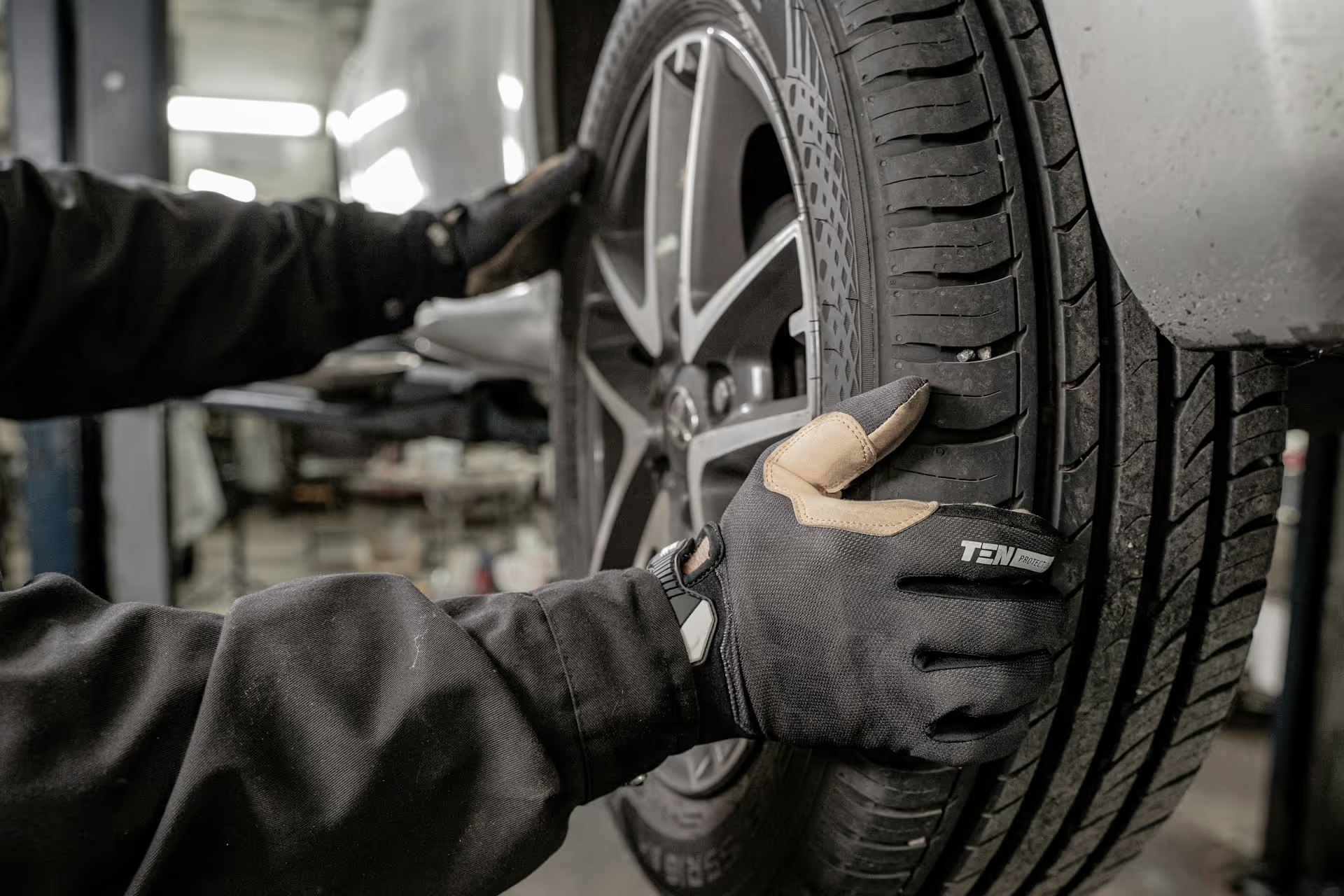

Wheel-off crashes are among the most sudden and catastrophic incidents on Michigan roads. When a tire detaches from a moving vehicle, it can become a deadly projectile—striking oncoming cars, triggering multi-vehicle collisions, or causing rollovers. These events often lead to severe injuries, extensive property damage, and in the worst cases, tragic fatalities. What makes these crashes even more devastating is the fact that they are almost always preventable.
Wheel separations occur not only in passenger vehicles but also in commercial trucks, delivery vans, and fleet vehicles of all sizes. The sheer force and weight of a detached tire—especially from a semi-truck—can turn an ordinary commute into a life-altering disaster.
Most wheel-off crashes can be traced back to mechanical failure, improper maintenance, defective parts, or negligent repair work. A mechanic might have overlooked worn-out bearings. A manufacturer could have shipped a defective wheel assembly. Regardless of the cause, determining who is responsible requires immediate preservation of evidence—before the vehicle is repaired, the tire is discarded, or critical components are altered.
At Liss, Shapero & Mitnick, we approach wheel-off cases with the same commitment we bring to every matter: integrity, clarity, and a client-first mindset. Our team has extensive experience identifying mechanical failures, analyzing service records, and holding negligent companies accountable. When evidence is preserved early, the truth becomes clear—and justice becomes possible.
Why Evidence Preservation Is Critical in Wheel-Off Cases
Components Can Be Quickly Discarded or Repaired
- Tow companies may remove and discard loose tires.
- Wheels, bolts, and other components may be thrown away or recycled.
- Insurers or repair shops may unintentionally destroy critical evidence during cleanup or repairs.
If these parts vanish, proving the mechanical failure becomes significantly harder.
Multiple Parties May Be Involved
Wheel-off crashes often involve a network of potentially responsible parties, such as:
- Mechanics who last worked on the wheel assembly
- Dealerships that performed warranty repairs
- Tire shops responsible for installation or rotation
- Manufacturers of defective components
- Trucking companies that ignored maintenance schedules
Each party may deny responsibility, making early evidence collection essential.
Mechanical Evidence Deteriorates Over Time
Even when components are preserved, they may degrade:
- Weather exposure can alter fracture points
- Rust formation can obscure signs of mechanical stress
- Contamination may make metallurgical analysis more difficult
The sooner the parts are secured, the more accurate the investigation.
Key Evidence Needed in a Wheel-Off Investigation
The Detached Tire and Wheel Assembly
The most crucial evidence is the wheel assembly itself. This includes:
- Lug nuts, bolts, studs, bearings, and hubs
- Thread condition, showing whether parts were stripped, cross-threaded, or improperly torqued
- Break patterns on metal components indicating mechanical fatigue or improper installation
A trained mechanical expert can assess whether the failure resulted from negligence, a defect, or improper repair.
Vehicle Examination
A detailed inspection of the vehicle can reveal what caused the wheel to detach:
- Axle and suspension condition
- Brake components that may have been incorrectly reinstalled
- Torque patterns and wheel-mounting surfaces showing improper tightening or installation errors
This examination should occur before any repairs or parts removal.
Maintenance and Repair Records
Paperwork often provides the clearest picture of who last worked on the wheel:
- Service invoices showing recent repairs or tire rotations
- Technician notes documenting concerns or recommendations
- Work orders and part replacement logs confirming what was performed—and what was overlooked
These records help establish the timeline of responsibility.
Manufacturing Documentation
If a part failed despite proper installation, manufacturer-related evidence may be critical:
- Recalls known to affect the wheel assembly, bearings, or suspension
- Technical service bulletins (TSBs) issued to dealerships
- Product defect reports related to the wheel or its components
Manufacturers may be liable when a design or manufacturing flaw contributed to the failure.
Crash Scene Evidence
The scene often provides vital clues about how the wheel separated and where it traveled:
- Skid marks or scuff marks indicating loss of control
- Tire path before impact, which can show the moment of separation
- Debris field helping reconstruct the crash sequence
- Roadway gouges created by the axle or other components dragging
Photographs and scene measurements help strengthen reconstruction analyses.
Who May Be Liable in a Wheel-Off Crash?
Auto Repair Shops & Mechanics
Liability may arise from:
- Improper torqueing of lug nuts
- Poor workmanship during brake or suspension service
- Failure to identify worn or dangerous components
Even a single overlooked detail can cause a wheel to separate.
Dealerships & Service Centers
Dealerships may be responsible when:
- OEM parts are defective or improperly installed
- Service technicians fail to follow manufacturer specifications
Tire Retailers
Tire shops can be liable when they:
- Install incompatible or defective wheels
- Fail to properly seat or torque wheel components
Vehicle & Parts Manufacturers
Manufacturers may be at fault due to:
- Design defects
- Manufacturing flaws
- Inadequate warnings or testing protocols
Product liability claims often apply in these cases.
Trucking & Fleet Companies
Commercial operators are held to high standards. They may be liable for:
- Poor maintenance routines
- Ignoring service intervals
- Allowing vehicles with known issues to remain in operation
Wheel-off incidents in commercial fleets frequently involve systemic negligence, not isolated mistakes.
How Liss, Shapero & Mitnick Investigate Wheel-Off Crashes
Mechanical Expert Analysis
Mechanical failure lies at the heart of most wheel-off crashes, which is why expert analysis is essential. Our team works with highly qualified engineers to evaluate failed components, including:
- Engineering assessments to determine how and why key parts failed
- Metallurgical analysis of bolts, studs, and fractured components to identify stress patterns, improper installation, or material defects
These evaluations often reveal critical information that repair shops, manufacturers, or fleet operators may attempt to deny.
Comprehensive Document Review
Paperwork often tells the story of what went wrong long before the wheel detached. We obtain and review:
- Service records documenting recent repairs, tire rotations, or brake work
- Technician notes that may reference earlier concerns or overlooked issues
- Warranty and recall information that may expose known defects or manufacturer warnings
This documentation helps establish whether the failure stemmed from human error, improper repair, or defective components.
Accident Reconstruction
Accident reconstruction allows us to understand the crash from start to finish. Our team:
- Maps vehicle movements leading up to the crash
- Determines where and when the wheel separated
- Assesses contributing factors, including speed, road conditions, and mechanical behavior
Reconstruction helps build a clear, fact-based picture of how the incident occurred.
Identifying All Responsible Parties
Wheel-off crashes often involve multiple negligent actors. We work to:
- Pursue each liable entity, whether it’s a repair shop, dealership, manufacturer, or commercial fleet
- Coordinate claims across insurers and corporate entities
- Ensure accountability at every level
This multi-party strategy is crucial for securing full compensation when several companies share blame.
Client-First Communication & Support
Throughout the process, clients receive personalized attention and compassionate guidance. We provide:
- Clear explanations at every stage of the investigation
- Regular updates, ensuring clients never wonder where their case stands
- A team-based legal strategy, with multiple attorneys lending their expertise
At Liss, Shapero & Mitnick, clients are treated like family—with respect, transparency, and unwavering support.
Steps to Take After a Wheel-Off Crash
Seek Medical Care Immediately
Even if injuries seem minor at first, prompt medical care creates a clear record linking your injuries to the crash.
Photograph the Vehicle, Wheel, and Scene
Take pictures of:
- The separated wheel
- The vehicle’s damage
- The debris field
- Roadway gouges, skid marks, or mechanical parts on the ground
These images may become essential evidence.
Do Not Allow Repairs Until an Attorney Intervenes
Repairs can destroy mechanical evidence needed to prove negligence. Always consult an attorney before authorizing any work.
Save All Tow, Shop, and Insurance Documentation
Keep:
- Tow receipts
- Repair estimates
- Insurance correspondence
- Any notes received from shops or adjusters
Every document may help reconstruct what happened.
Contact an Experienced Attorney Quickly
Wheel-off cases require immediate evidence preservation and expert involvement. Early legal help ensures:
- Critical parts are secured
- Responsible parties are placed on notice
- Evidence is not lost or destroyed
The sooner you involve legal counsel, the stronger your case will be.
Protect Your Rights After a Wheel-Off Crash
Wheel-off crashes are sudden, violent, and deeply traumatic—but they are also highly preventable. When a tire detaches, the underlying cause often points to negligence by a repair shop, dealership, manufacturer, or fleet operator. Because mechanical components can be repaired, discarded, or altered within hours, evidence disappears fast, making early legal intervention essential.
At Liss, Shapero & Mitnick, we know how critical it is to act immediately. Our team moves quickly to secure the wheel assembly, preserve mechanical components, obtain service records, and begin a thorough investigation. We bring engineering experts, accident reconstruction specialists, and decades of legal experience together to build the strongest case possible. Your safety, your recovery, and your future matter—and we fight for each client with integrity, dedication, and the full strength of our team-centered approach.
Contact Liss, Shapero & Mitnick
Address: 2695 Coolidge Highway, Berkley, MI 48072
Phone: 248-584-1300
Toll-Free: 1-855-LISS-LAW (1-855-547-7529)
Fax: 248-584-1323
Website: lsmlawyers.com