.svg)
.avif)



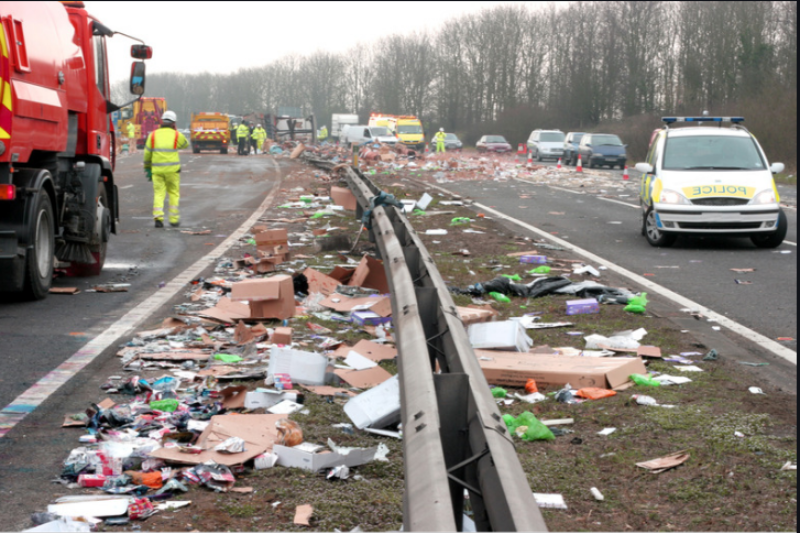
Every summer, Metro Detroit's highways get busier and more dangerous. Construction crews close lanes on I-75, I-94, and I-696 during the exact months when freight traffic peaks. More trucks are on the road, moving faster to meet delivery windows, often in tighter lanes with less room for error.
When a truck crash happens on one of these corridors, the case rarely works like a typical car accident claim. There are more parties involved, more records to track down, and a much shorter window to preserve the evidence that proves what happened. As a Michigan truck accident lawyer, our team has seen how quickly that evidence can disappear if no one acts fast.
Why Summer Increases Truck Traffic on Metro Detroit Highways
Michigan's construction season runs roughly from April through November, and MDOT tends to schedule major work on I-75, I-94, and I-696 during these months. That means more lane closures, more merging, and more stop-and-go traffic in areas where trucks are already difficult to maneuver. Add in seasonal tourism traffic heading north and a steady rise in retail freight volume, and the risk compounds quickly.
A few seasonal factors make summer particularly risky for truck crashes in our area:
- Construction zones narrow lanes and reduce visibility, especially at merge points on I-75 and I-696.
- Tourist traffic increases unfamiliar drivers sharing the road with commercial trucks unfamiliar with the area.
- Retail and freight surges tied to summer shipping cycles push drivers to move faster and take fewer breaks.
- Extended daylight hours can lead to longer shifts and more fatigue by the time drivers hit Metro Detroit corridors.
Commercial Carriers Are a Different Kind of Defendant
In a typical car accident, you're usually dealing with one driver and one insurance policy. A trucking case almost never works that way. The driver behind the wheel is often just one piece of a larger picture that includes the trucking company, the carrier, and sometimes even the business that loaded the cargo.
Commercial trucking companies operate under federal regulations from the Federal Motor Carrier Safety Administration (FMCSA) that don't apply to everyday drivers. These rules cover everything from vehicle maintenance to how many hours a driver can legally be on the road. When a company cuts corners on these requirements, it can create liability that goes well beyond the driver's own actions.
There's also an important distinction between owner-operators, who run their own trucks independently, and drivers employed by larger fleets. Fleet-owned trucks often come with more corporate oversight, more paperwork, and more layers of insurance. Owner-operator cases can be simpler in some ways, but they often involve less coverage available to compensate an injured victim.
Because more parties are potentially responsible, trucking companies typically carry much larger insurance policies than passenger vehicles. That also means their insurers are often more aggressive about limiting payouts and building an early defense.
Maintenance Records: A Paper Trail Regular Car Accidents Don't Have
Commercial trucks are required to follow strict inspection and maintenance schedules that don't apply to personal vehicles. These requirements exist because a poorly maintained 80,000-pound truck poses a much greater risk than a poorly maintained sedan. When maintenance records show gaps or ignored problems, they can reveal a pattern of neglect rather than a single bad moment.
Maintenance records commonly show:
- Inspection logs documenting required pre-trip and post-trip vehicle checks.
- Repair history showing whether known issues, like worn brakes or tire damage, were addressed or ignored.
- DOT compliance reports tracking whether the vehicle met federal safety standards at the time of the crash.
- Recurring problems that suggest a truck should have been taken out of service before the accident occurred.
Federal regulations generally require annual inspections at minimum, along with more frequent pre-trip and post-trip checks performed by the driver. Many carriers also keep internal maintenance schedules that go beyond the federal minimum, especially for older vehicles or high-mileage fleets. When those internal schedules are ignored or falsified, it often shows up clearly once the records are compared against the truck's actual condition after a crash. Requesting these records early, before they can be reorganized or lost, is one of the first steps in building a strong truck accident claim.
Black Box and ECM Data: The Digital Witness
Most commercial trucks are equipped with an Electronic Control Module, commonly called an ECM. Think of it as similar to an airplane's black box. It quietly records data about how the truck was operating in the moments before, during, and after a crash.
ECM data can capture the truck's speed, braking patterns, sudden deceleration events, and engine performance at the exact time of impact. This kind of data is often far more reliable than a driver's account of what happened, since memory can be shaped by shock, stress, or self-interest after a serious crash.
Why this matters: ECM data is often stored on a rolling cycle and can be automatically overwritten within days or weeks. Once it's gone, it's usually gone for good, along with one of the most objective pieces of evidence available in a truck crash case.
When ECM data is preserved successfully, it can help answer some of the most important questions in a case. Was the truck traveling above the speed limit when the crash occurred? Did the driver brake in time, or was there no braking response at all? Did the engine show signs of mechanical strain before the collision happened?
Driver Logs and Hours-of-Service Violations
Federal hours-of-service rules limit how long a commercial driver can operate a vehicle before taking mandatory rest. These rules exist because driver fatigue is one of the leading contributing factors in serious truck crashes nationwide. Most trucks now use Electronic Logging Devices, or ELDs, to track driving time and enforce these required rest periods automatically.
Unfortunately, falsified or incomplete logs remain a documented issue across the trucking industry. Some drivers face pressure to meet tight delivery schedules, even when it means underreporting hours or skipping required breaks.
What hours-of-service violations can indicate: a pattern of overwork, pressure from dispatch to ignore mandatory rest periods, or a driver operating well past the point of safe alertness. Any of these can point to fatigue as a contributing cause of the crash.
How These Cases Differ From a Standard Car Accident Claim
Every layer added to a truck accident case adds complexity that a typical motor vehicle accident claim simply doesn't have. Understanding these differences helps explain why trucking cases require a different approach from day one.
- More parties: the driver, the carrier, and sometimes a third-party maintenance contractor or cargo loader may all share responsibility.
- More insurance layers: commercial policies are larger and often involve multiple layers of coverage that need to be identified and pursued.
- More regulatory standards: federal trucking regulations create additional legal theories that don't exist in ordinary car accident cases.
- Shorter evidence windows: critical digital and paper records can disappear far faster than in a standard collision.
Because of these added layers, settlement negotiations in trucking cases often move more slowly and involve more back-and-forth than a typical claim. Multiple insurers and legal teams may need to review the same evidence before any resolution is possible. The injuries involved can also be more severe, given the size and weight difference between commercial trucks and passenger vehicles.
The First Few Days Matter Most
Truck crashes on I-75, I-94, and I-696 involve more than two vehicles and an insurance claim. They involve federal regulations, mechanical records, digital data, and driver logs that can shift responsibility in ways a standard accident case never would. The evidence that proves what really happened often has a short shelf life, which makes timing one of the most important factors in the entire case.
Our team has spent decades handling serious injury cases across Berkley and Metro Detroit, and we understand how commercial carriers and their insurers operate. We also understand that behind every case file is a person trying to recover, both physically and financially, from something they didn't cause. That combination of experience and genuine care for our clients is what has shaped our approach for over 50 years.
Talk to Someone Who Knows These Roads
If you or someone you love was hurt in a truck crash on I-75, I-94, I-696, or anywhere else in Metro Detroit, we want to hear what happened. Tony often calls new clients personally, so you're speaking with someone who actually knows your case, not just a call center. Your consultation is free, with no pressure and no obligation.
Toll-Free: 1-855-LISS-LAW (1-855-547-7529)
2695 Coolidge Highway, Berkley, MI 48072