.svg)
.avif)


Michigan winters bring more than cold temperatures—they bring dangerous driving conditions that can turn routine commutes into life-threatening situations. Snow-covered roads, freezing rain, black ice, and sudden whiteout conditions are a reality for drivers across the state, particularly during peak winter storms.
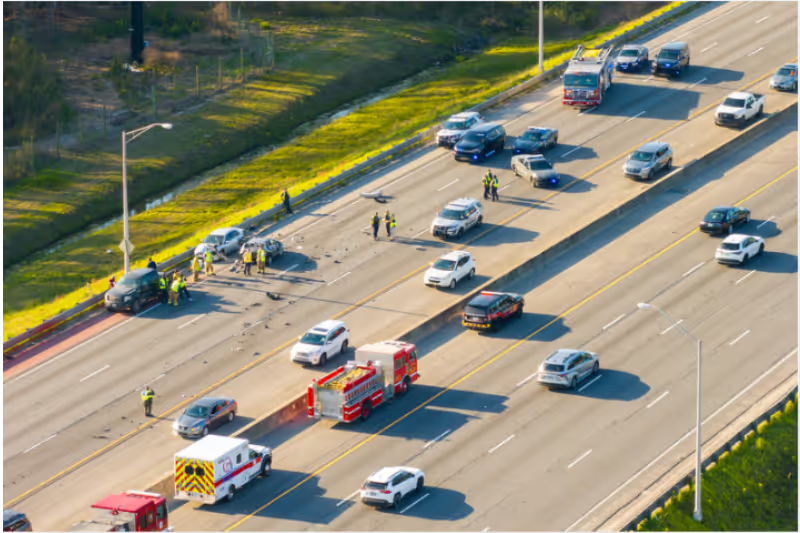
A chain-reaction crash, also known as a multi-vehicle pileup, occurs when one collision triggers a series of subsequent crashes involving multiple vehicles. Major highways like I-75 and I-94 are especially vulnerable during winter weather. These corridors carry heavy daily traffic, including commuters, commercial trucks, and long-distance travelers. When winter conditions strike, even a single moment of reduced visibility or loss of control can trigger a chain reaction involving dozens of vehicles.
Chain-reaction crashes unfold suddenly and chaotically. Drivers may have only seconds—or less—to react as vehicles slide, spin, or come to abrupt stops. The result is often a violent pileup that causes serious injuries, fatalities, prolonged highway closures, and widespread disruption for families and communities throughout Michigan.
How Fault Is Determined in Chain-Reaction Crashes
The Basic Rule: Each Driver’s Conduct Matters
Under Michigan law, every driver has a duty to operate their vehicle safely given the existing road and weather conditions. Winter weather does not eliminate this responsibility—it heightens it.
Key factors considered include:
- Whether the driver adjusted speed for snow, ice, or reduced visibility
- Whether a safe following distance was maintained
- Whether the driver was paying attention and driving defensively
Importantly, “bad weather” alone does not excuse negligence. Drivers are expected to slow down, increase following distance, and remain alert. Failing to do so can result in partial or full fault, even during severe winter conditions.
Rear-End Collisions and Presumptions of Fault
In many crashes, rear-end collisions carry a presumption that the rear driver is at fault. This is based on the expectation that drivers leave enough space to stop safely.
However, winter conditions can complicate this analysis. Investigators may consider:
- Sudden and unexpected stops in whiteout conditions
- Loss of traction due to black ice
- Whether the lead vehicle stopped abruptly without warning
In some cases, a lead driver may share responsibility if they:
- Slammed on the brakes unnecessarily
- Lost control and caused a sudden obstruction
- Failed to use hazard lights or warning signals
Multi-Vehicle Pileups and Shared Liability
In large pileups, fault is often split among multiple drivers rather than assigned to a single person. These cases require careful analysis of how the crash unfolded.
Factors that influence shared liability include:
- The timing and sequence of impacts
- Which driver caused the initial collision
- Whether subsequent drivers had a reasonable opportunity to avoid impact
Comparative Fault Under Michigan Law
Michigan’s Comparative Fault System
Under comparative fault, each party involved in a crash may be assigned a percentage of responsibility. Compensation is then adjusted based on that percentage.
For example:
- A driver found 10% at fault may still recover damages, reduced by 10%
- A driver found more than 50% at fault may be barred from recovering certain damages
How Fault Percentages Impact Compensation
Fault percentages directly affect:
- Pain and suffering claims
- Third-party liability compensation
- Settlement negotiations with insurers
Common Defense Tactics to Shift Blame
Insurance companies often work aggressively to increase an injured driver’s share of fault in pileup cases. Common tactics include:
- Claiming the driver was going too fast for conditions
- Arguing distraction or inattention
- Blaming the injured driver for failing to stop in time
The Role of Commercial Vehicles in Winter Pileups
Federal and State Safety Regulations for Truck Drivers
Truck drivers are subject to strict federal and state safety regulations, including rules governing:
- Speed and operation in hazardous weather
- Hours of service and fatigue prevention
- Vehicle maintenance, brakes, and tires
- Use of hazard lights and warning devices
When Trucking Companies May Be Liable
Liability may extend beyond the driver to the trucking company itself. Companies may be responsible when they:
- Pressure drivers to meet delivery schedules despite unsafe conditions
- Fail to properly train drivers for winter operations
- Neglect vehicle maintenance or safety inspections
- Allow trucks to operate when conditions are clearly dangerous
Evidence Used to Determine Fault
Police Reports and Crash Reconstructions
Police reports provide an initial framework, including:
- Diagrams of vehicle positions
- Officer observations
- Citations issued at the scene
In serious pileups, accident reconstruction experts may be used to analyze speed, braking, impact sequence, and points of collision.
Dash Cam and Traffic Camera Footage
Video evidence can be especially powerful in winter pileup cases.
Common sources include:
- Dash cams from passenger vehicles or commercial trucks
- Highway traffic cameras
- Nearby business or government surveillance systems
These recordings can clarify timing, visibility, and driver reactions in real time.
Vehicle Damage Patterns
The location and severity of damage on each vehicle often reveal how the pileup unfolded.
Investigators look at:
- Front-end versus rear-end damage
- Side impacts or secondary collisions
- Crush patterns indicating speed and force
Damage analysis helps determine which impacts occurred first and which drivers contributed most significantly.
Witness Statements
Independent witnesses—particularly those not directly involved—can provide valuable perspective.
Witnesses may help establish:
- Weather and visibility conditions
- Sudden stops or loss of control
- Unsafe driving behavior before the crash
Early witness interviews are often more reliable than statements taken weeks or months later.
Weather and Road Condition Data
Objective data often plays a major role in winter cases.
This may include:
- Weather reports and radar data
- Road maintenance and plowing records
- Reports of black ice or whiteout conditions
This information helps determine what drivers should reasonably have anticipated and how they should have adjusted their driving behavior.
Insurance in Winter Pileup Cases
Michigan No-Fault Insurance Benefits
Michigan’s No-Fault system provides important benefits regardless of who caused the crash. These benefits are often the first source of financial support after a winter pileup.
Available No-Fault benefits may include:
- Medical expenses, including emergency care, hospital stays, surgeries, and follow-up treatment
- Wage loss benefits, typically covering a percentage of lost income if injuries prevent you from working
- Replacement services, such as household help you can no longer perform
- Attendant care benefits, when injuries require assistance with daily activities
Third-Party Claims for Serious Injuries
When injuries are serious, Michigan law allows injured drivers and passengers to pursue third-party claims against at-fault drivers.
These claims may seek compensation for:
- Pain and suffering damages
- Excess economic loss, including wage loss beyond No-Fault limits
- Injuries caused by multiple negligent drivers, which is common in chain-reaction crashes
What Injured Drivers and Passengers Should Do After a Winter Pileup
Seek Immediate Medical Attention
Even if injuries seem minor, seek medical care as soon as possible. Winter pileups frequently cause head, neck, and internal injuries that may not show symptoms right away.
Call Law Enforcement and Remain at the Scene if Safe
Always contact law enforcement so an official crash report is created. If it is safe to do so, remain at the scene until instructed otherwise. Police reports often play a key role in determining fault.
Document Vehicles, Road Conditions, and Weather
If conditions allow, gather evidence at the scene, including:
- Photos or videos of vehicle damage and positions
- Snow, ice, or slush on the roadway
- Visibility conditions, skid marks, and debris
Gather Witness Information
Independent witnesses can help clarify what happened in a chaotic pileup. Try to collect names and contact information from anyone who saw the crash unfold.
Avoid Giving Recorded Insurance Statements
Insurance companies often request recorded statements shortly after a crash. These statements may be used to assign blame or minimize injuries.
Before speaking with insurers:
- Avoid speculating about fault
- Do not downplay your injuries
- Consider speaking with a lawyer first
When Winter Roads Turn Deadly, Accountability Matters
Winter pileups are sudden, violent, and often life-changing. On highways like I-75 and I-94, a single moment of lost control can escalate into a chain-reaction crash involving dozens of vehicles, leaving drivers and passengers with serious injuries—or worse.
Fault in these cases is rarely simple. Multiple drivers, commercial vehicles, and hazardous road conditions often intersect, and insurance companies move quickly to dispute responsibility and limit their financial exposure. In the aftermath, injured victims are frequently left trying to navigate complex fault arguments while focusing on recovery.
At Liss, Shapero & Mitnick, winter pileup cases are handled with the care, experience, and attention they demand. LSM understands how Michigan’s comparative fault rules work, how insurers defend chain-reaction crashes, and what it takes to hold all responsible parties accountable. Clients are treated like family—and given the full strength of the firm’s legal team from day one.
Contact Liss, Shapero & Mitnick
Liss, Shapero & Mitnick2695 Coolidge Highway
Berkley, MI 48072
📞 Phone: 248-584-1300
📞 Toll-Free: 1-855-LISS-LAW (1-855-547-7529)
📠 Fax: 248-584-1323