.svg)
Common Bicycle Crashes and Determining Legal Liability
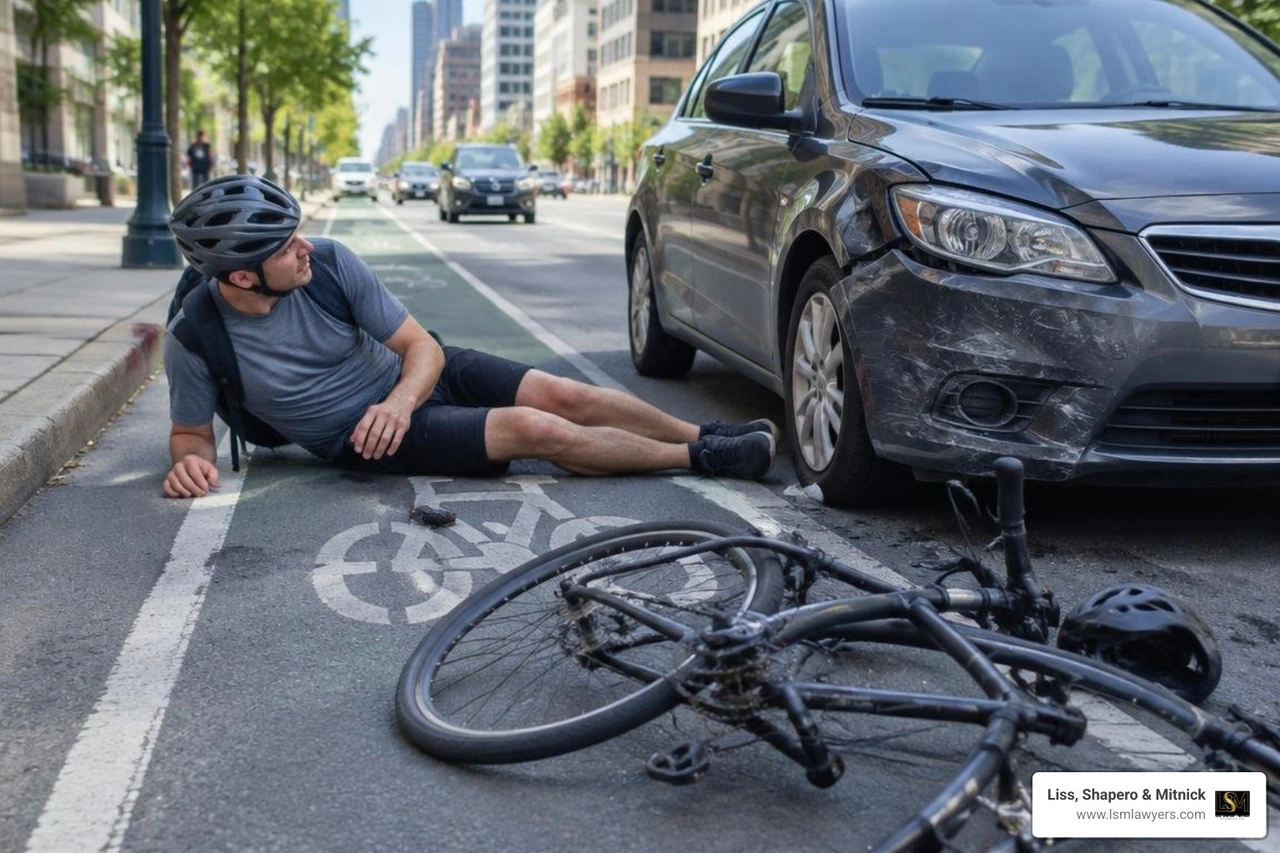
Choosing the right cycling accident attorney means prioritizing experience in bicycle crash reconstruction, handling vulnerable road user claims, and understanding insurer defense tactics. Establishing legal liability requires proving that a motorist, municipality, or product manufacturer failed to exercise reasonable care, directly resulting in your crash and damages. For broader context on how these cases are evaluated, see the National Highway Traffic Safety Administration’s bicycle safety resources.
Cycling on Michigan roadways should be a safe, enjoyable way to commute and stay active, but careless drivers frequently put riders at serious risk. According to national road safety data, more than 130,000 people are injured in roadway bicycle collisions across the United States every year, generating over $23 billion in medical costs and lost productivity. When a motor vehicle strikes a bicyclist, the lack of physical protection means the cyclist almost always absorbs the brunt of the impact.
Types of Cycling Accidents Handled by Attorneys
Bicycle crashes happen in various traffic scenarios across Metro Detroit and Oakland County. We handle claims stemming from diverse crash patterns, including:
- Right-Hook and Left-Cross Collisions: Drivers turning right often fail to check their mirrors or blind spots for oncoming cyclists, while left-turning motorists frequently misjudge a bike's speed and turn directly across its path. Learn how we handle right-hook collisions and intersection turn hazards.
- Car Door Collisions ("Dooring"): Parked drivers or passengers who open vehicle doors into traffic without checking can severely injure approaching riders. We represent victims through our Detroit area bike dooring injury legal counsel.
- Dedicated Bike Lane and Shoulder Crashes: Motorists who drift into marked lanes, park illegally, or swerve onto shoulders create catastrophic hazards. If you were hit in an urban corridor, consult our Oakland County bike lane crash lawyer.
- Electric Bicycle and Commuter Collisions: The surge in heavier, faster commuter bikes brings unique liability and insurance questions. We outline these frameworks in our guide to Michigan bicycle and e-bike accident medical bills.
- Municipal Roadway Defects: Deep potholes, unmaintained expansion joints, obscured signage, or unpaved utility cuts can pitch a cyclist over the handlebars, creating potential municipal negligence claims.
- Direct Motor Vehicle Strikes: Inattentive, speeding, or distracted drivers who fail to share the road cause devastating trauma. We protect riders injured in these collisions as a dedicated Oakland County biker hit by car attorney.
How a Cycling Accident Attorney Investigates and Proves Fault
To build a compelling claim, an attorney must establish four core legal elements: duty of care, breach of that duty, direct causation, and actual damages. Every licensed driver owes all road users—including cyclists—a legal duty to operate their vehicle safely and follow traffic regulations.
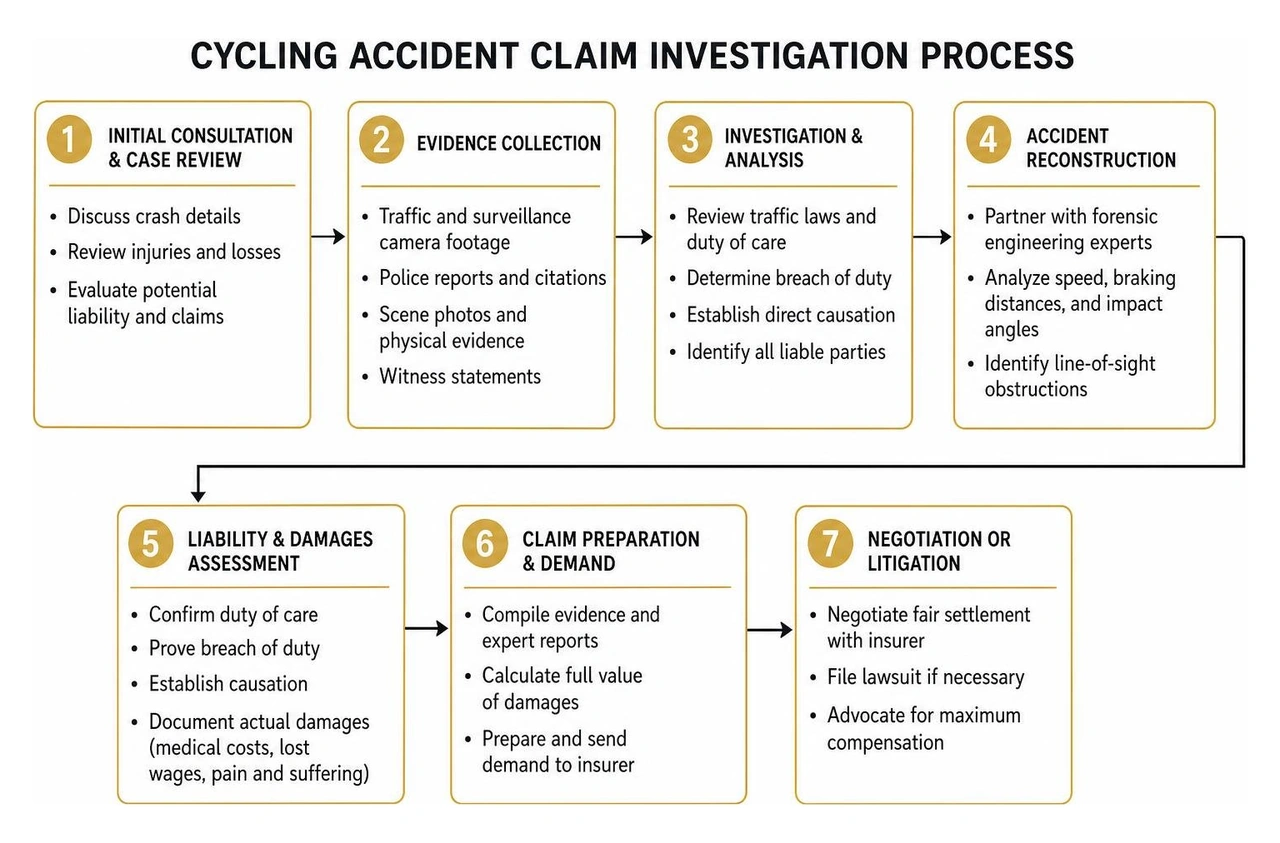
Proving a breach requires thorough factual evidence. When determining whether a motorist violated safe-driving rules, we investigate:
- Traffic and Surveillance Camera Footage: Sourcing nearby business security feeds, municipal traffic cameras, and dashcam footage before it is routinely overwritten.
- Police Reports and Citations: Reviewing crash reports for traffic citations, such as illegal turns or failure to yield. Review our resource on proving a driver failed to yield to a cyclist in Michigan.
- Accident Reconstruction: Partnering with forensic engineering experts to calculate vehicle speed, braking distances, impact angles, and line-of-sight obstructions.
- Eyewitness Testimony: Interviewing motorists, pedestrians, and nearby business patrons who witnessed the crash firsthand.
Critical Steps to Protect Your Health and Legal Rights After a Crash
The chaotic moments immediately following a bicycle collision can make or break your personal injury claim. Adhering to a clear post-crash protocol protects your physical recovery and preserves essential legal rights.
Immediate Actions at the Scene and Medical Documentation
- Call 911 Immediately: Ensure law enforcement and emergency medical technicians are dispatched to the scene. An official police report provides foundational documentation of the crash.
- Obtain Driver and Witness Information: Collect the driver's full name, contact information, driver's license number, license plate, and insurance carrier details. Gather names and phone numbers from all eyewitnesses.
- Never Admit Fault or Downplay Injuries: Avoid saying "I'm okay" or apologizing. Adrenaline masks severe trauma, and early casual statements can be misconstrued by insurance adjusters later.
- Seek Immediate Medical Evaluation: Even if you believe you only sustained minor scrapes, visit an emergency room or urgent care facility right away. Traumatic brain injuries, hairline fractures, internal bleeding, and soft tissue damage often present delayed symptoms.
- Follow Medical Advice Strictly: Attend every follow-up appointment, physical therapy session, and specialist referral. Gaps in care give insurance companies an opening to argue your injuries were not serious or resulted from an unrelated event.
Preserving Physical Evidence and Eyewitness Testimony
Physical evidence provides critical proof of how an accident unfolded. Never repair, clean, or discard any equipment until your legal team has documented it.
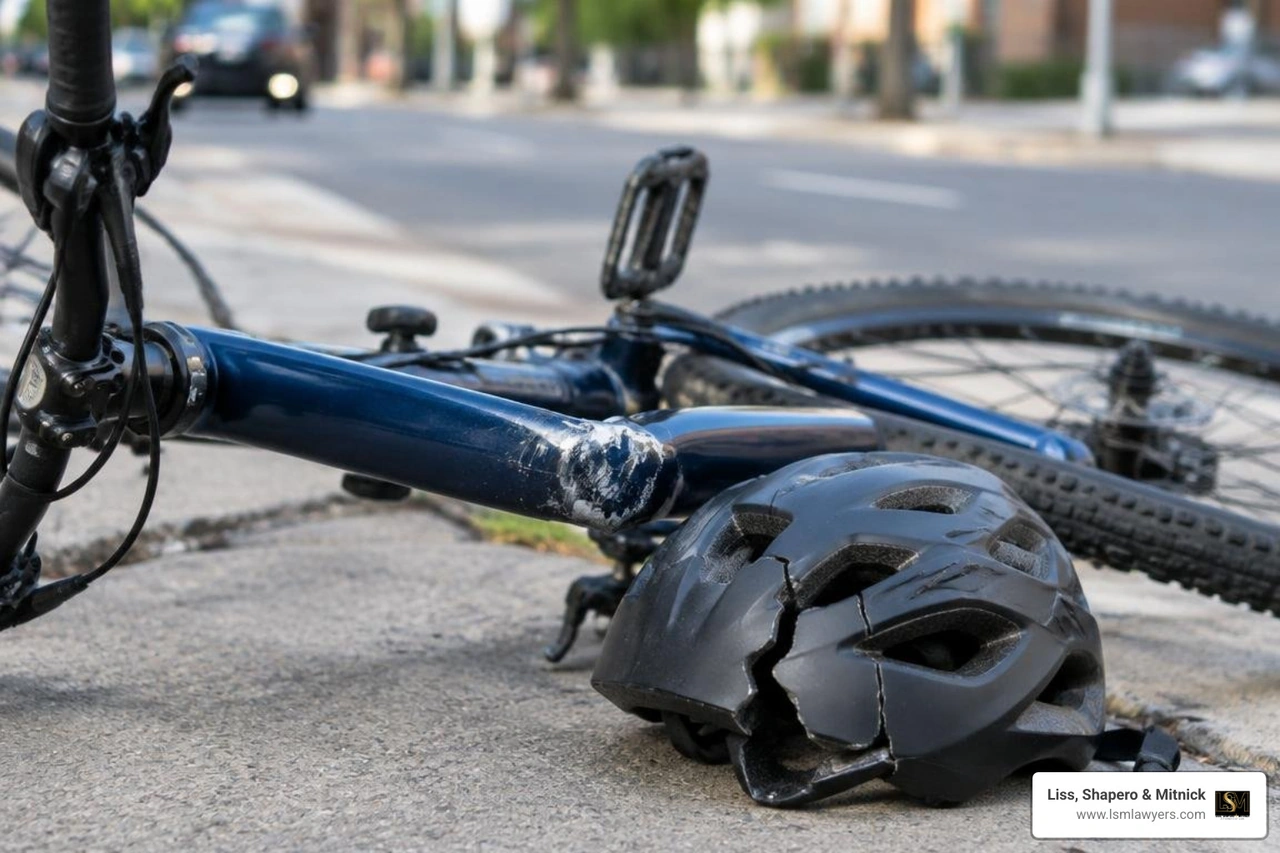
Be sure to preserve:
- The Bicycle: Keep the bike in its exact post-crash condition, including bent rims, snapped derailleurs, and scuffed paint.
- Safety Gear and Apparel: Preserve your cracked helmet, torn jerseys, shredded gloves, and scuffed shoes in an unwashed state.
- Electronic Cycling Data: Download and back up all GPS ride-tracking data, heart rate metrics, power meter readings, and cycle computer logs from apps like Strava or Garmin.
- Visual Documentation: Capture clear photos of all bodily injuries, vehicle damage, road gouges, skid marks, lighting conditions, and road hazards.
To ensure no critical details are overlooked, review our checklist on what evidence to save after a bicycle or scooter accident.
Understanding Bike Laws, Fault Rules, and Available Compensation
Cycling laws grant bicyclists clear roadway rights while holding motorists accountable for negligent conduct. Understanding state and local traffic frameworks is vital when pursuing financial recovery.
State Traffic Statutes and Partial Fault Rules
Cyclists generally have the legal right to use public roadways and are entitled to the same protections as motorized vehicles. Drivers are expected to maintain safe passing clearances—typically at least three feet when overtaking a cyclist.
When determining liability, Michigan operates under a modified comparative negligence system. If a cyclist shares partial responsibility for an accident, their financial compensation is reduced by their assigned percentage of fault. However, as long as the cyclist's fault is not greater than 50%, they remain eligible to recover non-economic damages.
| Cyclist Assigned Fault | Total Claim Value | Financial Recovery | Impact on Claim |
|---|---|---|---|
| 0% at Fault | $100,000 | $100,000 | Full damage recovery |
| 20% at Fault | $100,000 | $80,000 | Recovery reduced by 20% |
| 40% at Fault | $100,000 | $60,000 | Recovery reduced by 40% |
| 51%+ at Fault | $100,000 | $0 (Non-Economic) | Barred from pain and suffering recovery |
Recovering Economic and Non-Economic Damages
Injured cyclists can pursue two primary categories of compensation:
Economic Damages (Tangible Financial Losses)
- Medical Bills and Rehabilitation: Coverage for emergency transit, surgeries, hospital stays, prescription medications, physical therapy, and assistive mobility devices. Learn the specific rules for who pays your medical bills after a bicycle crash.
- Lost Wages and Diminished Earning Capacity: Reimbursement for missed paychecks during recovery and compensation if long-term impairments prevent you from returning to your prior occupation.
- Property Damage: Full replacement or repair value for your bicycle, custom components, helmet, cycling computers, and apparel.
- Attendant Care and Replacement Services: Compensation for household help and daily living assistance needed during recovery. Read our detailed guide on who pays medical bills after a car or bicycle accident.
Non-Economic Damages (Intangible Losses)
- Physical Pain and Suffering: Compensation for physical agony, acute trauma, and chronic discomfort.
- Emotional Distress and Mental Anguish: Redress for post-traumatic stress, sleep disruption, anxiety, and depression resulting from the collision.
- Loss of Enjoyment of Life: Financial recognition for the inability to participate in cycling, sports, hobbies, and family activities.
- Disfigurement and Permanent Scarring: Damages for permanent road rash scarring, surgical marks, or mobility impairments.
For additional insight into how coverage applies to cyclists struck by motor vehicles, see our answers to who pays medical bills when hit while riding a bicycle.
Why You Need a Dedicated Cycling Accident Attorney for Your Claim
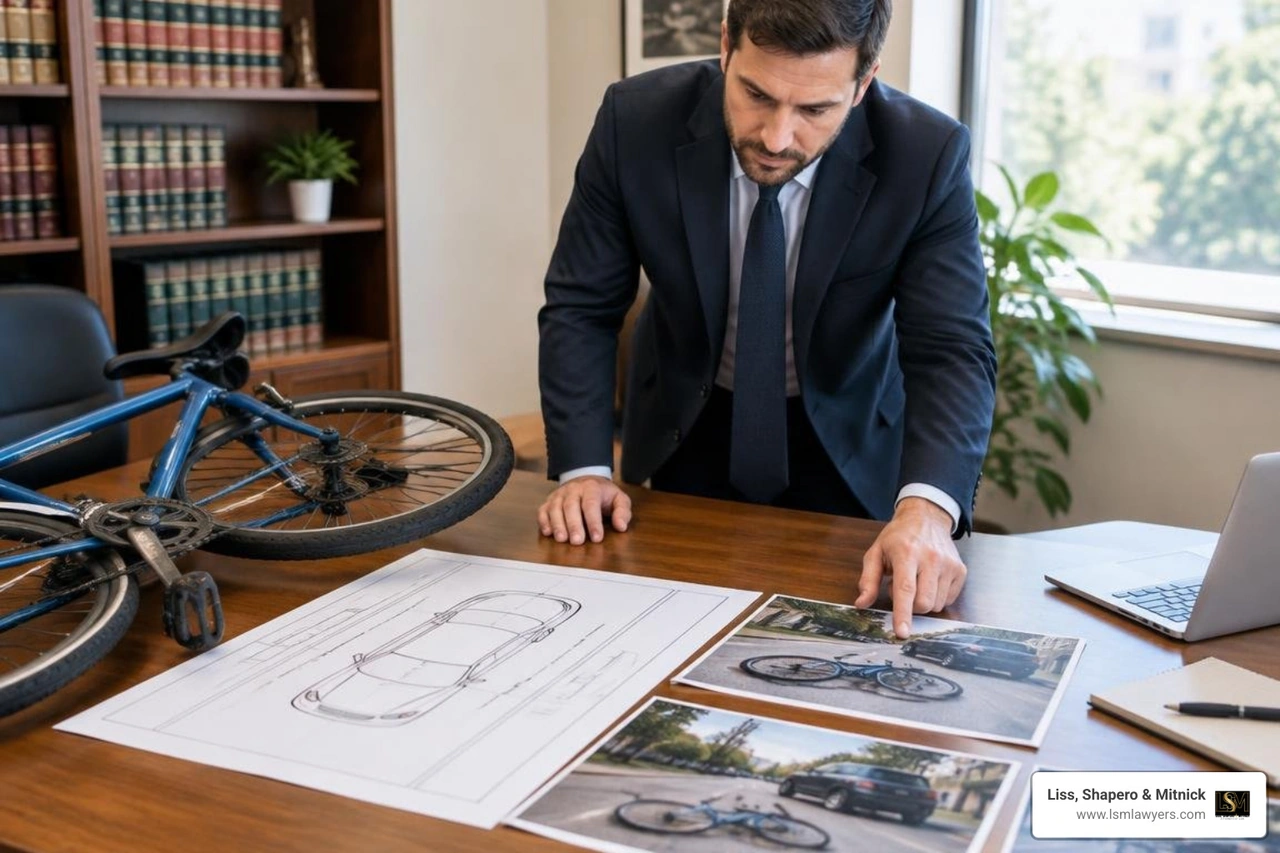
Bicycle accident claims present legal and factual challenges that general personal injury lawyers often overlook. Working with an attorney who understands cycling dynamics, bicycle mechanics, and the insurance industry gives you a significant advantage.
Overcoming Anti-Cyclist Bias and Insurance Reduction Tactics
Insurance companies frequently exploit societal anti-cyclist bias to minimize claim payouts. Adjusters routinely deploy aggressive tactics to reduce their financial exposure:
- Blaming the Cyclist's Road Position: Adjusters often claim the rider was "riding too far into the lane" or should have been on a sidewalk, even when the cyclist was legally entitled to the roadway.
- Claiming Lack of Visibility: Insurers argue the bicyclist was wearing dark clothing or was otherwise impossible for the driver to see.
- Exploiting Helmet Usage: If a cyclist suffered head trauma while not wearing a helmet, adjusters may argue the rider failed to mitigate damages, even when state law does not mandate adult helmet use.
- Rushing Lowball Settlements: Adjusters often present quick settlement checks before the full scope of long-term medical needs, nerve damage, or orthopedic injuries is clear.
At Liss, Shapero & Mitnick, our unique strength lies in leveraging our former insurance-defense experience. Because we understand the exact playbook, valuation software, and risk calculations that insurers use to minimize claims, we build proactive cases that dismantle their defenses.
Key Questions to Ask When Hiring a Cycling Accident Attorney
When selecting an attorney to represent your bicycle accident claim, consider asking:
- How many bicycle accident and vulnerable road user cases have you successfully resolved?
- How does your firm handle complex insurance structures like personal injury protection and uninsured motorist policies?
- Do you have trial experience if the insurance company refuses to make a reasonable settlement offer?
- Do you work on a contingency fee basis where I pay nothing unless you win my case?
- How frequently will your team provide updates regarding the progress of my claim?
If your family is navigating road safety concerns or seeking guidance on community riding rules, explore our resources on Berkley families and summer bike safety as well as pedestrian and walking safety around major corridors.
Frequently Asked Questions About Bicycle Accident Claims
How Long Do I Have to File a Bicycle Accident Lawsuit?
In Michigan, the general statute of limitations for filing a personal injury lawsuit against an at-fault driver is three years from the date of the collision.
However, claims involving state or local government agencies—such as crashes caused by road defects or municipal buses—often require formal notice within months or weeks of the incident. In addition, claims for first-party No-Fault personal injury protection benefits have strict one-year notice requirements. Missing these deadlines can permanently bar your claim, making it vital to consult an attorney promptly.
What Happens If the At-Fault Driver Flees or Has No Insurance?
Hit-and-run crashes and collisions with uninsured drivers are deeply stressful, but you still have legal options. Injured cyclists can often recover compensation through their own auto insurance policy via Uninsured Motorist (UM) or Underinsured Motorist (UIM) coverage, or through a policy held by a resident relative. Our attorneys review all available household policies to uncover every viable source of financial recovery.
Can I Still Recover Damages If I Was Not Wearing a Helmet?
Yes. Michigan law does not mandate helmet use for adult bicyclists. While insurance adjusters may try to argue that failing to wear a helmet contributed to your head injuries, the lack of a helmet does not prevent you from filing a claim or recovering compensation for broken bones, soft tissue trauma, spinal injuries, or other damages caused by a negligent driver.
Conclusion
A serious bicycle accident can disrupt your health, career, and financial stability in an instant. Dealing with medical appointments, lost work, and aggressive insurance adjusters while trying to heal can feel overwhelming. You do not have to carry that burden alone.
At Liss, Shapero & Mitnick, we provide dedicated legal representation to injured cyclists across Berkley, Metro Detroit, and throughout Michigan. Whether you need an experienced pedestrian accident lawyer in Berkley or dedicated representation from our bicycle accident lawyers in Berkley, our team uses its former insurance-defense experience to pursue full and fair compensation for your injuries.
If you or a loved one was injured while riding, explore our dedicated Motorcycle and Bicycle Accident Practice Area or contact our office today for a free, no-obligation case evaluation. Let us handle the legal battle so you can focus on your recovery.