.svg)
.avif)

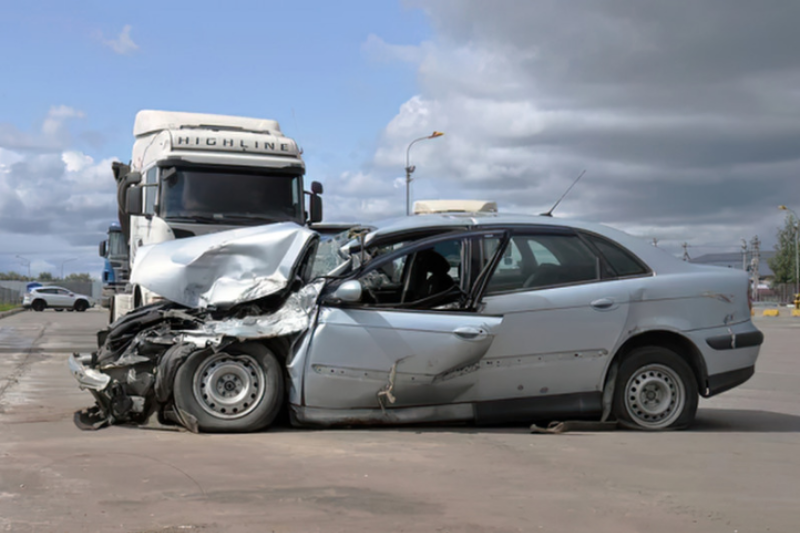
You're stopped at a light on Woodward Avenue, or waiting to turn onto Coolidge Highway, and a delivery van clips your bumper or slams into you from behind. It happens fast. One moment you're running errands, and the next you're standing on the shoulder trying to figure out what to do first.
A crash with a delivery truck feels different from a typical two-car accident, and it often is. There may be a company name on the side of that van. There may be a driver who was working a shift, not just running a personal errand. Those details change the shape of the claim from the very first phone call.
Right After the Crash: The Police Report and Scene Details
When police respond to a crash involving a commercial delivery vehicle, the report they file becomes one of the most important documents in the case. Officers typically note the vehicles involved, any visible damage, and statements from both drivers. They may also record whether the delivery driver appeared to be on the clock at the time.
Many people assume a police report is just a formality. In a delivery truck crash, it often becomes the first piece of evidence that ties the driver's actions back to their employer.
If you are able to, it helps to note a few details at the scene:
- The company name or logo on the vehicle
- Any visible ID or DOT number on the truck
- The driver's name and the company they were delivering for
- Contact information for any witnesses nearby
- Photos of the vehicles, the road, and any traffic signals or signs
This information can be hard to gather when you're shaken up or dealing with an injury. That's normal, and it's one of the reasons an early conversation with our team can help fill in the gaps before details fade.
Who's Actually Liable? Understanding Employer Responsibility
In a standard car accident, liability usually comes down to the two drivers involved. A delivery truck crash often adds another layer: the company the driver works for.
Under a legal concept called vicarious liability, an employer can be held responsible for the actions of an employee who was working at the time of the crash. If the delivery driver was on their route, making a stop, or otherwise performing job duties, the company may share responsibility for the accident.
This is where things can get complicated. Many delivery companies rely on independent contractors rather than direct employees. The distinction matters, because liability rules can shift depending on how the driver is classified. A driver might be contracted through a staffing service, a regional distributor, or a national delivery brand, and each of those relationships can affect who is legally responsible.
It's common to assume the crash is a simple claim against the driver's personal insurance. In reality, identifying every party who may share responsibility is often the first real step in the case.
Our Commercial Vehicle Accidents page walks through more detail on how liability works across different types of commercial drivers in Michigan.
The Insurance Layers: Why This Isn't a One-Policy Claim
A car accident between two personal vehicles usually involves two insurance policies. A delivery truck crash can involve several.
Depending on how the driver and vehicle are set up, coverage may come from more than one source:
- The driver's personal auto insurance policy
- The delivery company's commercial insurance policy
- A third-party logistics or staffing company's policy, if one is involved
- Your own no-fault insurance, which applies regardless of who caused the crash
Michigan is a no-fault state, which means your own insurance typically covers your initial medical expenses no matter who was at fault. This applies to delivery truck crashes the same way it applies to any other accident. Your Personal Injury Protection, or PIP, benefits are usually the first source of coverage for medical care and some lost wages.
Where things get more involved is when your injuries are serious enough that you want to pursue a claim beyond PIP benefits. That's when identifying the delivery company's commercial policy, and any other coverage layered underneath it, becomes part of the process.
Our No-Fault Insurance Benefits page explains how PIP coverage works in more detail, including what it covers and how claims are typically filed.
Vehicle and Company Data That May Support the Claim
Modern delivery vehicles often carry more data than people realize. Many companies use GPS tracking, delivery logs, and maintenance records to manage their fleets. Some vehicles have onboard telematics that record speed, braking, and location at the time of a crash.
This information can help explain what happened in the moments before impact. It may show whether the driver was speeding, whether the vehicle had a mechanical issue, or whether the driver was behind schedule and rushing between stops.
This is where evaluation matters. Delivery companies aren't required to hold onto this data forever, and some records get overwritten or deleted on a routine schedule. If this kind of evidence is relevant to your situation, timing can matter more than people expect.
Medical Bills and Treatment: What Gets Covered and When
After a crash, one of the first questions people ask is how they're supposed to pay for treatment. Michigan's no-fault system is built to address this. Your PIP benefits generally cover reasonable and necessary medical expenses related to the crash, starting soon after the accident.
It's common to worry that you'll need to pay upfront or argue with an insurance adjuster before receiving care. In most cases, that isn't how it's supposed to work. Your PIP coverage is meant to apply from the start, though insurers sometimes delay or dispute specific bills.
A few things tend to matter for a smoother claims process:
- Seeking medical treatment promptly after the crash
- Keeping records of every appointment, diagnosis, and recommended treatment
- Following through on recommended care, even if symptoms seem to improve
- Notifying your insurer of the accident as soon as reasonably possible
Lost Wages and Time Away From Work
Missing work after a crash adds a different kind of stress. Whether it's a few days or several months, lost income affects real bills and real responsibilities.
Michigan's no-fault system includes wage loss benefits as part of PIP coverage. These benefits are designed to replace a portion of lost income for a period of time, up to certain limits set by law. How this plays out depends on your employment situation.
A few factors that commonly come up:
- Salaried or hourly employees typically provide pay stubs or employer statements to document lost income
- Self-employed individuals may need to show a pattern of income through tax records or invoices
- Partial return to work, such as reduced hours, can still qualify for partial wage loss benefits
- Documentation from a treating physician connecting your inability to work to the crash is usually required
Our Recovering Lost Wages page goes into more detail on how these benefits are calculated and what documentation typically supports a claim.
What This Scenario Teaches You
A delivery truck crash rarely works like a simple two-car claim. There are more parties who may share liability, more insurance policies that may apply, and more types of evidence that can shape the outcome. None of that makes the process impossible. It just means there are more pieces to sort through.
The biggest misconception people bring into these situations is that it will move the same way a routine fender bender does. In reality, identifying the right companies, the right policies, and the right data early on tends to make a real difference in how the claim unfolds.
If you're not sure which of these layers apply to what happened to you, that uncertainty is common. It's also exactly the kind of question a conversation with our team can help answer.
Metro Detroit Roads, Local Roots
Delivery trucks share Woodward Avenue, Coolidge Highway, and neighborhood streets across Berkley and the surrounding area every single day. We've spent more than 20 years working in this community, and we've seen how these crashes affect our neighbors here in Oakland County and across Wayne, Macomb, and Washtenaw Counties.
Tony Shapero often calls new clients personally, because we believe people going through this deserve more than a case number. When you work with our team, you get the whole team, not just one attorney handling your file among hundreds of others.
Talk Through What Happened With Our Team
If a delivery truck hit your car in the Metro Detroit area, you don't have to sort through the insurance layers and liability questions on your own. Contact LSM Lawyers for a free consultation. There's no pressure and no obligation, just a straightforward conversation about what happened and what your options may be.
📞 248-584-1300
📞 Toll-Free: 1-855-LISS-LAW (1-855-547-7529)
📍 2695 Coolidge Highway, Berkley, MI 48072