.svg)
.avif)


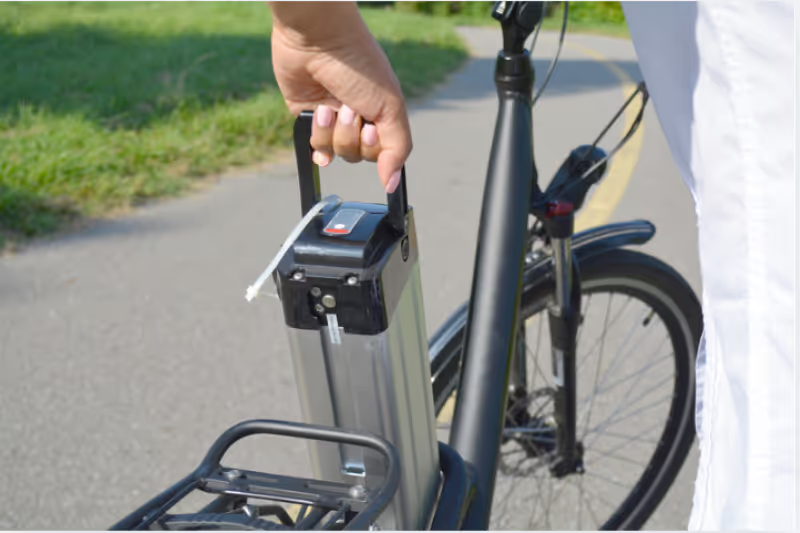
Electric bikes have become increasingly common throughout Michigan, offering an efficient and affordable way to commute, run errands, and navigate urban areas. As winter approaches, however, the risks associated with e-bike batteries become far more pronounced. Riders often respond to cold temperatures by bringing batteries indoors, charging them overnight, or storing them in living spaces to prevent freezing.
Lithium-ion battery fires are not gradual or predictable events. When they occur, they do so suddenly, producing intense heat, flames, and toxic smoke within seconds. During colder months, these fires are more likely to happen inside homes and apartment buildings, where escape routes are limited and fire spread is rapid.
The consequences can be devastating. Victims may suffer severe burns, smoke inhalation injuries, and long-term respiratory damage. Entire families may be displaced due to property destruction, and neighboring units can be placed at risk through no fault of their own. What begins as a practical decision to protect a battery from the cold can quickly escalate into a serious safety emergency.
Understanding E-Bike Batteries and Why They Are Fire Risks
E-bikes are powered by high-capacity lithium-ion batteries, which store large amounts of energy in a compact form. While efficient, these batteries are inherently volatile and can become dangerous when exposed to improper charging, temperature extremes, or internal defects.
At the core of many battery fires is a process called thermal runaway. Once triggered, thermal runaway causes a rapid, uncontrollable increase in temperature that can lead to ignition or explosion. This process does not require an external flame and often begins inside the battery casing.
Key characteristics that make e-bike batteries especially hazardous include:
- High energy density, allowing fires to burn hotter and longer
- Internal damage that may not be visible after drops or impacts
- Delayed failure, where a battery ignites hours or days after being stressed
- Toxic gases released during combustion
One of the most dangerous aspects of lithium-ion battery failures is their unpredictability. A battery can function normally for months and then fail without warning, often during charging.
Battery origin also matters. There is a significant difference between:
- Original manufacturer batteries, which are typically tested and designed for a specific bike model
- Aftermarket or replacement batteries, which may lack proper safety features, quality controls, or adequate warnings
Common Storage and Charging Practices That Lead to Fires
Storage
One of the most common issues is indoor storage. Batteries are frequently stored in:
- Apartments and condos
- Basements or utility rooms
- Attached garages
When a battery ignites indoors, fire spreads rapidly and evacuation becomes far more dangerous.
Charging
Charging habits are another major factor. Fires often occur when batteries are:
- Charged overnight or unattended
- Plugged in for extended periods after reaching full charge
- Charged immediately after being brought in from freezing temperatures
Improper charging equipment further compounds the danger. Common contributors include:
- Non-original or incompatible chargers
- Extension cords or power strips not rated for battery charging
- Shared outlets that overload electrical circuits
Battery
Battery condition also plays a critical role. Using batteries that are:
- Damaged or dropped, even if the damage appears minor
- Aging, with reduced capacity or inconsistent performance
- Exposed to moisture or condensation
significantly increases the risk of internal failure.
Liability After an E-Bike Battery Fire
Manufacturer Responsibility
Battery and e-bike manufacturers may be liable when fires result from:
- Design defects, such as inadequate thermal protection
- Manufacturing defects, including internal flaws or poor quality control
- Failure to warn, where consumers are not properly informed of storage or charging risks
These cases often fall under product liability law and focus on whether the battery was unreasonably dangerous when used as intended.
Retailer and Distributor Liability
Retailers and distributors may share responsibility if they:
- Sold defective or recalled batteries
- Failed to provide proper instructions or warnings
- Marketed unsafe aftermarket batteries as compatible or “safe”
Aftermarket and Third-Party Battery Issues
Liability becomes more complex when fires involve replacement batteries. Third-party manufacturers may cut corners, omit safety features, or provide misleading compatibility claims. These batteries are frequently linked to fires and may expose multiple parties to liability.
Landlords, Property Owners, and Premises Liability
Landlord Duties and Fire Safety Obligations
Landlords may be liable when they fail to:
- Address known fire hazards related to battery charging or storage
- Enforce reasonable safety policies
- Maintain fire alarms, sprinklers, or safe egress routes
Failure to Communicate or Enforce Policies
Many buildings lack clear guidance on e-bike battery storage. Liability may arise if landlords:
- Knew batteries were being charged indoors
- Failed to warn residents of risks
- Ignored prior incidents or complaints
Unsafe Charging Areas and Fire Suppression Failures
Some properties provide shared charging areas without proper ventilation or fire suppression. Others fail to maintain smoke detectors or sprinkler systems. These failures can significantly worsen injuries and property damage.
Shared Responsibility in Apartment Fires
In multi-unit buildings, liability may be shared among:
- Battery manufacturers
- Property owners or management companies
- Maintenance contractors
- Insurers seeking subrogation
Insurance Issues After an E-Bike Battery Fire
Homeowner’s and Renter’s Insurance Disputes
After a battery fire, insurers may question:
- Whether the battery was an excluded “hazardous device”
- Whether improper charging or storage voids coverage
- Whether damage extends beyond policy limits
Renter’s insurance disputes are especially common when fires originate in individual units but damage multiple apartments.
Denied or Limited Coverage Claims
Insurers may attempt to:
- Deny coverage entirely based on alleged misuse
- Limit payouts for personal property, smoke damage, or temporary housing
- Exclude injuries suffered during evacuation
These denials are often based on broad policy interpretations rather than clear exclusions.
Subrogation After Insurance Payouts
When an insurer pays a claim, it may pursue subrogation, seeking reimbursement from:
- Battery manufacturers
- E-bike companies
- Property owners or management companies
While subrogation happens behind the scenes, it can directly affect injured victims if insurers attempt to shift blame or recover costs at the expense of full compensation.
Conflicts Between Insurance and Product Liability Claims
Insurance claims do not replace product liability cases. Conflicts arise when:
- Insurers settle property damage quickly while injury claims remain unresolved
- Product manufacturers deny responsibility once insurance pays
- Victims are pressured into releases that limit future legal claims
Evidence That Matters in an E-Bike Battery Fire Claim
Physical Evidence Preservation
Key items should be preserved whenever possible, including:
- The battery, even if heavily damaged
- The charger and power source
- The e-bike or charging dock
Discarding these items can eliminate the ability to prove a defect.
Fire Department and Origin Investigations
Fire department reports often identify:
- The fire’s point of origin
- Contributing ignition sources
- Whether the battery played a role
These reports can be pivotal in both insurance disputes and litigation.
Expert Battery and Fire Analysis
Product liability cases often rely on:
- Electrical engineers
- Fire cause-and-origin experts
- Battery safety specialists
Experts analyze internal battery failure, charging irregularities, and thermal runaway mechanisms.
Medical Documentation
Strong claims require detailed records of:
- Emergency treatment
- Burn care and surgeries
- Respiratory and toxic exposure injuries
- Psychological trauma
Medical documentation connects injuries directly to the fire event.
Visual and Witness Evidence
Photographs, videos, and witness statements help establish:
- Fire progression and severity
- Smoke conditions and escape barriers
- Timing and warning signs before ignition
Together, this evidence forms the foundation of liability and damages claims.
Legal Options for Injured Victims and Families
Personal Injury Claims
Injured individuals may pursue compensation for:
- Burn injuries and scarring
- Smoke inhalation and respiratory damage
- Emotional distress and trauma
- Lost income and future earning capacity
Wrongful Death Claims
When battery fires are fatal, surviving family members may bring wrongful death claims addressing:
- Loss of financial support
- Loss of companionship and care
- Funeral and burial expenses
Property Damage and Displacement Claims
Victims may seek recovery for:
- Destroyed personal property
- Temporary housing and relocation costs
- Long-term displacement or uninhabitable residences
Holding the Right Parties Accountable After a Battery Fire
E-bike battery fires are not just accidents. They are often the result of defective products, inadequate warnings, unsafe charging designs, or failures to address known fire risks. When lithium-ion batteries ignite—especially in cold weather and indoor environments—the consequences can be catastrophic. Victims are left dealing with serious injuries, destroyed homes, insurance disputes, and unanswered questions about how it happened and who is responsible.
Contact Liss, Shapero & Mitnick Today
If you or a loved one has been injured in an e-bike battery fire, do not assume it was unavoidable or that insurance companies will treat you fairly. These incidents deserve careful investigation, accountability, and aggressive advocacy. Our team works to identify all responsible parties and pursue the full compensation our clients deserve.
Liss, Shapero & Mitnick
2695 Coolidge Highway
Berkley, MI 48072
📞 Phone: 248-584-1300
📞 Toll Free: 1-855-LISS-LAW (1-855-547-7529)
📠 Fax: 248-584-1323