.svg)
.avif)


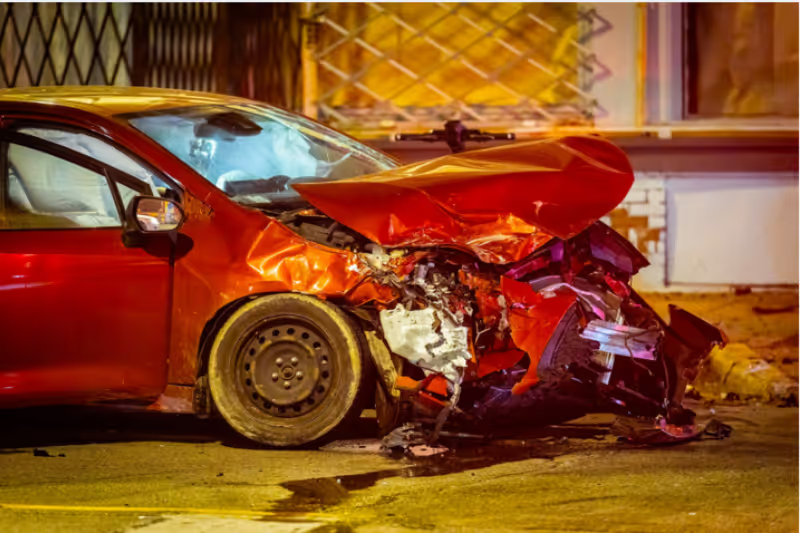
A storefront crash is one of the most shocking types of accidents a person can experience. One moment, people are shopping, dining, or working—and the next, a vehicle violently bursts through glass, walls, and entryways. These crashes happen without warning and unfold in seconds, leaving little time for anyone inside to react or escape.
Storefront crashes don’t happen in remote or unusual locations. They occur in familiar, everyday spaces such as restaurants, coffee shops, retail stores, medical offices, banks, and salons. Many take place in busy strip malls or shopping centers where parking spaces sit just feet from customers and employees.
Unlike typical motor vehicle accidents, storefront crashes often involve people who are completely unprotected. Customers sitting at tables, employees working behind counters, and pedestrians walking past entrances have no seatbelts, airbags, or warning signals. The result is a high risk of severe or life-threatening injury.
After a vehicle crashes into a building, the scene is often chaotic—debris everywhere, injured victims, emergency responders rushing in, and businesses forced to shut down. Long after the initial impact, victims may face extensive medical treatment, lost income, permanent disabilities, and emotional trauma stemming from an event that happened in a place they believed was safe.
Who May Be Liable in a Storefront Crash?
The Driver
In many cases, the driver who crashed into the business is a primary source of liability. Drivers have a legal duty to operate their vehicles safely and maintain control at all times.
Common forms of driver negligence include:
- Distracted driving (cell phone use, inattention, confusion)
- Driving under the influence of alcohol or drugs
- Speeding or reckless driving in parking lots
- Failure to brake or stop appropriately
Pedal Misapplication and Loss of Control
Pedal misapplication—pressing the accelerator instead of the brake—is frequently cited in storefront crashes. While often described as a “mistake,” this error can still amount to negligence if the driver failed to exercise reasonable care or control.
Medical Episodes and Sudden Incapacity
Some drivers claim a sudden medical emergency, such as a seizure or loss of consciousness. These situations require careful investigation. Liability may still exist if:
- The driver had prior warning signs
- A known medical condition was unmanaged
- The driver should not have been operating a vehicle
Auto Insurance Coverage and Policy Limits
The driver’s auto insurance is typically the first source of compensation. However, storefront crash injuries are often severe, and damages can quickly exceed standard policy limits—making it necessary to look beyond the driver alone.
The Business Owner or Property Owner
Property owners and business operators may share responsibility when unsafe conditions contribute to a storefront crash or increase the severity of injuries.
Potential areas of liability include:
- Failure to install protective barriers or bollards in high-risk areas
- Poor parking lot or storefront design, such as head-in parking aimed directly at entrances
- Inadequate safety planning, especially in busy commercial areas
- Lack of maintenance, including faded striping, poor lighting, or uneven pavement
Under Michigan law, business owners owe a duty of care to customers, employees, and other invitees. This duty includes taking reasonable steps to protect people from foreseeable dangers—including the risk of vehicle intrusion.
Third Parties
In some cases, responsibility extends beyond the driver and property owner.
Third parties that may share liability include:
- Property management companies responsible for maintenance or safety decisions
- Architects, engineers, or contractors involved in unsafe design or construction
- Vehicle manufacturers, in rare cases involving brake failure or other defects
Identifying these parties is critical when primary insurance coverage is insufficient.
How Michigan Law Treats Storefront Crash Claims
Negligence Standards Under Michigan Law
Most storefront crash claims are based on negligence. To establish liability, an injured person must show:
- A legal duty of care existed
- That duty was breached
- The breach caused injuries
- Damages resulted
Drivers, property owners, and third parties may all be analyzed under this framework.
Premises Liability Considerations
When injuries occur inside or near a business, premises liability law often applies. Courts examine whether the risk of a vehicle crashing into the building was foreseeable and whether reasonable safety measures were in place.
Comparative Fault Issues
Michigan follows a comparative fault system, meaning responsibility may be divided among multiple parties. Insurance companies often attempt to shift blame to reduce payouts, making detailed investigation essential.
Shared Responsibility Among Multiple Liable Parties
Storefront crashes frequently involve overlapping causes, such as:
- A negligent driver
- A poorly designed parking lot
- Lack of protective barriers
Holding all responsible parties accountable increases the likelihood of full compensation.
The Role of Michigan No-Fault Insurance Benefits
Injured victims may also be entitled to Michigan No-Fault Personal Injury Protection (PIP) benefits, which can cover:
- Medical expenses
- Wage loss
- Replacement services
These benefits are available regardless of fault and often provide critical financial support while liability claims move forward.
Insurance Issues in Storefront Crash Cases
Auto Insurance Coverage
In many storefront crash cases, the driver’s auto insurance is the first place victims turn for compensation.
Key components of auto insurance may include:
- Bodily injury liability coverage, which pays for injuries caused by the at-fault driver
- Michigan No-Fault Personal Injury Protection (PIP) benefits, which may cover:
- Medical expenses
- Wage loss
- Replacement services
- Policy limits, which can be quickly exhausted in serious injury cases
Because storefront crashes often cause catastrophic injuries, the driver’s insurance coverage may be insufficient—especially if the driver carries only minimum limits or is underinsured.
Commercial and Premises Insurance
When injuries occur inside or near a business, commercial insurance policies may also apply.
These policies may include:
- Business liability insurance, covering injuries to customers or visitors
- Property owner insurance, which may apply if unsafe conditions contributed to the crash
- Umbrella or excess policies, which provide additional coverage beyond standard limits
Insurance companies frequently dispute responsibility in these cases, each attempting to shift blame to another insurer. This can delay compensation and make professional legal guidance essential.
When Insurance Is Not Enough
In severe storefront crash cases, insurance coverage alone may not fully compensate victims for their losses.
Common challenges include:
- Injuries that exceed auto or business policy limits
- Disputes over which policy applies
- Multiple insurers denying responsibility
Identifying all available sources of recovery—across drivers, property owners, and third parties—is often the only way to pursue full and fair compensation.
What Injured Victims Should Do After a Storefront Crash
Seek Immediate Medical Attention
Even if injuries are not immediately obvious, medical evaluation is critical. Storefront crashes frequently cause internal injuries, head trauma, and delayed symptoms that worsen over time.
Call Emergency Services and Law Enforcement
Police and emergency responders create official reports that document what happened, who was involved, and the initial condition of the scene. These records are often crucial in later insurance and legal claims.
Preserve Evidence Whenever Possible
If it is safe to do so, preserving evidence early can make a major difference.
Helpful evidence may include:
- Photos or videos of the scene, vehicle, and damage
- Surveillance cameras inside or outside the business
- Names and contact information of witnesses
- Clothing or personal items damaged in the crash
Avoid Giving Statements to Insurance Companies
Insurance adjusters may contact victims quickly, sometimes within hours of the crash. These statements are often recorded and may be used to limit or deny claims.
Before speaking with any insurance company:
- Avoid speculation about fault
- Do not downplay injuries
- Consider speaking with a lawyer first
Document Physical, Emotional, and Financial Losses
Keeping thorough records helps demonstrate the true impact of the crash.
Important documentation includes:
- Medical bills and treatment records
- Missed work and lost income
- Pain levels and daily limitations
- Emotional distress, anxiety, or sleep issues
This documentation helps ensure that injuries are fully understood—not minimized or overlooked.
When the Unexpected Happens, Accountability Matters
Storefront crashes are sudden, violent, and often life-altering. In a matter of seconds, an ordinary day at work or a routine stop at a business can turn into a traumatic event with serious physical, emotional, and financial consequences.
Determining who pays after a storefront crash requires careful investigation and experienced legal analysis. Liability may involve a negligent driver, a business or property owner, third parties, or multiple insurance policies—all of which insurers may try to dispute or minimize.
If you or a loved one has been injured in a storefront crash, do not assume the insurance companies will do the right thing. Understanding liability early can directly impact your recovery and the compensation available to you.
Contact Liss, Shapero & Mitnick
Liss, Shapero & Mitnick2695 Coolidge Highway
Berkley, MI 48072
📞 Phone: 248-584-1300
📞 Toll-Free: 1-855-LISS-LAW (1-855-547-7529)
📠 Fax: 248-584-1323