.svg)
Understanding Liability in a Personal Injury Dog Bite Case
When an animal attacks without warning, determining who is legally responsible is the foundation of any financial recovery. Dog bite law generally revolves around two distinct legal frameworks: strict liability and common-law negligence. Understanding how these theories apply depends on the specific circumstances of the attack, the location, and whether the person controlling the animal breached a statutory duty.
Under strict liability, an owner is held responsible for damages caused by their dog regardless of whether the animal had ever shown aggressive tendencies before. You do not need to prove that the owner was careless or failed to secure a fence; the mere fact that the bite occurred while you were lawfully present establishes legal accountability. In contrast, common-law negligence requires showing that an owner, keeper, or harborer failed to exercise reasonable care—such as letting a known aggressive animal roam without a leash.
In Michigan, strict liability is codified by statute. If a dog bites a person without provocation while that person is in a public place or lawfully on private property (including the property of the dog owner), the owner is liable for all resulting damages. In our dedicated dog bite practice, we frequently see cases where multiple theories—such as statutory strict liability combined with premises liability against a negligent property owner—are used to secure comprehensive compensation.
Other states take varied statutory approaches. For instance, Ohio strict liability laws impose liability not just on the legal owner, but also on any "keeper" or "harborer" who had physical custody or control over the premises where the dog was kept.
| State Legal Framework | Liability Standard | Prior Knowledge Required? | Key Exceptions / Defenses |
|---|---|---|---|
| Strict Liability States (e.g., Michigan, Ohio, New Jersey) | Owner strictly liable for all bite injuries | No (No "free bite" rule) | Trespassing, provocation, committing a crime |
| Mixed / Modified States (e.g., Pennsylvania) | Strict liability for medical expenses; negligence required for pain/suffering | Prior history needed for non-economic damages | Unlawful presence, intentional provocation |
| One-Bite / Negligence States | Negligence or proof of vicious propensity | Yes (Owner knew or should have known of danger) | Trespass, comparative fault, lack of owner knowledge |
State Variations: Strict Liability vs. One-Bite Rules
Across the country, animal liability laws fall on a spectrum. While strict liability statutes favor the victim by eliminating the need to prove owner negligence, traditional "one-bite rule" jurisdictions require victims to show that the owner knew, or had reason to know, of the dog's dangerous propensities before the incident occurred.
- Michigan & Ohio: Both states enforce strict liability statutes that hold owners liable on the first bite, removing the common-law requirement to establish prior vicious behavior.
- New Jersey & Connecticut: These states also enforce robust strict liability statutes (such as Connecticut General Statutes § 22-357), making owners liable unless the victim was trespassing, teasing, tormenting, or abusing the animal.
- Pennsylvania: Follows a hybrid system. Under Pennsylvania law, an owner is strictly liable for a victim’s actual medical expenses. However, to recover full compensation—including pain, suffering, and permanent scarring—the victim must generally prove that the owner acted negligently or knew the dog had dangerous tendencies.
- Maryland: Enforces strict liability for injuries caused by running-at-large dogs or dogs with known aggressive propensities, while maintaining specific defenses related to trespass and provocation.
Common Defenses in a Personal Injury Dog Bite Lawsuit
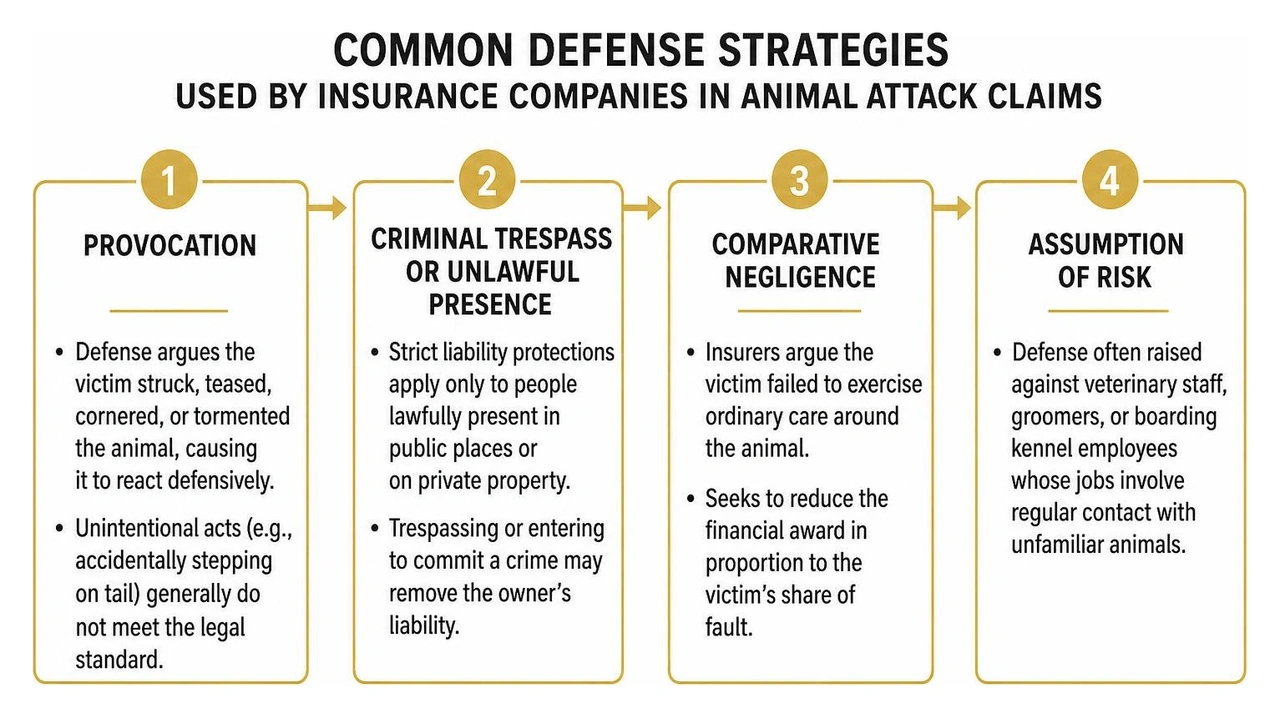
Insurance defense adjusters and defense lawyers rely on specific legal arguments to avoid paying settlements. The most frequent defenses include:
- Provocation: The defense will argue that the victim struck, teased, cornered, or tormented the animal, causing it to react defensively. Under strict liability statutes, unintentional acts (like accidentally stepping on a dog's tail) often do not meet the legal threshold for intentional provocation.
- Criminal Trespass or Unlawful Presence: Strict liability protections only extend to people who are lawfully in a public space or invited onto private property. If a victim was trespassing or entering a property to commit a crime, the owner may be shielded from statutory strict liability.
- Comparative Negligence: Insurers often argue that the injured party failed to exercise ordinary care around the animal, aiming to reduce the financial award in proportion to the victim's perceived fault.
- Assumption of Risk: Frequently raised against veterinary staff, professional groomers, or boarding kennel employees whose jobs involve regular contact with unfamiliar animals.
Types of Dog Bite Injuries and Child Protection Laws
Canine attacks exert hundreds of pounds of pressure per square inch. This force results in severe crush injuries, deep puncture wounds, torn muscle tissue, and severed nerves. Because canine mouths harbor dangerous bacteria—including Pasteurella multocida, Staphylococcus, and Streptococcus—puncture wounds carry an exceptionally high risk of serious infection, tissue necrosis, and sepsis if not irrigated and treated with antibiotics immediately.
Facial Trauma, Reconstructive Surgery, and Scarring
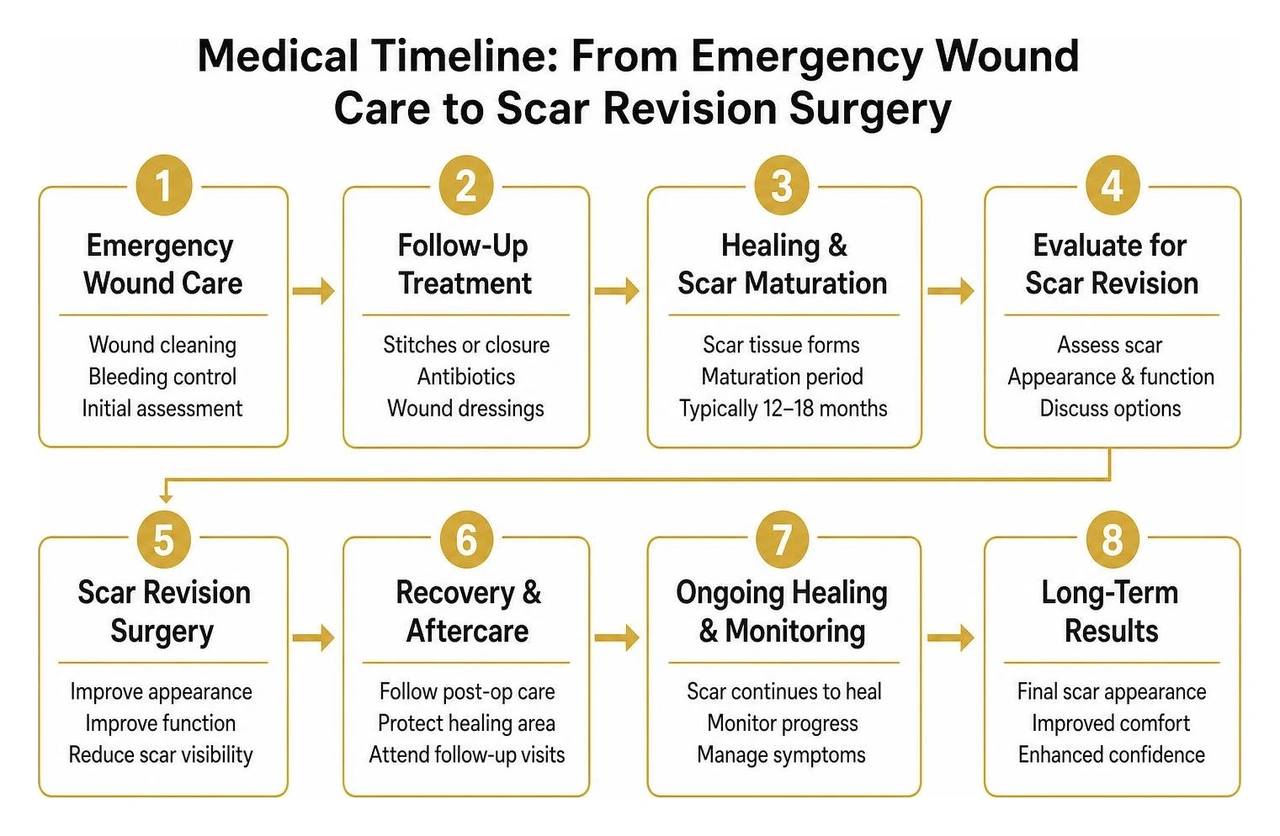
Because victims instinctively use their arms to shield themselves or are pulled to the ground, facial lacerations, broken facial bones, and torn soft tissues are common. Repairing these injuries often requires multiple surgeries, including debridement, skin grafts, and long-term scar revision procedures by a plastic surgeon.
Beyond the physical wounds, animal attacks cause deep psychological trauma. Victims frequently experience post-traumatic stress disorder (PTSD), night terrors, severe anxiety around animals, and social withdrawal due to visible disfigurement. Exploring our resources on injuries from dog bites can provide further insight into the medical and psychological trajectory of these severe attacks.
Special Protections for Child Bite Victims
Children are the most vulnerable demographic for severe animal attacks. Statistics show that 73% of children under age 4 who sustain dog bite injuries suffer trauma to the head, face, or neck. Due to their height and natural curiosity, young children frequently make direct eye contact with dogs or lean in close, triggering territorial or predatory behavior from large animals.
To protect young victims, the law provides important legal safeguards:
- Presumption of Non-Provocation: Young children are generally considered legally incapable of intentional provocation. Courts recognize that a toddler does not possess the cognitive maturity to understand that petting or approaching an animal might trigger an aggressive reaction.
- Tender Years Protections: In many jurisdictions, children under the age of seven are held to be legally incapable of comparative negligence or trespassing in dog bite contexts.
- Tolling of the Statute of Limitations: When a minor is injured, statutory filing deadlines are typically suspended (tolled) until the child reaches the age of majority (age 18), ensuring their legal rights remain intact as long-term scarring and emotional impacts develop.
Recovering Damages and Proving Financial Loss
A successful claim must account for both immediate out-of-pocket expenses and long-term disruptions to your life. Working with our legal team to understand dog bite claim value factors ensures that no category of damage is overlooked during settlement negotiations.
Calculating Economic Damages in a Personal Injury Dog Bite Claim
Economic damages encompass all verifiable financial losses stemming directly from the attack:
- Past and Future Medical Expenses: Emergency room bills, ambulance transportation, surgical procedures, rabies post-exposure prophylaxis, prescription antibiotics, and physical therapy.
- Future Reconstructive Costs: Many scar revision procedures cannot be performed until the scar tissue has fully matured, typically 12 to 18 months after the bite. These future surgical costs must be documented and included in your initial demand.
- Lost Income and Diminished Earning Capacity: Wages lost while recovering in the hospital or attending doctor appointments, as well as reduced earning potential if the attack caused permanent nerve damage or loss of mobility in your hands or arms.
- Out-of-Pocket Expenses: Bandages, specialized wound care supplies, travel costs to medical specialists, and damaged personal property (such as torn clothing or broken glasses).
The Impact of Long-Term Emotional Distress and Disfigurement
Non-economic damages address the intangible, life-altering impacts of an animal attack. Because dog bites frequently leave noticeable scars on visible areas such as the face, neck, and hands, disfigurement plays a central role in settlement value:
- Pain and Suffering: Physical discomfort endured during the bite, initial stitching, wound debridement, and dressing changes.
- Mental Anguish and PTSD: Ongoing psychological treatment, panic attacks, sleep disruptions, and severe phobias related to dogs (cynophobia).
- Permanent Disfigurement and Embarrassment: Visible keloid or hypertrophic scarring that alters personal appearance, leading to diminished self-esteem and social anxiety.
- Loss of Enjoyment of Life: Inability to engage in previously enjoyed outdoor activities, sports, or hobbies due to physical limitations or fear.
Insurance Coverage and Essential Post-Incident Procedures

In the vast majority of personal injury dog bite claims, compensation is paid by an insurance company rather than out of the dog owner’s personal bank account. Understanding how insurance coverage operates is critical to securing a full recovery.
Homeowners Policies, Renters Insurance, and Breed Exclusions
Most standard homeowners and renters insurance policies include personal liability coverage, typically ranging from $100,000 to $500,000. This coverage protects policyholders if their dog bites someone on their property or in a public space.
However, navigating insurance policies can be complex:
- Breed Restrictions: Some insurance companies maintain lists of excluded breeds—such as Pit Bulls, Rottweilers, Doberman Pinschers, German Shepherds, or Chow Chows. If an excluded breed causes an injury, the insurer may attempt to deny coverage under the policy terms.
- Past Bite Exclusions: If a dog has previously bitten someone and the owner failed to report it, or if the insurer issued a specific animal liability exclusion rider, coverage may be contested.
- Landlord Liability: If a tenant’s dog attacks someone and the tenant lacks renters insurance, the landlord or property management company may share liability if they knew the animal was dangerous and had the legal authority to remove it from the premises.
For a detailed breakdown of coverage issues, consult our guide on homeowners insurance dog bite claims.
Immediate Action Plan: Gathering Evidence and Reporting
The steps taken immediately following an animal attack directly impact the strength of your personal injury claim. For a complete procedural walkthrough, review our guide on what to do immediately after a bite.
Follow this essential evidence checklist:
- Seek Immediate Medical Treatment: Have your wounds cleaned, evaluated for structural damage, and treated with preventative antibiotics.
- Identify the Animal and Owner: Obtain the owner’s full name, home address, telephone number, and the dog’s rabies vaccination history.
- File an Animal Control Report: Report the incident to your local municipal animal control or police department. This creates an official public record and initiates a mandatory quarantine check for rabies.
- Photograph Everything: Take clear, well-lit photos of your injuries from multiple angles before and after treatment, as well as photos of the dog, broken fences, torn clothing, and the scene of the incident.
- Collect Witness Details: Secure names, addresses, and phone numbers from anyone who saw the attack or had prior knowledge of the animal’s aggressive behavior.
- Preserve Physical Evidence: Keep unwashed clothing, broken personal items, and torn shoes in a clean bag.
- Avoid Giving Recorded Statements to Insurers: Do not speak with the dog owner's insurance adjuster before consulting with legal counsel.
Frequently Asked Questions About Dog Bite Claims
What is the statute of limitations for filing a dog bite lawsuit?
In Michigan, the statute of limitations for filing a personal injury lawsuit is generally three years from the date the bite occurred. In neighboring states such as Ohio and Pennsylvania, the deadline is typically two years. If you fail to file your lawsuit before the statute of limitations expires, the court will dismiss your case, permanently barring you from recovering financial compensation. When a minor is bitten, the statutory clock is usually tolled until the child's 18th birthday, allowing additional time to file.
Can a dog owner be held responsible if the bite occurred at a private gathering?
Yes. Dog owners owe a duty of care to social guests, neighbors, and family members invited into their homes or yards. If you were bitten at a backyard gathering, the host’s homeowners insurance policy typically covers your injuries. Because the claim is handled through an insurance carrier, you can pursue compensation for your medical bills and lost wages without seeking direct personal funds from your host or friend.
What if a delivery driver is injured on a homeowner's porch?
Delivery workers, mail carriers, and service technicians are legally classified as invitees because they enter private property to perform lawful work duties. Property owners must maintain safe entryways and keep aggressive animals secured. If a driver is injured, our analysis of delivery driver dog bite liability demonstrates how statutory strict liability applies directly to protect workers while on duty.
Conclusion
An unexpected animal attack can leave severe physical scars, substantial medical bills, and lasting psychological distress. Navigating insurance adjusters, strict liability statutes, and future reconstructive medical evaluations requires experienced legal representation.
At Liss, Shapero & Mitnick, our legal team leverages former insurance-defense experience to anticipate insurer tactics, protect your rights, and pursue the compensation you deserve. We understand how insurers value claims, assess permanent disfigurement, and calculate future medical expenses. For a detailed look at how documentation impacts long-term compensation, explore our resource on dog bite scars and claim value.
If you or a loved one has suffered an animal attack, contact Liss, Shapero & Mitnick today to evaluate your case and start protecting your recovery.