
Health Insurance Denial Help: What to Do First

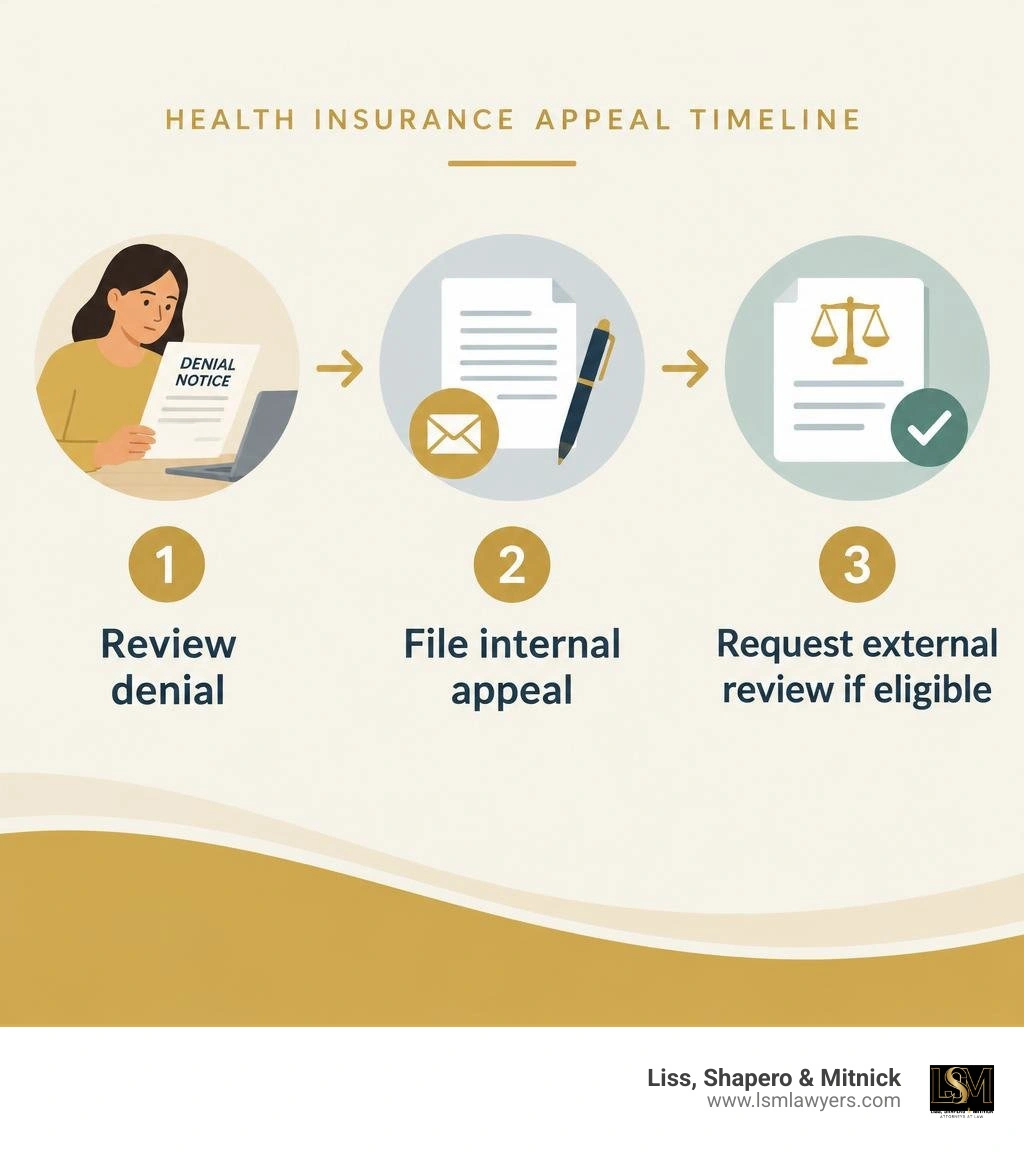
Health insurance denial help starts with the denial notice. Find the reason the insurer gave and the appeal deadline. Ask your doctor whether a billing error can be fixed or whether medical records could support an appeal. Then file a written internal appeal with the insurer, keep copies of everything you send, and save proof of when you sent it. If the insurer upholds the denial, ask whether you qualify for an independent external review.
In many private plans, you have at least 180 days to file an internal appeal, but the rules depend on your coverage. If delayed care could put your health at risk, ask about an expedited appeal right away.
I’m Anthony Shapero, managing partner at Liss, Shapero & Mitnick. My years defending insurers and handling Michigan injury and No-Fault disputes inform my approach to Health insurance denial help when accident-related medical bills are at stake.
Discover more about Health insurance denial help:
Roughly 20% of insured adults face a denied health claim each year. Yet, fewer than 1% of patients ever appeal. Insurers count on that silence. The reality is that between 40% and 60% of all submitted appeals succeed, giving policyholders the payments they rightfully deserve under the Affordable Care Act (ACA).
Having worked on the defense side of the insurance industry before fighting for injured individuals across Metro Detroit and Michigan, I know how insurance adjusters operate. Claim rejections are often automated, but you have enforceable legal rights to challenge them.
Understanding Why Claims Are Denied and Your Right to Appeal
When your insurer refuses to pay for a treatment, doctor visit, or medication, they send an Explanation of Benefits (EOB) or a formal Adverse Benefit Determination letter. This document is not merely an invoice; it is a legal notice outlining why payment was withheld.
Common reasons health insurance claims are denied include:
- Lack of Medical Necessity: The insurer’s clinical guidelines disagree with your physician’s treatment plan.
- Missing Prior Authorization: The healthcare provider did not obtain pre-approval before administering care.
- Administrative and Coding Errors: Inaccurate diagnostic codes (ICD-10) or procedure codes (CPT) were submitted on the claim form.
- Experimental or Investigational Exclusions: The carrier classifies a specific therapy, device, or drug as unproven.
- Network Status: Services were rendered by an out-of-network provider without prior plan approval.
Understanding whether your situation requires an internal appeal or an external review helps you formulate a clear legal strategy when navigating complex insurance disputes.
| Feature | Internal Appeal | External Review |
|---|---|---|
| Who Evaluates the Claim? | The insurance company's internal medical review team | An Independent Review Organization (IRO) |
| Typical Deadline to File | Within 180 days of the denial notice | Within 4 months (120 days) of final internal denial |
| Standard Decision Timeframe | 30 days (pre-service) / 60 days (post-service) | Up to 45 days |
| Expedited Decision Timeframe | Within 72 hours for urgent care | Within 72 hours for urgent care |
| Finality | Insurer can uphold its own denial | Decision is legally binding on the insurance company |
Immediate Steps: When to Seek Health Insurance Denial Help
Taking fast, organized action after receiving an adverse determination prevents missed deadlines.

- Examine the Denial Notice: Identify the exact denial code, the specific policy limitation cited, and the appeal deadline.
- Request Your Complete Claim File: Under federal law, you have the right to request all internal notes, medical clinical criteria, and reviewer reports used by the plan to deny your claim.
- Cross-Check Billing Codes: Contact your provider's billing office to verify that typographical errors or misapplied modifier codes were not the root cause.
- Review Policy Language: Cross-reference your Summary Plan Description (SPD) or Evidence of Coverage to verify whether the benefit is genuinely excluded or simply subject to specific clinical hurdles.
The Role of Your Doctor in Overturning a Denial
Your treating physician is your primary ally during an appeal. A generic prescription slip rarely overturns a denial; carriers demand rigorous clinical substantiation.
- Letters of Medical Necessity: Ask your doctor to draft a detailed letter directly refuting the insurer’s denial criteria, detailing prior treatments tried and failed, and explaining why this specific intervention is vital.
- Peer-to-Peer Reviews: Your physician can request a direct phone conference with the insurance company's medical director to advocate for your care.
- Diagnostic Records: Supplement your appeal packet with full operative notes, imaging results, lab panels, and relevant medical literature.
How to Navigate the Health Insurance Appeal Process Step-by-Step
Navigating an appeal requires strict adherence to administrative procedures. Missing a filing deadline by a single day can extinguish your legal right to challenge the denial.
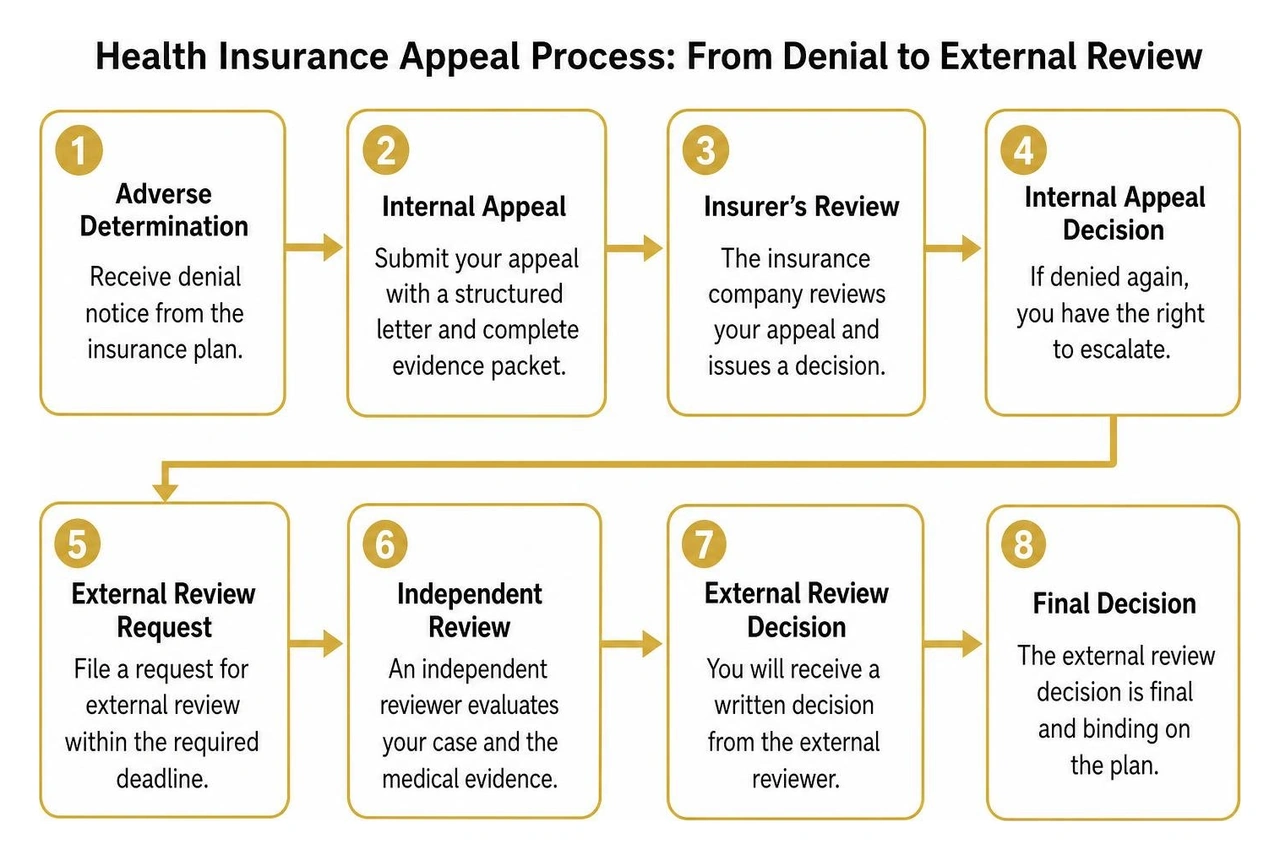
When preparing your submission, review this detailed guide to private insurance appeals. Taking a systematic approach helps in identifying and resolving common claim denials and billing issues.
- Draft a Structured Appeal Letter: Clearly state your member ID, claim number, dates of service, and an itemized breakdown explaining why the insurer’s decision violates policy terms or clinical standards.
- Compile an Evidence Packet: Include your physician's letter of medical necessity, complete medical records, and peer-reviewed studies supporting the efficacy of the treatment.
- Submit with Verifiable Tracking: Send appeals via certified mail with return receipt requested or use the insurer’s secure online portal. Keep timestamped confirmation receipts for your records.
Standard vs. Expedited Appeals for Urgent Medical Care
Standard appeal timelines are designed for elective or completed treatments. However, when waiting weeks for a decision could seriously jeopardize your life, health, or ability to regain maximum function, you are legally entitled to an expedited appeal.
- Urgent Care Criteria: Applies if a delay would subject you to severe pain or immediate clinical deterioration.
- Physician Certification: Your doctor must certify in writing that your situation meets the legal standard for an urgent review.
- 72-Hour Resolution: Both internal expedited appeals and external reviews must render a binding decision within 72 hours (or even faster for ongoing inpatient care).
Requesting an External Review and Independent Medical Evaluation
If your health insurer upholds its denial through the final internal stage, you have the right to an independent external review. Independent Review Organizations (IROs) are unaffiliated medical panels that review cases without insurer interference.
Review state-specific guidelines on how to request an external health insurance review to ensure your paperwork meets state submission requirements. Similar principles apply when challenging benefit cutoffs following an independent medical evaluation arranged by insurance adjusters looking to terminate ongoing claims.
Where to Find Free and Low-Cost Health Insurance Denial Help
Navigating health insurance disputes does not have to be an isolated battle. Several state agencies, consumer protection advocates, and legal resources offer assistance to policyholders facing improper claim rejections.

Consumers can leverage their state healthcare consumer helpline for guidance on denied benefits, billing rights, and network dispute resolutions. Understanding these regulatory avenues is particularly critical when dealing with complex insurance disputes after sustaining injuries.
State Programs and External Health Insurance Denial Help
In Michigan, residents benefit from the Patient’s Right to Independent Review Act (PRIRA), administered by the Michigan Department of Insurance and Financial Services (DIFS). This statute allows consumers to bypass the insurer’s internal bureaucracy and obtain an objective, binding review by an independent medical specialist at no cost to the patient.
In 2024, PRIRA appeals in Michigan surged by 22%, reflecting a growing public awareness of state-backed consumer remedies. To explore how this process works, consult the official Michigan DIFS free claim appeal process.
Navigating health coverage is especially crucial for Michigan motorists choosing coordinated health coverage with no-fault benefits, where an improper health insurance denial can cascade into auto insurance disputes.
Filing Complaints with Government Regulators
When an insurance carrier violates statutory guidelines or acts in bad faith, filing an administrative complaint with regulatory bodies can trigger formal inquiries.
- Self-Funded Employer Plans: Regulated under federal ERISA laws; complaints fall under the jurisdiction of the U.S. Department of Labor (Employee Benefits Security Administration).
- Fully-Insured Group and Individual Plans: Regulated by state insurance commissioners, such as the Michigan DIFS.
- Medicare and Medicaid: Administered through the Center for Medicare & Medicaid Services (CMS) and state health agencies.
Follow official protocols for filing a formal insurance complaint to place regulatory pressure on non-compliant insurers.
What to Do When an Appeal Is Denied Again
If your external review is denied or your plan is exempt from standard external pathways, you still have legal options:
- Request a Second-Level Internal Appeal: Some non-ERISA group policies provide secondary internal panel hearings.
- Request a State Fair Hearing: Available for Medicaid and state-administered plan disputes.
- Pursue Legal Action under ERISA or State Law: If an insurer unreasonably withholds benefits, you can file a lawsuit in federal or state court to enforce policy terms and recover owed coverage.
Understanding how to proceed is essential when coordinating medical bill payments during pending injury claims to protect yourself from aggressive medical debt collections while disputes are litigated.
Frequently Asked Questions About Health Insurance Appeals
How long do I have to file an internal appeal after receiving a claim denial?
For most private, employer-sponsored, and ACA plans, you have 180 days from the date you receive the formal Adverse Benefit Determination letter. Always verify the precise deadline stated on your denial notice.
Can I appeal a health insurance denial if the care was received out-of-network?
Yes. You can appeal based on network adequacy (if no in-network specialist was reasonably available) or invoke the federal No Surprises Act if you received emergency treatment or involuntary out-of-network care at an in-network facility.
What are the chances of winning a health insurance claim appeal?
Independent studies show that 40% to 60% of patient appeals succeed. When appeals are supported by comprehensive medical documentation, clinical notes, and physician letters of necessity, success rates rise significantly.
Conclusion
A health insurance denial is not the final word—it is merely the insurance company's opening position. By understanding the reasons for claim rejections, adhering to strict appeal timelines, and enlisting the support of your medical providers, you can effectively challenge wrongful determinations and protect your financial well-being.
At Liss, Shapero & Mitnick, our Berkley-based legal team leverages former insurance-defense experience to level the playing field for policyholders across Michigan. Whether you are dealing with catastrophic injury claims or coordinating health insurance during open enrollment, we provide strategic advocacy to help you secure the coverage you have paid for.
Authored by Anthony Shapero, Managing Partner at Liss, Shapero & Mitnick.