
What Insurance Bad Faith Means in Michigan

Insurance bad faith in Michigan depends on whose claim the insurer is handling. If your insurer wrongly denies or delays your own benefits, you can pursue the benefits owed and, in some cases, statutory interest. Michigan generally does not allow a separate bad-faith tort claim for that denial. If a liability insurer puts its policyholder at risk by refusing a reasonable settlement within policy limits, the policyholder may have a bad-faith failure-to-settle claim.
A denial alone does not prove bad faith. Keep the denial letter, your proof of loss, and every message about the claim. The type of coverage matters, too: Michigan No-Fault benefits have payment rules that differ from other insurance claims.
I'm Anthony Shapero, managing partner at Liss, Shapero & Mitnick. My approach to Insurance bad faith Michigan claims draws on years spent defending insurers before I began representing injured people.

Insurance bad faith Michigan vocab to learn:
Understanding Insurance Bad Faith in Michigan: Legal Standards and Rights
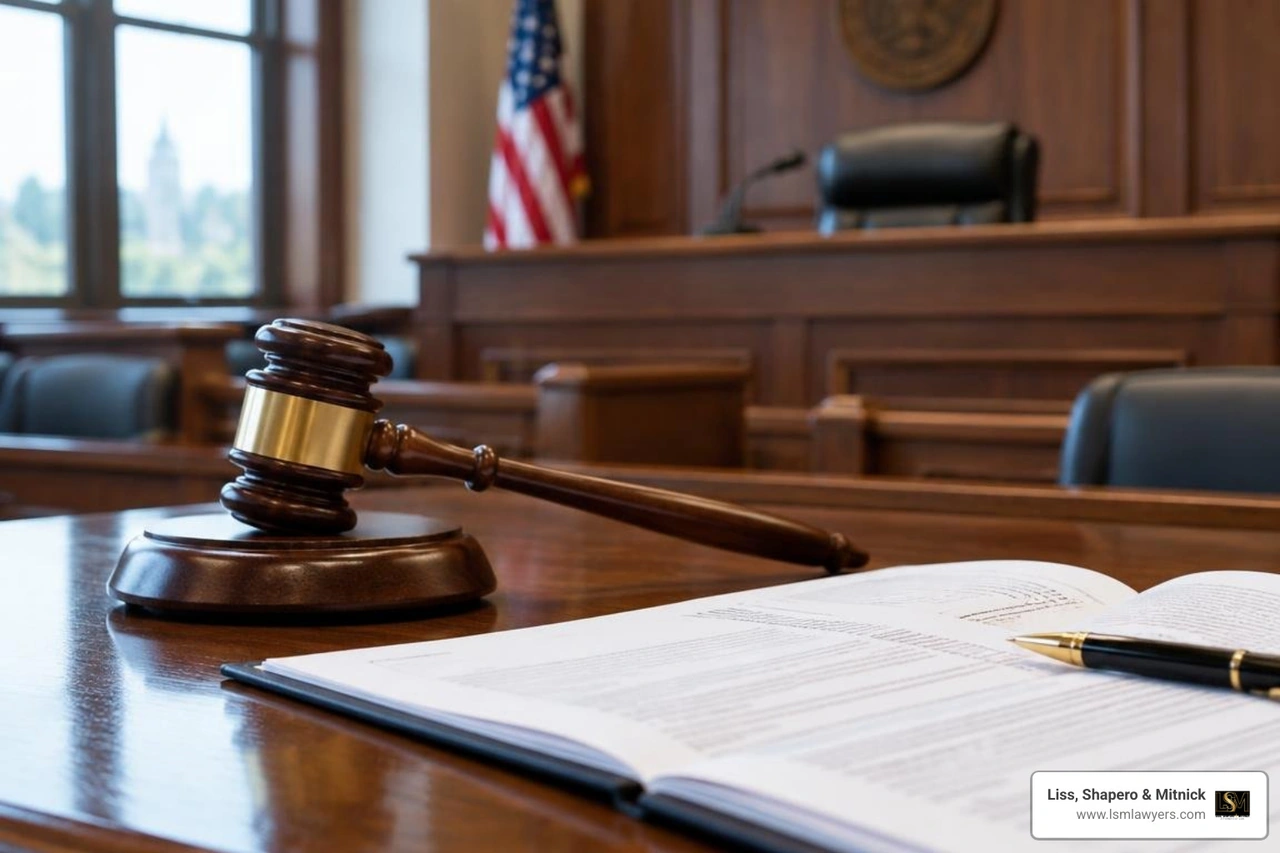
When an insurance carrier issues a policy, it creates a binding commercial contract. In many states, if an insurer acts unreasonably or unfairly delays payment, policyholders can file a standalone tort lawsuit for bad faith and seek emotional distress or punitive damages. In Michigan, the legal framework is much more restricted.
As outlined in the Michigan Insurance Law Compendium, our courts have repeatedly rejected an independent common-law tort for breach of the implied covenant of good faith and fair dealing in commercial insurance agreements. Michigan law draws a strict boundary between first-party claims (claims you make against your own insurance policy) and third-party claims (claims brought against a policyholder by an injured party).
| Claim Category | Core Legal Action | Primary Remedies Available | Independent Tort Permitted? |
|---|---|---|---|
| First-Party Claims (PIP, Homeowners, Life, Disability) | Breach of Contract / Statutory Violations | Payment of contract benefits + 12% statutory penalty interest under MCL 500.2006 | No (remedies generally limited to contract terms) |
| Third-Party Failure to Settle (Auto Liability, CGL) | Extracontractual Bad Faith Duty to Settle | Full amount of excess verdict exceeding policy limits | Yes (recognized state of mind / tort standard) |
First-Party Claims and the Rejection of Independent Tort Liability
For policyholders facing an unexpected denial of disability, health, property, or auto benefits, the inability to sue for general bad faith tort damages can be frustrating. Under foundational Michigan Supreme Court decisions such as Kewin v. Massachusetts Mutual Life Insurance Co. and Roberts v. Auto-Owners Insurance Co., an insurer's wrongful refusal to pay benefits is fundamentally treated as a breach of contract.
The Michigan Court of Appeals reiterated this rule in Casey v. Auto Owners Insurance Company, confirming that an alleged bad-faith breach does not create an independent tort action. Because commercial contracts do not inherently contemplate emotional well-being, policyholders cannot recover damages for mental anguish, annoyance, or vexation unless they prove an independent tort such as Intentional Infliction of Emotional Distress (IIED). Furthermore, punitive damages designed purely to punish wrongdoers are not available in Michigan unless expressly authorized by statute, and exemplary damages require proof of tortious conduct entirely separate from the contractual breach.
These boundaries frequently come into play when handling delayed or denied claims after an IME, where insurers terminate necessary medical benefits based on brief, one-sided medical exams.
Statutory Remedies and 12% Penalty Interest Under MCL 500.2006
Even though Michigan does not permit independent common-law tort claims for first-party claim handling, the Legislature established statutory protections within the Uniform Trade Practices Act (UTPA).
Under MCL 500.2006 statutory provisions, insurance carriers face strict processing timelines:
- 30-Day Specification Rule: An insurer must specify in writing what materials constitute satisfactory proof of loss within 30 days after receiving a claim.
- 60-Day Payment Deadline: Once satisfactory proof of loss is supplied, the insurer must pay the claim within 60 days.
- 12% Penalty Interest: If benefits are not paid within that 60-day window, the overdue amount accumulates simple interest at a rate of 12% per year, unless the claim is reasonably in dispute.

When resolving insurance disputes after personal injury, this 12% statutory penalty under the UTPA serves as crucial leverage to compel carriers to pay legitimate losses promptly. Under the Michigan Auto No-Fault Act (MCL 500.3142), Personal Injury Protection (PIP) benefits carry an even tighter 30-day payment timeline once reasonable proof of loss is submitted.
Third-Party Bad Faith and the Duty to Settle Within Policy Limits

While first-party claims remain confined to contract remedies, Michigan law recognizes a cause of action for bad faith in third-party liability disputes. When an insurer defends a policyholder against a lawsuit, it exercises exclusive control over settlement negotiations. This control creates a fiduciary duty to protect the insured from personal financial ruin.
If an insurance company refuses a reasonable settlement demand within the policy limits, it gambles with the insured's financial security. If the case goes to trial and results in a verdict far exceeding the coverage cap, the policyholder faces an excess judgment. Under these circumstances, navigating an insurance bad faith lawsuit allows the policyholder (or the injured plaintiff via an assignment of rights) to hold the carrier responsible for the entire excess verdict.
Proving Insurance Bad Faith in Michigan Under the Commercial Union Standard
In the landmark case Commercial Union Ins. Co. v. Liberty Mutual Ins. Co., the Michigan Supreme Court established the standard for bad-faith failure to settle. The court defined bad faith as:
"Arbitrary, reckless, indifferent, or intentional disregard of the interests of the person owed a duty."
Bad faith does not require actual fraud, deceit, or dishonesty. Instead, it occurs when an insurer acts with a selfish purpose, prioritizing its own bottom line over the insured's exposure. However, bad faith is more than mere negligence or an honest error in judgment.
To evaluate whether an insurer breached its duty to settle, Michigan courts apply a 12-factor framework:
- Failure to properly investigate the claim and evaluate liability risks.
- Refusal to heed the recommendations of its own retained defense counsel or adjusters.
- Failure to keep the policyholder fully informed of settlement offers and excess exposure.
- Disregard of clear liability and catastrophic claimant injuries.
- Undue delay in accepting a policy-limits settlement offer.
- Attempts to coerce the insured into contributing personal funds toward a settlement within policy limits.
Michigan law explicitly prohibits evaluating an insurer's settlement decision using 20/20 hindsight. The carrier's conduct must be judged strictly based on the facts and circumstances known at the time the settlement decision was made.
Excess Judgments and the Judgment Rule Under Frankenmuth v. Keeley
Historically, insurers argued that if an insured defendant was insolvent or had minimal income, they suffered no actual loss from an excess verdict because they could never pay it.
The Michigan Supreme Court eliminated that defense in Frankenmuth Mut. Ins. Co. v. Keeley, formally adopting the "judgment rule." Under this rule, the entry of a final excess judgment against an insured constitutes immediate, compensable legal injury due to damaged credit, liens, and potential bankruptcy. An insurer guilty of bad-faith failure to settle is liable for the full excess judgment, regardless of whether the insured has the financial capacity to pay.
Procedural Rules for Litigating Insurance Bad Faith in Michigan After Hairston v. LKU
For nearly 50 years, plaintiffs who secured an excess verdict often sought to collect the excess balance by filing a writ of garnishment against the defendant's liability insurer in the underlying case, relying on Rutter v. King (1974).
In 2025, the Michigan Supreme Court overhauled this procedure in Hairston v. LKU. Overruling Rutter, the court held that an insurer's alleged bad-faith failure to settle is an unliquidated, contingent claim rather than an absolute, garnishable debt under Michigan Court Rule (MCR) 3.101(G)(1).

As a result, bad-faith failure-to-settle claims cannot be litigated through post-judgment garnishment. Instead, the injured plaintiff must obtain an assignment of rights from the insured defendant and file an independent civil lawsuit against the insurer, complete with standard pleadings, full discovery, and trial procedures. Knowing when to hire an attorney rather than waiting for an offer ensures these procedural steps are handled properly from day one.
Discovery Rules, Insurer Defenses, and Statutes of Limitations
Litigating insurance disputes requires access to internal documentation. In first-party coverage and breach-of-contract disputes, insurer claim files, adjuster logs, and communications are generally discoverable, provided they were created in the ordinary course of business prior to formal litigation.
However, Michigan courts maintain strict boundaries:
- Work-Product Doctrine: Documents prepared by or for counsel in direct anticipation of litigation remain privileged.
- Loss Reserves & Reinsurance: While some courts allow exploration of general risk evaluations, reserve amounts and reinsurance communications are frequently deemed irrelevant and non-discoverable in standard coverage disputes.
Protecting these records early by serving a formal spoliation letter prevents the loss or destruction of electronic claim files and adjuster notes.
Insurer Defenses in Michigan Bad Faith Litigation
Insurance carriers rely on several established defenses to defeat claims:
- Fairly Debatable / Reasonable Dispute: If an insurer denies a claim based on a legitimate legal question or factual ambiguity, it avoids statutory penalty interest under MCL 500.2006.
- Advice of Counsel: An insurer that reasonably relies on the thorough, objective opinion of independent defense counsel regarding settlement value can use that advice to defend against bad-faith allegations.
- Innocent Misrepresentation & Policy Rescission: Under Michigan law, an insurer may rescind coverage and void an insurance policy if an applicant made a material misrepresentation on the application, even if the error was completely unintentional, provided the insurer relied on it to underwrite the risk.
- Condition Precedent & Lack of Notice: Failure by the insured to submit prompt notice of a claim, attend an examination under oath, or provide timely proof of loss can bar recovery.
Statutes of Limitations and Accrual Timelines
Missing a filing deadline will bar an otherwise valid claim:
- Breach of Contract: Under MCL 600.5807, first-party breach of insurance contract claims carry a six-year statute of limitations, though specific policies may contractually shorten this period to one or two years.
- Accrual in Failure to Settle: A third-party bad-faith failure-to-settle claim accrues when the final excess judgment is entered against the insured.
- No-Fault Claims: First-party auto PIP disputes are governed by strict rules, including one-year-back rule limitations, which limit recovery to expenses incurred within one year prior to filing suit.
Frequently Asked Questions About Insurance Bad Faith in Michigan
Does Michigan law allow an independent tort lawsuit for a first-party claim denial?
No. Under established Michigan Supreme Court precedent (Kewin, Roberts, and Casey), Michigan does not recognize an independent tort for breach of the implied covenant of good faith and fair dealing. Wrongful first-party denials must be pursued as breach of contract actions, with statutory remedies such as 12% penalty interest under MCL 500.2006 where applicable.
How did the Hairston v. LKU decision change bad faith failure-to-settle litigation?
The Michigan Supreme Court's 2025 ruling in Hairston v. LKU barred plaintiffs from pursuing third-party bad-faith failure-to-settle claims through summary post-judgment garnishment proceedings. Claimants must now obtain an assignment of rights from the insured and file an independent civil lawsuit.
What must a policyholder prove to recover 12% penalty interest from an insurer?
Under MCL 500.2006, a first-party insured must establish that they submitted satisfactory proof of loss, that the insurer failed to pay within 60 days, and that the claim was not reasonably in dispute. Third-party claimants must prove that liability was clear, that the insurer refused payment in bad faith, and that bad faith was determined by a court of law.
Conclusion
Understanding insurance bad faith in Michigan requires recognizing the difference between first-party contract enforcement and third-party failure-to-settle litigation. While Michigan law shields insurers from broad bad-faith tort damages in routine claim denials, the Uniform Trade Practices Act, the Auto No-Fault Act, and common-law failure-to-settle rules provide concrete tools to enforce accountability.
At Liss, Shapero & Mitnick, our legal team draws on deep former insurance-defense experience to level the playing field for our clients across Metro Detroit and throughout Michigan. Whether you are dealing with a denied personal injury claim, disputing a disability termination, or coordinating health insurance with Michigan No-Fault, we understand how insurers evaluate risk and how to enforce your rights under Michigan law.
Anthony Shapero
Managing Partner, Liss, Shapero & Mitnick