.svg)
Michigan Bike Accident: What to Do and What Rights You Have

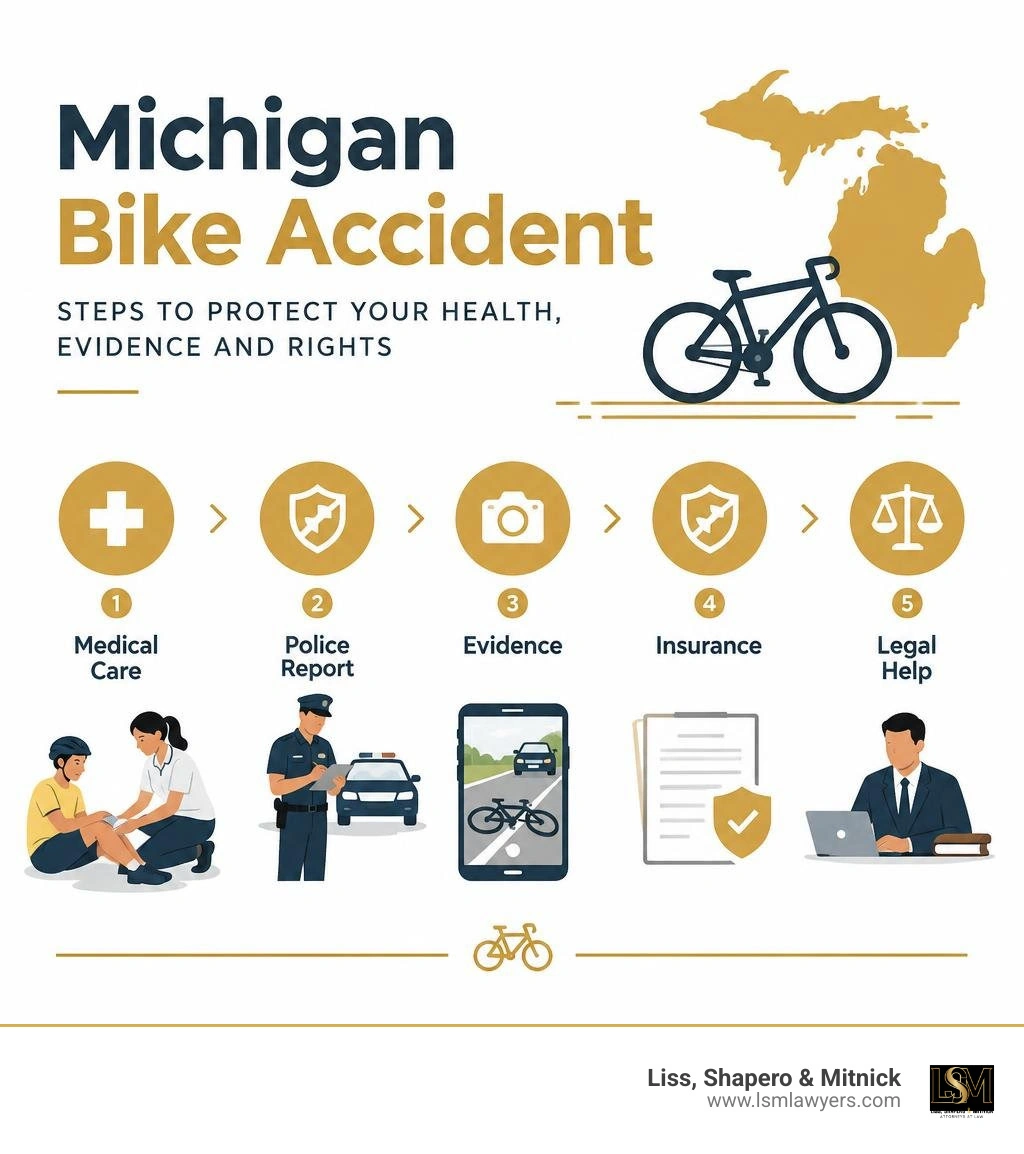
After a Michigan bike accident, get medical care, call police, collect witness and vehicle information if you can, and avoid giving a recorded statement to an insurer before you understand your options. Michigan law generally requires drivers to leave at least three feet when passing a bicyclist, and a careless driver may be responsible for medical costs, lost income, and other losses.
Cycling deaths are a growing concern. Michigan recorded 35 bicyclist fatalities in 2025, a 21% increase from 29 in 2024, even as overall roadway deaths declined. Recent crashes in rural Ingham County, Kalamazoo, and Metro Detroit show that speed, narrow shoulders, large vehicles, impaired driving, and gaps in safe bike infrastructure can turn a routine ride into a life-changing event.
I am Scott Mitnick, a Michigan personal injury lawyer and partner at Liss, Shapero & Mitnick with more than 20 years of civil-litigation experience in auto negligence, no-fault insurance, and wrongful-death matters. This Michigan bike accident guide explains the practical steps to protect your health, evidence, insurance claim, and legal rights.
Understanding Michigan Bike Accident Trends and Risk Factors
The recent data on Michigan cycling safety presents an alarming contradiction. While total traffic fatalities across the state fell by 3% in 2025 to 1,065 deaths, vulnerable road users suffered the opposite trend. Pedestrian fatalities jumped 18%, and cyclist deaths rose 21% to 35 victims. In 2024, 22 cyclists died on state roads, down from 28 in 2023, but our per-capita cyclist death rate continues to outpace national averages for rural states.
What is driving this increase? A combination of engineering choices, driver behaviors, and vehicle designs has made Michigan roads more dangerous for riders. Across Ingham County, bicycle collisions account for 0.8% of all recorded traffic crashes, a proportion higher than the statewide average. Tragic events like the crash where a Williamston boy was killed on Grand River Ave highlight the severe dangers cyclists face on high-speed rural arterials. These roads often have 55 mph limits, narrow shoulders, and zero physical separation between traffic and non-motorized riders.
Modern vehicle design exacerbates these dangers. Modern SUVs and pickup trucks feature taller hoods and blunt front grilles. In a collision, these flat profiles strike cyclists at chest level, increasing the likelihood of riders being pulled underneath the vehicle rather than thrown clear onto the hood.
While Michigan established a Complete Streets policy to promote multi-modal transit, the legislation serves primarily as a planning framework rather than a funding mandate. Consequently, local governments are encouraged, but not legally required or funded, to retrofit existing high-speed corridors with protected bike lanes or wide, paved shoulders.
Lessons from High-Profile Michigan Collisions
Catastrophic crashes across our state highlight recurring patterns of driver error and roadway risk. The 2016 Kalamazoo bicycle crash—where an impaired truck driver traveling 58 mph in a 30 mph zone struck a group of cyclists, killing five and injuring four—remains a stark reminder of the devastating impact of driver intoxication and extreme speeding. That tragedy prompted national discussions on motorist accountability, leading to second-degree murder convictions and prison terms of 40 to 75 years for the driver.
Recent collisions demonstrate that these systemic issues persist. In Leroy Township near Williamston, two young siblings riding on the paved shoulder of Grand River Avenue were struck by a passing SUV, resulting in the death of a 12-year-old boy and severe injuries to his sister, even though both wore helmets. Further east, Metro Detroit communities have increased their focus on e-bike safety after serious incidents at multi-lane suburban intersections, such as crosswalk collisions along Telegraph Road in Bloomfield Township.
Whether caused by substance impairment, vehicle drift, or driver inattention, these incidents show that paint alone does not stop a multi-ton vehicle from entering cycling space.
E-Bikes and Vulnerable Road Users
The rapid adoption of electric bicycles (e-bikes) and electric motorcycles (e-motos) has introduced new dynamics to Michigan roads. These devices allow riders of varying skill levels to travel at higher speeds, which shortens reaction times for motorists and riders alike.
Tragedies involving motorized bikes are occurring in both commercial and suburban corridors. A recent collision where a Muskegon man died after a collision between an e-bike and vehicle at a Fruitport retail center demonstrates the risks riders face in busy parking lot entrances and turning corridors.
As detailed in our analysis of bicycle & e-bike accidents and who pays your medical bills in Michigan, legal classification matters. Standard low-speed electric bicycles (Class 1, 2, and 3) are treated similarly to traditional bicycles under Michigan traffic law. However, higher-output e-motos often fall outside the statutory definition of an e-bike and may be treated as unlicensed motor vehicles, altering liability and insurance coverage in a crash.
Michigan Cycling Laws and Motorist Responsibilities
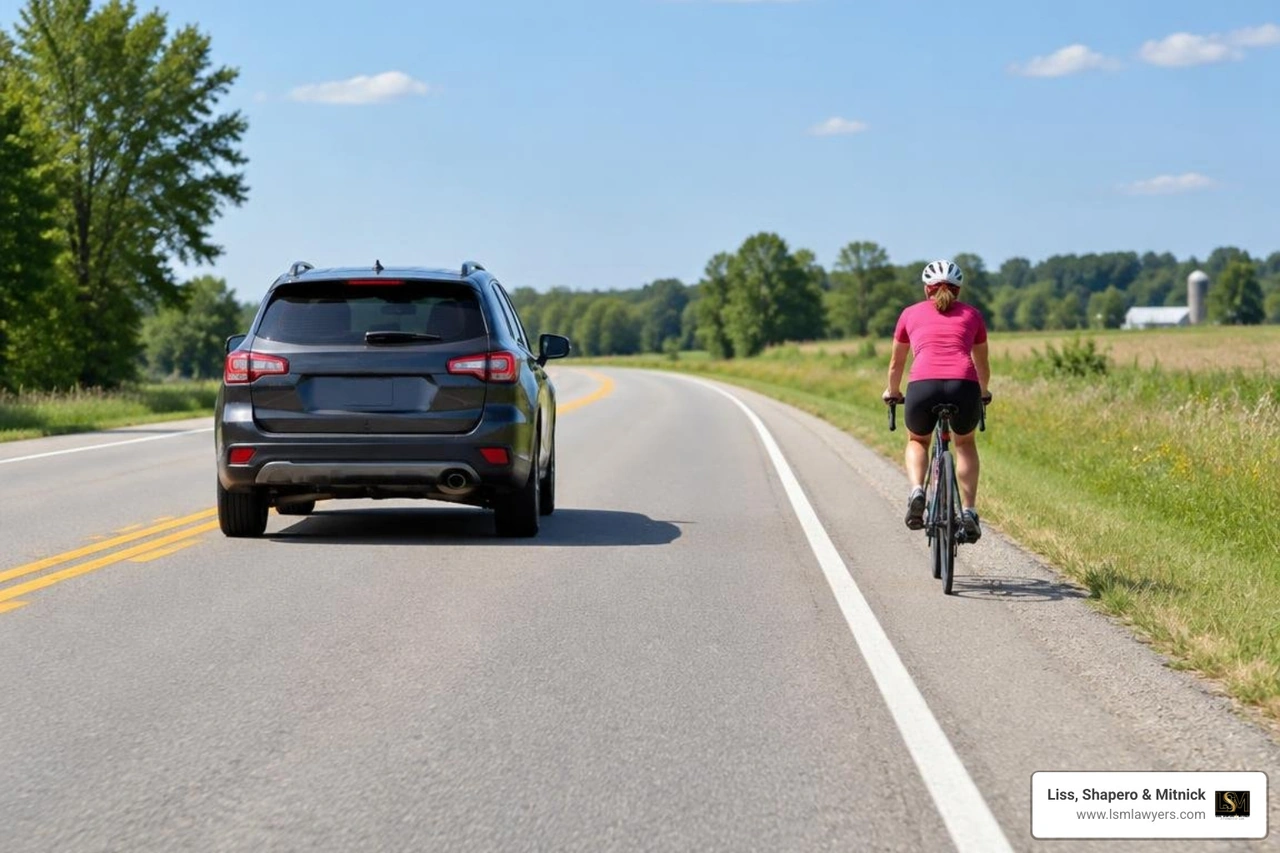
Michigan law recognizes bicycles as legal vehicles entitled to share the roadway. Under Michigan Compiled Laws (MCL 257.636(2)), motorists overtaking a bicycle traveling in the same direction must pass at a safe distance—defined by statewide statute as not less than three feet of clearance between the right side of the vehicle and the cyclist.
Several local municipalities have enacted local ordinances expanding this requirement to five feet, including:
- Ann Arbor
- Grand Rapids
- Dearborn
- Kalamazoo
- Portage
- Norton Shores
- Muskegon
- Jackson
- East Lansing
Drivers must exercise heightened caution when turning across bike lanes, approaching mid-block crosswalks, or navigating intersections. Understanding the rules governing bicycle & pedestrian safety in crosswalks, trail crossings, and right hooks is crucial because a significant percentage of urban crashes occur when a turning motorist fails to yield to a straight-traveling rider.
How Legal Fault Is Determined in a Michigan Bike Accident
Determining liability after a collision requires establishing whether the motorist breached their duty of care. Common forms of driver negligence include:
- Drifting over painted shoulder lines or bike lane markings
- Distracted driving from smartphone use or in-car screens
- Turning right across the path of an oncoming cyclist (a "right hook")
- Opening a car door into an approaching bicyclist's path without checking the mirror
When a crash occurs in designated cycling zones, working with an experienced bike lane crash lawyer in Oakland County, Michigan helps ensure that physical evidence, traffic camera footage, and driver cell phone records are properly preserved. Similarly, in high-density areas, consulting a bike dooring injury attorney in the Detroit area allows injured riders to prove violations of local safety ordinances.
Michigan uses a modified comparative fault standard (MCL 600.2959). If an injured bicyclist is found partially at fault (for example, riding at dusk without active lights), their economic recovery is reduced by their percentage of fault. If the cyclist is deemed more than 50% at fault, they are barred from recovering non-economic damages (pain and suffering), though their access to no-fault medical benefits remains protected.
Insurance Coverage and Medical Bill Recovery
Michigan’s auto insurance system is unique. If you are injured as a bicyclist in a crash involving a motor vehicle, your initial medical expenses are covered through Michigan No-Fault Personal Injury Protection (PIP) benefits, regardless of who caused the collision.
Our guide on what happens when you are hit while riding a bike in Michigan and who pays your medical bills outlines how state law determines payment priority:
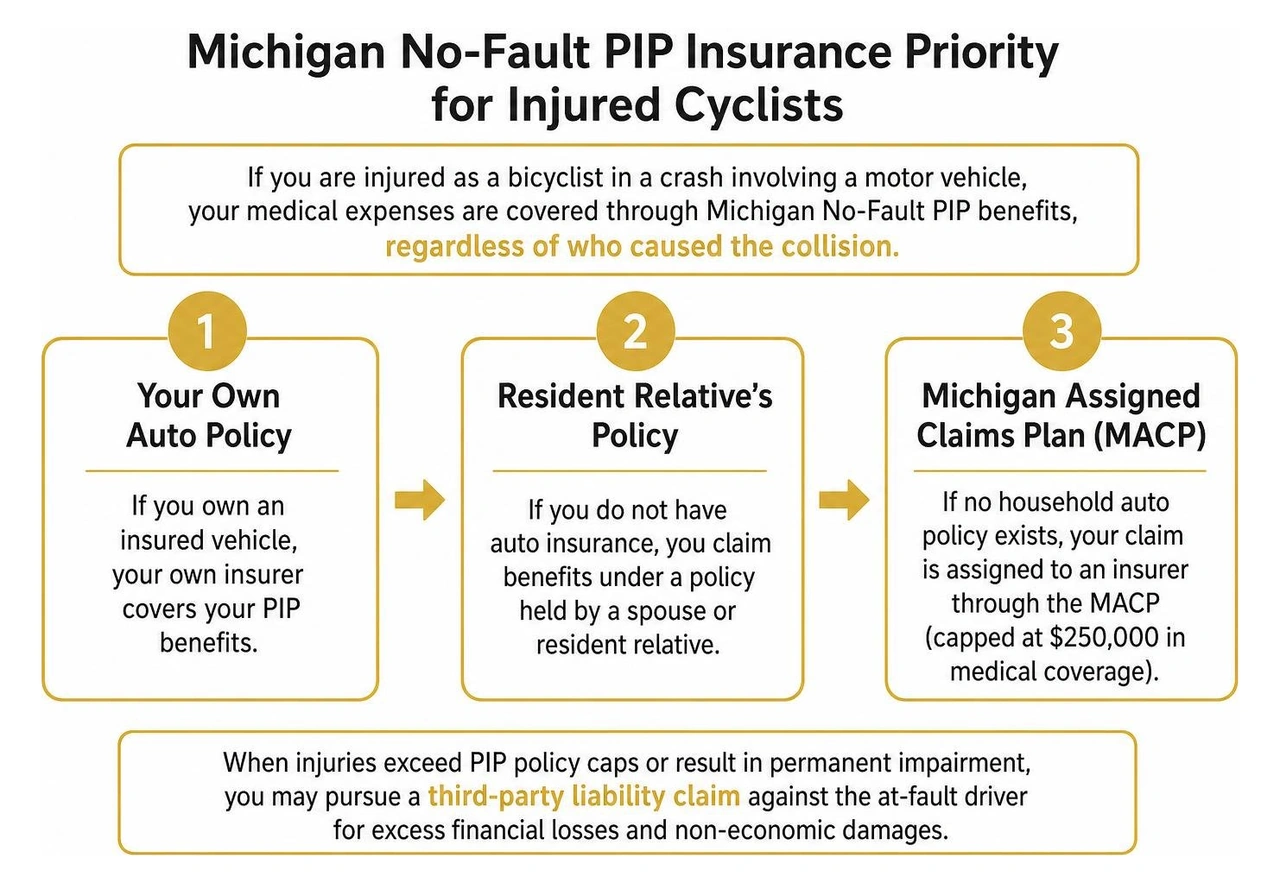
- Your Own Auto Policy: If you own an insured vehicle, your own insurer covers your PIP benefits.
- Resident Relative's Policy: If you do not have auto insurance, you claim benefits under a policy held by a spouse or resident relative.
- Michigan Assigned Claims Plan (MACP): If no household auto policy exists, your claim is assigned to an insurer through the MACP (capped at $250,000 in medical coverage).
When severe injuries exceed statutory PIP policy caps or result in permanent impairment, partnering with a biker hit by car attorney in Oakland County allows you to pursue a third-party liability lawsuit against the at-fault driver for excess financial losses and non-economic damages.
Legal Recourse and Post-Crash Recovery
Navigating the aftermath of a bike crash involves managing two parallel legal claims: first-party no-fault PIP claims and third-party bodily injury claims against the negligent motorist.
| Claim Type | Governing Law / Source | Recoverable Benefits | Fault Required? |
|---|---|---|---|
| First-Party No-Fault (PIP) | Your auto policy, resident relative policy, or MACP | Medical costs (up to policy limit), 85% lost wages (up to 3 years), $20/day replacement services, attendant care | No (No-fault system) |
| Third-Party Bodily Injury | At-fault driver's bodily injury liability policy | Pain and suffering, excess medical bills beyond PIP limits, excess wage loss beyond statutory caps | Yes (Must prove driver was ≥50% at fault) |
In fatal collisions, surviving family members may pursue a wrongful death claim under MCL 600.2922. This action recovers funeral and burial costs, loss of financial support, and compensation for the loss of companionship. While grassroots initiatives and community memorial fundraisers often provide rapid short-term relief, they do not replace formal legal claims. Working with a dedicated bicycle accident lawyer in Berkley, Michigan ensures that your family secures all available insurance proceeds and holds negligent drivers fully accountable.
Critical Steps Following a Michigan Bike Accident
The actions you take immediately following a collision directly affect both your physical recovery and your legal claim.
- Call 911 Immediately: Ensure law enforcement creates an official crash report. Never agree to resolve a collision informally without an officer present.
- Seek Emergency Medical Attention: Adrenaline can mask traumatic brain injuries, internal bleeding, and musculoskeletal damage. Go to an emergency department or urgent care facility.
- Preserve All Equipment: Do not repair, discard, or clean your damaged bicycle, helmet, torn clothing, or electronics. Your cracked helmet and bent wheel rim serve as key physical evidence for crash reconstructionists.
- Document the Scene: If physically able, take photographs of vehicle damage, road gouge marks, tire skid lines, street signs, and shoulder conditions before the scene is cleared.
- Collect Witness Information: Obtain names, phone numbers, and statements from eyewitnesses or nearby residents with security cameras.
- Avoid Giving Recorded Statements: Do not provide statements to the at-fault driver’s insurance adjuster before consulting a cycling accident attorney. Adjusters often use leading questions to shift comparative fault onto the cyclist.
Frequently Asked Questions About Michigan Bike Accidents
Who pays medical bills after a bicycle crash with a motor vehicle?
Medical bills are covered primarily through Michigan's No-Fault PIP insurance framework. For a full breakdown of coverage tiers, see our guide answering who pays my medical bills if I'm hit by a car while riding my bicycle in Michigan?. Your treatment costs are submitted first to your own auto insurance policy, second to a resident relative's policy, and finally through the Michigan Assigned Claims Plan if no private auto policy exists in your household.
What is Michigan's passing distance requirement for cyclists?
Under MCL 257.636(2), motorists must maintain at least three feet of clearance when overtaking a bicyclist traveling in the same direction. However, local ordinances in cities like Ann Arbor, Grand Rapids, Kalamazoo, and Dearborn require a minimum passing distance of five feet.
Can an injured cyclist recover compensation if they were not wearing a helmet?
Yes. Michigan law does not require adult bicyclists to wear helmets, and failure to wear a helmet does not prevent you from filing an insurance claim or lawsuit. While the defense may attempt to argue comparative negligence for head injuries, not wearing a helmet does not eliminate an at-fault driver's liability for causing the crash.
Conclusion: Protecting Cyclists and Finding Legal Help
A bicycle crash can leave riders and their families facing complex medical care, lost income, and difficult insurance disputes. When drivers fail to yield, misjudge their passing clearance, or operate their vehicles recklessly, injured cyclists deserve skilled legal advocacy.
At Liss, Shapero & Mitnick, we represent injured cyclists and pedestrians throughout Berkley, Metro Detroit, and across Michigan. Our team draws on our former insurance-defense background to anticipate auto insurers' tactics, challenge comparative fault arguments, and maximize compensation for our clients.
If you or a loved one has been injured on the road, contact our Motorcycle & Bicycle Accident Practice Area team today for a free, confidential case evaluation.