.svg)
.avif)


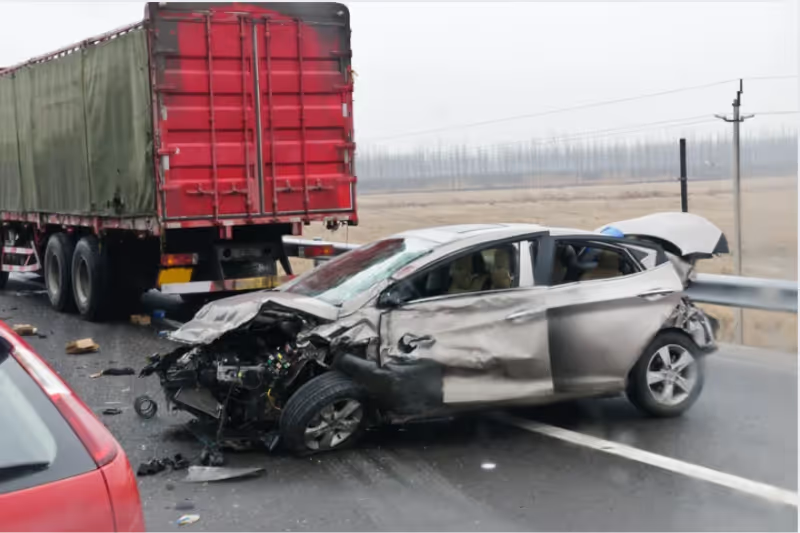
Truck underride crashes are among the most violent and deadly collisions on the road. When a passenger vehicle slides beneath the side or rear of a large commercial truck or trailer, the results are frequently catastrophic. The structural protections built into cars—airbags, crumple zones, and reinforced frames—are often rendered useless in these crashes, leading to severe injuries or loss of life.
Underride crashes can happen almost anywhere. On highways, they often occur at high speeds when a truck slows suddenly or is stopped in traffic. On city streets, they may happen during turns, lane changes, or at intersections. Construction zones and roadside breakdowns also create dangerous conditions, especially when visibility is limited and warning devices are inadequate.
For survivors, underride crashes often result in permanent, life-altering injuries. For families who lose a loved one, the emotional and financial consequences can be overwhelming. Beyond individual families, these crashes affect entire communities—leaving lasting trauma and raising serious questions about roadway safety and preventable risks.
Side and Rear Underride Guards: What They Are and Why They Matter
Rear Underride Guards
Rear underride guards are metal bars or frames mounted to the back of trailers. Their purpose is to stop or slow a vehicle before it can slide underneath the trailer during a rear-end collision.
Federal Requirements for Rear Underride Guards
Federal regulations require most large trailers to have rear underride guards. These standards set minimum strength and height requirements intended to reduce the risk of fatal underride crashes.
Known Weaknesses in Existing Rear Guard Standards
Despite federal requirements, many rear underride guards are criticized for being too weak or poorly designed. In real-world crashes, some guards fail by:
- Bending or breaking on impact
- Detaching from the trailer
- Allowing vehicles to underride at higher speeds
How Guards Can Fail in Real-World Crashes
Rear guards are often tested under limited conditions that do not reflect actual highway speeds or crash angles. As a result, guards that technically meet minimum standards may still fail catastrophically in serious collisions.
Side Underride Guards
Side underride guards are installed along the sides of trailers to prevent vehicles, cyclists, and pedestrians from being pulled or pushed underneath the trailer during side impacts or turns.
Lack of Universal Federal Requirements for Side Guards
Unlike rear underride guards, there is no universal federal requirement in the United States mandating side underride guards on most commercial trailers. This means many trucks on the road offer no side underride protection at all.
Safety Data Showing Reduced Fatalities With Side Guards
Studies and international data have shown that side underride guards can significantly reduce fatalities and severe injuries, particularly in urban environments and at intersections where side impacts are more common.
Common Truck Configurations Without Side Protection
Many trailers—especially long-haul and older models—operate without any side underride protection. These configurations pose a heightened risk to passenger vehicles, cyclists, and pedestrians sharing the road.
Who May Be Liable in a Truck Underride Crash?
Truck Drivers
Truck drivers have a duty to operate their vehicles safely and in compliance with state and federal regulations. When that duty is breached, serious consequences can follow.
Common driver-related issues in underride crashes include:
- Negligent driving and safety violations, such as speeding, distraction, or fatigue
- Failure to use hazard lights, reflective triangles, or warning devices when stopped or disabled
- Unsafe stopping or parking, including stopping in travel lanes, shoulders, or poorly lit areas
- Improper roadway positioning, particularly during wide turns or lane changes
Trucking Companies
In many underride cases, the trucking company bears significant responsibility. Companies control equipment decisions, maintenance practices, and driver expectations.
Potential areas of trucking company liability include:
- Failure to install or upgrade underride guards, even when safer options are available
- Negligent maintenance or inspection practices, allowing guards or lighting to deteriorate
- Inadequate safety policies, training, or driver supervision
- Pressure on drivers to meet unrealistic schedules, encouraging unsafe driving behavior
Trailer and Guard Manufacturers
In some cases, the underride guard itself is the problem. Manufacturers may be held liable when guards fail to perform as intended.
These claims may involve:
- Defective or poorly designed underride guards
- Failure to meet safety standards, even if minimum regulations were technically satisfied
- Product liability or design defect claims, particularly where guards collapse, detach, or allow underride at survivable speeds
Other Third Parties
Additional parties may share responsibility depending on the circumstances of the crash.
These may include:
- Cargo loaders or logistics contractors, if improper loading affected visibility or stability
- Maintenance or inspection providers, who failed to identify safety issues
- Government entities, in limited cases involving dangerous roadway design or inadequate signage
Compensation Available After a Truck Underride Crash
Compensation for Injured Victims
Survivors of underride crashes often face long-term or permanent harm. Compensation may include:
- Past and future medical expenses, including surgeries and hospital care
- Rehabilitation, therapy, and long-term care, such as in-home assistance
- Lost wages and loss of future earning capacity
- Pain and suffering, both physical and emotional
- Permanent disability and loss of quality of life
Compensation in Fatal Underride Crash Cases
When an underride crash results in death, surviving family members may pursue wrongful death damages under Michigan law.
Recoverable damages may include:
- Funeral and burial expenses
- Loss of financial support the deceased would have provided
- Loss of companionship, care, and guidance
- Emotional suffering and mental anguish experienced by surviving loved ones
Michigan No-Fault Benefits and Truck Accidents
Michigan’s No-Fault system may provide critical benefits regardless of who caused the crash.
These benefits may include:
- Personal Injury Protection (PIP) benefits
- Medical expenses and wage-loss benefits, subject to policy terms
- Replacement services for household help
How Michigan Law Applies to Underride Crash Claims
Negligence Standards Under Michigan Law
Most underride crash claims are based on negligence. To establish liability, an injured person or surviving family must show that a party:
- Owed a legal duty of care
- Breached that duty through action or inaction
- Caused injury or death as a result
- Produced measurable damages
Comparative Fault Arguments Used by Trucking Defendants
Michigan follows a comparative fault system, and trucking defendants often attempt to shift blame to the injured driver. Common arguments include claims that the passenger vehicle was speeding, following too closely, or failed to avoid the truck. These defenses are frequently raised even when inadequate underride protection or safety violations played a major role.
Statutes of Limitation and Notice Requirements
Strict deadlines apply to underride crash claims. Failing to act within the required time frame can permanently bar recovery. In cases involving government entities or public roadways, additional notice requirements may apply. Acting early helps ensure that critical rights are preserved.
What Victims and Families Should Do After an Underride Crash
Seek Emergency Medical Care
Immediate medical attention is critical. Underride crashes often cause severe head, spinal, and internal injuries that may not be immediately apparent. Prompt treatment also creates vital medical documentation.
Preserve Vehicles, Trailers, and Guard Evidence
Physical evidence is often central to underride cases. If possible, it is important to preserve:
- The passenger vehicle
- The truck or trailer involved
- Underride guards and mounting hardware
- Photos or videos of the crash scene
Avoid Statements to Trucking or Insurance Companies
Insurance adjusters and trucking representatives often contact victims or families shortly after a crash. These conversations may be recorded and used to limit liability.
Before giving any statement:
- Avoid discussing fault
- Do not speculate about the cause of the crash
- Consider speaking with a lawyer first
Understand Critical Deadlines
Legal deadlines begin running quickly after a crash. Missing a filing deadline or notice requirement can jeopardize an otherwise valid claim. Understanding these timelines early is essential.
Contact Experienced Legal Counsel Early
Underride crash cases are complex, high-stakes matters involving federal regulations, engineering issues, and powerful insurance interests. Early involvement by experienced legal counsel helps:
- Secure and preserve evidence
- Identify all liable parties
- Navigate Michigan’s No-Fault and negligence laws
- Protect families from aggressive defense tactics
When a Preventable Crash Takes a Life or Changes One Forever
Truck underride crashes are among the most violent and deadly accidents on our roadways. When a passenger vehicle slides beneath the side or rear of a commercial truck, the outcome is often catastrophic—leaving victims with life-altering injuries or families grieving the sudden loss of a loved one.
If you or a loved one has suffered a severe injury or loss in a truck underride crash, do not face trucking companies and insurance carriers alone. These cases are complex, high-stakes, and aggressively defended. Understanding your rights early can make a meaningful difference in both recovery and outcome.
Contact Liss, Shapero & Mitnick
Liss, Shapero & Mitnick2695 Coolidge Highway
Berkley, MI 48072
📞 Phone: 248-584-1300
📞 Toll-Free: 1-855-LISS-LAW (1-855-547-7529)
📠 Fax: 248-584-1323