.svg)
.avif)



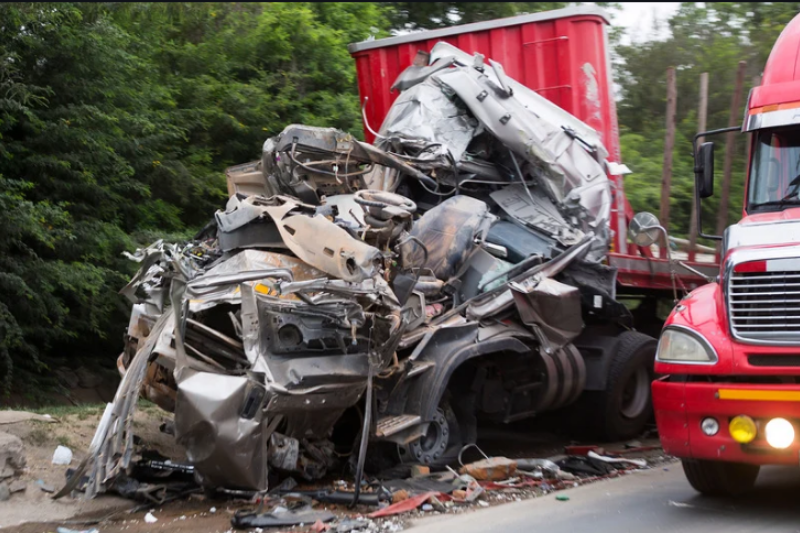
Anyone who has been in a car accident knows the aftermath is stressful. A crash involving a fully loaded semi-truck brings a different kind of pressure, one most people never expect. While an injured driver is still in the emergency room, the trucking company's insurance carrier may already be assigning an adjuster. Some carriers have rapid response teams that can reach a crash scene on I-75, I-94, or I-696 within hours.
That speed matters because a lot of the evidence in a truck crash case does not last long. Electronic data gets overwritten. Maintenance logs get archived and eventually purged. Video footage records over itself on a loop.
The Black Box: Understanding Electronic Control Module (ECM) Data
What ECM Data Actually Records
Depending on the make and model of the truck, ECM data can include:
- Vehicle speed in the seconds before impact
- Braking activity and whether hard braking occurred
- Engine RPM and throttle position
- Seatbelt usage
- Cruise control status
Why This Data Can Disappear Quickly
ECM data is often stored on a rolling basis. New trips can overwrite older data within a matter of days or weeks. Some systems only retain data from the most recent hard-braking event. If a truck goes back into service and continues normal operation, the crash data itself can be lost entirely.
Why Early Access Matters
Downloading ECM data typically requires specialized equipment. In many cases it also requires cooperation from the trucking company or a court order. Waiting even a short time to request preservation can mean the difference between objective proof and conflicting witness accounts.
Electronic Logging Device (ELD) Records and Driver Hours
What ELD Logs Show
ELD data typically documents when a driver started their shift, how many consecutive hours they drove, and how long they rested between trips. It can also show the truck's location and speed at various points throughout the day.
How Fatigue Violations Surface in the Records
Federal hours of service rules limit how long a driver can operate before taking a required rest period. When ELD records show a driver exceeded those limits, or falsified their log, it can point directly to fatigue. This is one of the clearest forms of evidence in a trucking case.
Why These Logs Are Time Sensitive
Carriers are required to maintain ELD data for a defined retention period. Even so, that data can be difficult to obtain without prompt legal action. Specific retention timeframes flagged for legal review before publishing. Requesting preservation early prevents a carrier from later claiming the records were simply deleted.
Maintenance and Inspection Records
What These Records Reveal
Maintenance files can show a pattern of known issues, including:
- Brake wear or repeated brake system complaints
- Tire condition and replacement history
- Prior repair requests that were delayed or ignored
- Pre-trip and post-trip inspection reports completed by the driver
When Deferred Maintenance Points to Company Negligence
Many people assume a truck crash is only about driver error. In reality, a truck with worn brakes or bald tires can behave dangerously no matter how skilled the driver is. When maintenance records show a company knew about a problem and delayed fixing it, responsibility shifts toward the carrier itself.
Why Records Do Not Stay Available Forever
Trucking companies are not required to preserve every maintenance document indefinitely. Once a truck is sold, repaired, or cycled out of a fleet, older records can be archived or discarded. That makes early requests for these files especially important.
Dashcam and Surveillance Footage
Fleet Dashcams Are Increasingly Common
Many commercial carriers now equip trucks with forward-facing cameras, and some use inward-facing cameras that monitor the driver as well. These systems can capture the moments leading up to a crash, along with driver behavior such as phone use or visible fatigue.
Corridor Cameras Along I-75, I-94, and I-696
Beyond the truck itself, footage may exist from nearby sources along Metro Detroit's major corridors. This can include:
- Traffic and toll cameras maintained by state or local agencies
- Security cameras from nearby businesses, gas stations, or rest areas
- Footage from other vehicles equipped with their own dashcams
Why Footage Gets Erased Quickly
Most surveillance and dashcam systems record on a continuous loop. They automatically overwrite old footage after a set number of days. A business might keep footage for a week or two before it is gone permanently. Requesting preservation right after a crash is often the only way to capture this evidence.
Driver Qualification Files
What Is Inside a Qualification File
A typical driver qualification file includes:
- Employment history and application materials
- Commercial driver's license verification
- Road test results
- Prior violations or accident history
- Drug and alcohol testing records
What These Files Can Reveal
Sometimes a qualification file shows exactly what it should, a properly vetted and trained driver. Other times, it reveals a pattern of overlooked red flags. This might include prior license suspensions or previous crashes that were never addressed. These files can point directly to negligent hiring or supervision practices.
Why This Matters in Repeat Situations
Sometimes a driver has a documented history of violations. If a company put them on the road anyway, that pattern can significantly affect a case. Qualification files help establish whether a crash was an isolated event or part of a larger pattern the company should have caught.
What a Spoliation Letter Does and Why Timing Matters
What a Spoliation Letter Is
A spoliation letter is a formal notice sent to a trucking company and its insurer. It demands that all evidence related to a crash be preserved, including ECM data, ELD records, maintenance files, dashcam footage, and driver qualification documents. Once this letter is received, the company has a legal obligation to stop any routine deletion or destruction of those materials.
Why Sending It Quickly Matters
Before a spoliation letter arrives, a company may continue normal business practices. This can include automatic data overwrites and scheduled record purges. Sending this notice as soon as possible closes that window. Every day of delay is a day evidence could be lost through entirely routine processes.
What Happens If Evidence Is Destroyed Anyway
If a company destroys evidence after being properly notified, courts can respond in several ways. One option allows a jury to assume the missing evidence would have favored the injured party. This consequence gives companies a strong incentive to comply once notice has been sent.
What Metro Detroit Drivers Should Do After a Semi-Truck Crash
Prioritize Safety and Medical Care
The first step after any serious crash is always medical attention, even if injuries seem minor at first. Some injuries, including concussions and soft tissue damage, are not immediately obvious. Seeking care quickly protects both health and any future claim.
Document What You Can
If it is safe to do so, photographs of the vehicles, the roadway, and any visible damage can be genuinely helpful later. Witness names and contact information are also valuable, since memories fade quickly. None of this should ever come before getting medical help.
Involve an Attorney Early
So much evidence in these cases is time sensitive. Involving a semi truck accident lawyer in Michigan early on allows preservation letters to go out quickly. This step alone can be the difference between strong objective evidence and conflicting accounts of what happened.
The Value of Acting Quickly After a Truck Crash
Most people do not think about black boxes, ELD logs, or spoliation letters while they are still recovering from a serious crash, and that is completely understandable. The unfortunate reality is that some of the most important evidence in these cases has a shelf life measured in days, not months. By the time many people are ready to think about legal help, some of that evidence may already be gone.
At LSM, we have spent years working through the layers of evidence that come with commercial vehicle cases. From electronic data to maintenance histories, we bring that experience to every truck crash case we handle.
Talk to Someone Who Understands These Cases
If you or someone you love has been hurt in a semi-truck crash on I-75, I-94, I-696, or anywhere else in Metro Detroit, you do not have to figure out the evidence side of things on your own. Tony Shapero personally calls new clients. When you work with LSM, you get the full team behind your case, not just one person handling a file. We have over 50 years of combined experience and have recovered more than $100 million for our clients.
📞 Call us at 248-584-1300 or toll-free at 1-855-LISS-LAW (1-855-547-7529)
🌐 Visit us at lsmlawyers.com
This content is for general informational purposes only and does not constitute legal advice. Past results do not guarantee future outcomes. Contact LSM for guidance specific to your situation.