.svg)
What Auto Physical Damage Insurance Protects After a Crash

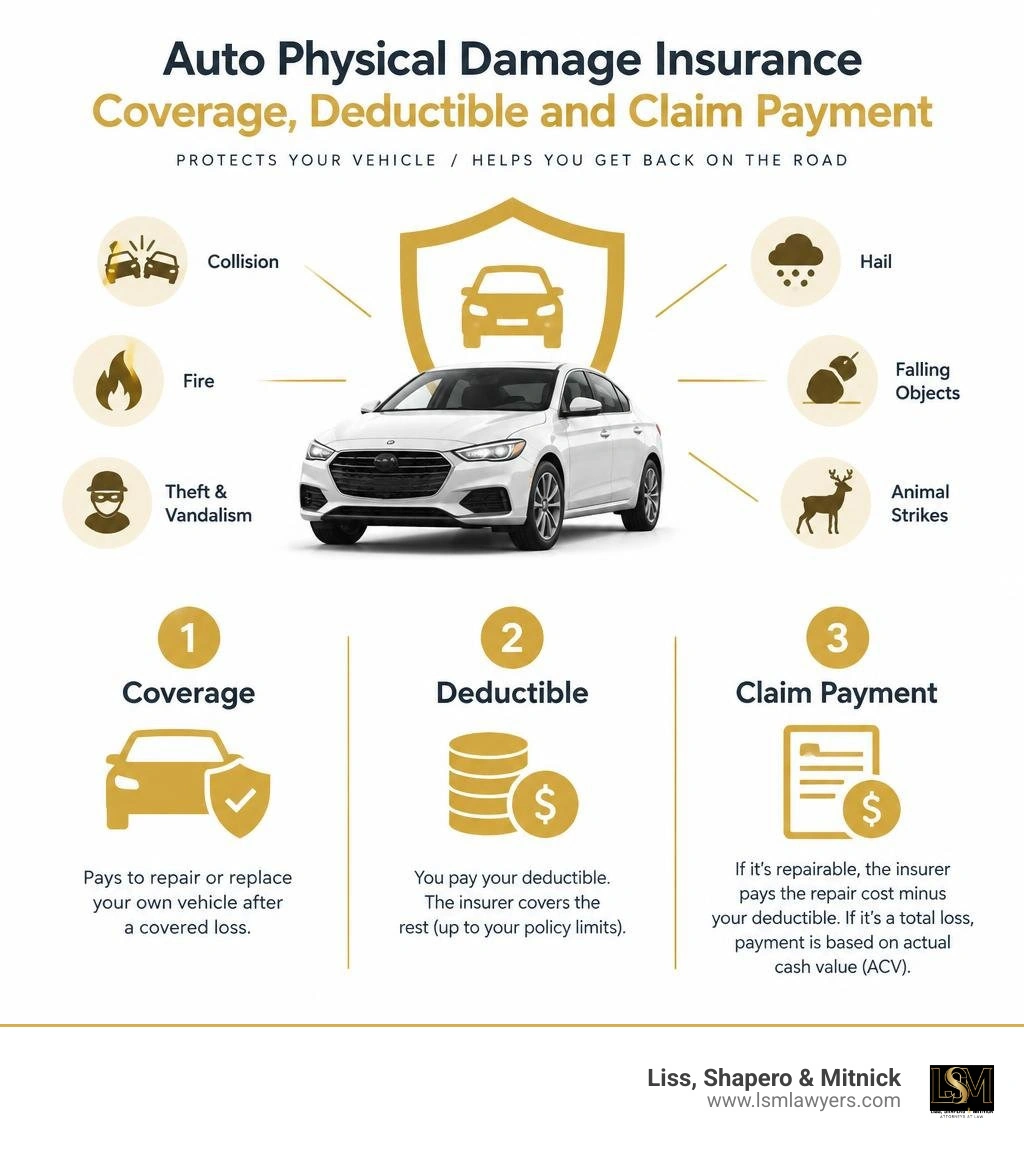
Auto physical damage insurance pays to repair or replace your own vehicle after a covered loss. It usually includes collision coverage for crashes with another vehicle or object, plus comprehensive coverage for events such as theft, fire, vandalism, hail, falling objects, and animal strikes.
It is different from liability insurance. Liability coverage pays for injuries or property damage you cause to other people. Physical damage coverage protects the car, truck, motorcycle, or commercial vehicle you own or lease. It is often optional under state law, but a lender or leasing company may require it.
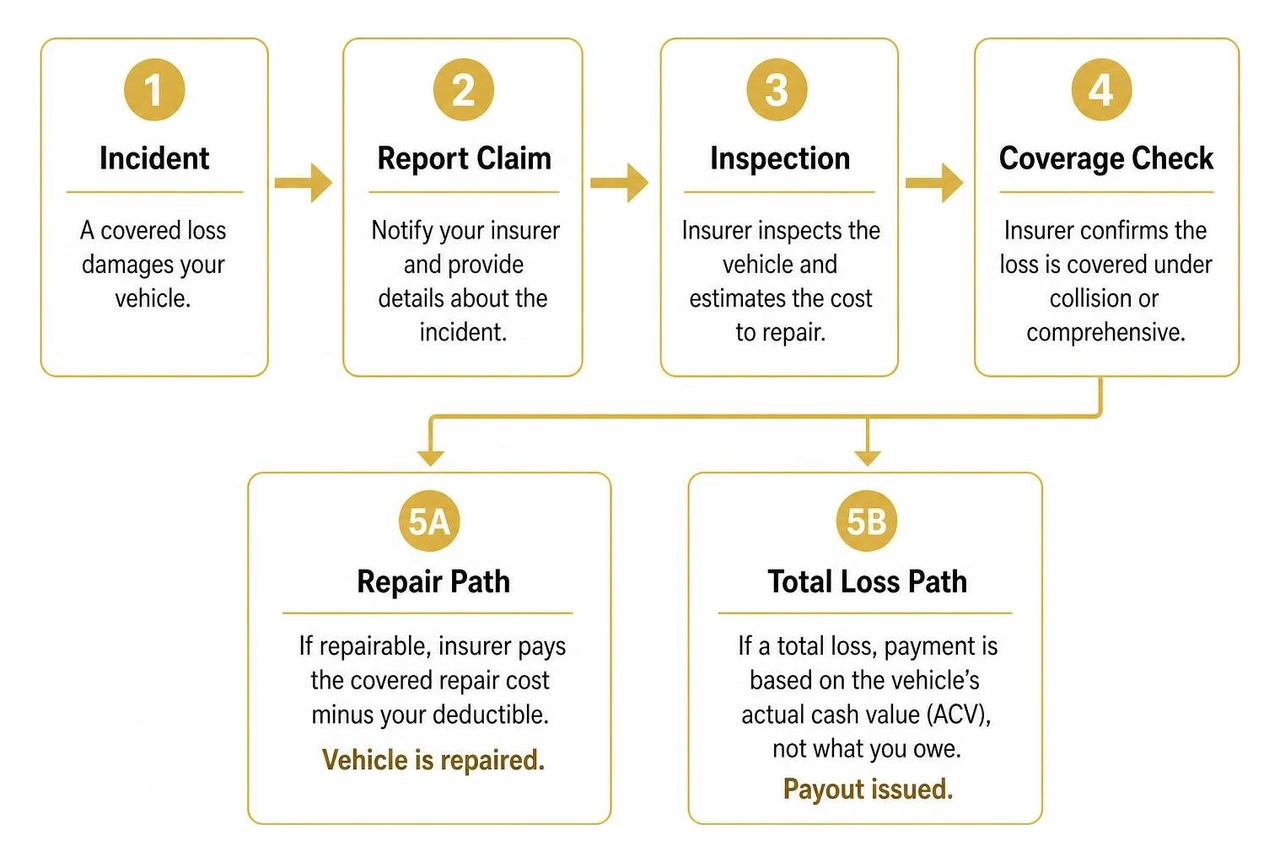
If your vehicle is damaged, the insurer generally pays the covered repair cost minus your deductible. If the vehicle is a total loss, payment is usually based on its actual cash value, not necessarily what you still owe on a loan.
For Michigan drivers already dealing with injuries, missed work, and repair bills, knowing which part of an auto policy applies can prevent costly surprises.
I am Scott Mitnick, a Michigan and Illinois attorney with more than 20 years of civil litigation experience involving auto negligence, Michigan No-Fault law, and insurance disputes. I have represented people facing difficult auto physical damage insurance and injury-related coverage questions after serious accidents.
What Is Auto Physical Damage Insurance and What Does It Cover?
Auto physical damage insurance is a first-party coverage structure designed to repair or replace your vehicle when it sustains direct, accidental loss. While other parts of an auto policy handle medical treatment or protect you from third-party lawsuits, physical damage coverage concentrates entirely on the metal, glass, engine, and structural components of the vehicle itself.
In standard personal auto policies, this protection is formally designated as Part D: Coverage for Damage to Your Auto. Under Part D, coverage applies regardless of legal fault, ensuring that your vehicle can be repaired promptly even if an investigation into the crash is ongoing.
Physical damage protection functions through two primary pillars—collision and comprehensive—though commercial lines may also incorporate options such as specified perils.
Collision vs. Comprehensive: Core Coverage Elements
Understanding how collision and comprehensive coverages function eliminates the guesswork when filing a claim:
- Collision Coverage: Pays for damage resulting from an impact with another vehicle, a stationary object (such as a tree, guardrail, or utility pole), or a rollover accident. Whether you hit a patch of black ice on a Metro Detroit expressway or back into a concrete pillar in a parking structure, collision coverage pays for repairs after you satisfy your deductible.
- Comprehensive Coverage (Other Than Collision): Insures against accidental losses arising from perils outside of a direct vehicular impact. Covered events include:
- Theft and larceny
- Vandalism or malicious mischief
- Windstorm, hail, flood, and water damage
- Fire, explosion, or earthquake
- Falling objects (such as tree branches)
- Missiles or flying debris
- Direct contact with birds or animals (e.g., striking a deer)
- Glass breakage
While comprehensive coverage shields against a wide range of external hazards, it will not replace lost personal belongings left on your passenger seat; those items generally fall under homeowners or renters policies.
How Auto Physical Damage Insurance Differs from Liability Coverage
Drivers frequently conflate first-party property protection with third-party liability coverage. Under traditional auto insurance rules, liability policies protect your personal assets if you are held legally responsible for harming someone else or damaging their property.
In contrast, physical damage insurance pays you directly to repair your own car, regardless of who caused the incident. When dealing with injuries and bodily harm in Michigan, evaluating the difference between no-fault PIP benefits and a liability claim becomes critical for total recovery.
| Coverage Feature | Auto Physical Damage Insurance | Third-Party Property Damage Liability |
|---|---|---|
| Who Receives the Benefit? | The policyholder / vehicle owner (First-Party) | The other driver or property owner (Third-Party) |
| What Property Is Covered? | Your insured vehicle | Other vehicles, structures, fences, or public property |
| Fault Requirement | Pays regardless of fault | Pays only when you are legally liable |
| Deductibles | Yes (selected by the insured) | No deductible applies to third-party payouts |
| Legal Mandate | Optional under state law (required by lenders) | Mandatory in nearly all jurisdictions |
Deductibles, Actual Cash Value, and Claim Payout Calculations
When you report a physical damage claim, the payout calculation depends on two factors: your chosen deductible and the vehicle’s actual cash value (ACV).
A deductible is the predetermined out-of-pocket amount you agree to pay toward vehicle repairs before insurance funds apply. Typical deductibles range from $250 to $1,000. Selecting a higher deductible lowers your ongoing monthly or annual premium because you assume greater financial responsibility per incident. Conversely, a lower deductible raises the premium while minimizing sudden repair expenses.
When working with claims adjusters after an accident, clear and cautious communication protects your rights. Understanding what to avoid saying to an insurance adjuster helps prevent unfair depreciation assessments or disputed repair scopes.
Repair vs. Total Loss Determinations
An insurance company will evaluate whether a damaged car is economically feasible to repair or must be declared a total loss.
- The Economic Threshold: If estimated repair costs combined with the vehicle's projected salvage value exceed its pre-accident market value, the insurer declares a total loss.
- Actual Cash Value (ACV): Total loss payouts are calculated on an ACV basis—defined as replacement cost minus depreciation and pre-existing wear.
- Loan Deficiencies: Because ACV reflects market depreciation rather than your outstanding loan or lease balance, you could face negative equity if you owe more on the vehicle than its current market worth. Guaranteed Auto Protection (GAP coverage) resolves this exposure by paying the difference between the ACV settlement and the remaining loan principal.
Exclusions, Policy Limitations, and Rate Impacts
Physical damage coverage does not indemnify vehicle owners against every possible expense. Standard policy contracts specifically exclude:
- Mechanical or electrical breakdown and factory defects
- Normal wear and tear, rust, and gradual deterioration
- Freezing of engine cooling systems or fluids
- Tire blowouts and punctures (unless resulting directly from a broader covered collision or vandalism incident)
- Unapproved custom equipment, aftermarket modifications, or electronics not permanently installed by the manufacturer
- Confiscation or destruction by government or civil authorities
- Intentional destruction caused by the policyholder
Many vehicle owners hesitate to report losses out of concern that making a claim will raise insurance rates. Generally, comprehensive claims (such as cracked windshields or hail damage) have a minimal impact on policy surcharges compared to at-fault collision claims. However, claim frequency within a short window can still influence renewal rates.
Commercial Fleet Policies and Essential Endorsements
Commercial operations, moving services, logistics fleets, and independent contractors face distinct physical damage risks requiring tailored policy structures.
For corporate entities and fleet managers navigating state guidelines, a clear understanding of commercial statutory frameworks—as outlined in the state's Brief Explanation of Michigan No-Fault Insurance—ensures vehicles remain properly protected under both first-party physical damage and mandatory statutory tiers.

Customizing Commercial Auto Physical Damage Insurance for Fleets
Commercial policies provide flexible deductible and valuation options designed for heavy usage:
- Combined Deductibles: Merges physical damage and inland marine cargo deductibles into a single out-of-pocket limit per occurrence, eliminating multiple deductibles when a crash damages both the truck and its transported goods.
- Aggregate Deductibles: Sets a cap on total deductible expenditures across an entire fleet during a single catastrophic event (such as a severe hailstorm damaging multiple fleet units at a terminal).
- Stated Amount Valuation: Allows commercial operators to establish coverage limits based on explicit valuation schedules that incorporate specialized modifications, liftgates, or hydraulic systems.
- Equipment Floaters: Extends inland marine coverage to tools, tarps, chains, binders, and unattached equipment that standard auto policies exclude.
Key Endorsements: Roadside Assistance, Towing, and Gap Protection
Standard personal and commercial auto policies can be supplemented with targeted endorsements:
- Transportation Expense and Rental Reimbursement: Covers alternative rental vehicles or loss-of-use costs while your vehicle is in the repair shop. For theft losses, standard forms often impose a 48-hour waiting period before daily transportation allowances begin.
- Towing and Labor Coverage: Reimburses roadside emergency service, winching, flat tire changes, and towing to an approved repair facility.
- Finance Value / GAP Endorsements: Protects vehicle owners from shortfalls between depreciated ACV settlements and outstanding lease or loan balances.
- Loss Payee and Additional Insured Clauses: Formally designates lenders and leasing institutions as parties entitled to joint claim proceeds to protect their financial interests.
When motor vehicle crashes involve uninsured motorists or insufficient liability policies, protecting yourself when other drivers lack coverage through comprehensive first-party policy provisions becomes vital.
Frequently Asked Questions About Vehicle Physical Damage
Is auto physical damage coverage legally required?
Auto physical damage coverage is not mandated by state motor vehicle financial responsibility laws, which focus primarily on third-party bodily injury and property damage liabilities.
However, physical damage coverage is almost always required by banks, credit unions, and leasing companies. Because the vehicle serves as collateral for your loan or lease, lenders require continuous collision and comprehensive coverage with specified maximum deductibles to protect their financial investment until the balance is paid in full.
What is the difference between comprehensive and specified perils?
Comprehensive coverage is written on an "open perils" or "all-risks" basis, meaning it covers all direct accidental physical damage to your vehicle except perils explicitly excluded in the policy text.
Specified Perils (often sold as Fire and Theft with Combined Additional Coverage or CAC) is a narrower, lower-cost option primarily used for heavy commercial trucks and seasonal commercial vehicles. It only covers losses directly caused by specifically enumerated hazards—such as fire, lightning, theft, windstorm, or explosion—and excludes other common perils, such as glass repairs or animal collisions.
Does physical damage insurance cover non-owned or rental cars?
Under standard personal auto policies, physical damage coverage extends to "non-owned autos," which includes temporary substitute vehicles driven while your primary car is being serviced, as well as passenger cars rented for personal use.
This coverage mirrors the broadest physical damage protection and lowest deductible on your existing policy. However, this extension excludes vehicles furnished or available for your regular, frequent use (such as an unlisted company vehicle) and may not cover commercial loss-of-use administrative fees charged by rental agencies without a specific rental endorsement.
Protecting Your Legal and Financial Rights After an Accident
Navigating auto insurance claims requires understanding how first-party vehicle coverages interact with medical benefits and third-party liabilities. When property destruction is accompanied by personal injuries, missed employment, or disputed insurance bad faith, managing multiple adjusters can quickly become overwhelming.
At Liss, Shapero & Mitnick, our legal team draws on decades of insurance-defense background to advocate for injured drivers throughout Metro Detroit, Berkley, and all of Michigan. We ensure insurance carriers uphold their contractual duties and pursue full financial recovery for our clients.
Before making policy adjustments or navigating open enrollment periods, review our guide on coordinating health and auto insurance coverages to safeguard your family's financial protection. For skilled legal guidance regarding an auto accident or disputed insurance claim, contact our team today for a free consultation.