
How a Michigan Fatal Car Accident Lawyer Can Help Your Family
After a fatal crash, preserve the crash report, insurance details, and any photos or messages about the collision. A Michigan fatal car accident lawyer can help your family seek no-fault survivor benefits, investigate whether another driver caused the crash, and pursue a wrongful death claim through the estate's personal representative. These are separate paths to financial support and accountability.
The legal process can feel overwhelming when your family is grieving. Insurance deadlines and evidence that may disappear make it worth getting advice early.
I'm Anthony Shapero, Managing Partner at Liss, Shapero & Mitnick. As a Michigan fatal car accident lawyer who began his career defending insurers, I use that experience to anticipate their arguments and fight for families.

Common Michigan fatal car accident lawyer vocab:
Traffic fatalities remain a sobering reality across our state. In 2022 alone, Michigan recorded 1,083 traffic fatalities—a 10% increase from the prior year—pushing the state's fatal crash rate to 1.14 deaths per 100 million vehicle miles traveled. When a sudden collision claims a loved one, the emotional distress is instantly compounded by severe financial hardship. Grieving families are left trying to make sense of police reports while medical bills, funeral costs, and lost household income pile up.
Understanding how the Michigan Wrongful Death Act intersects with insurance claims and probate court procedures is essential for protecting your family's future.
Understanding Michigan Wrongful Death Claims and No-Fault Benefits
Navigating the aftermath of a fatal motor vehicle crash requires pursuing two distinct legal tracks: first-party no-fault survivor's loss benefits and third-party wrongful death tort claims.
Under Michigan's Wrongful Death Act (MCL 600.2922), when a person's death is caused by the wrongful act, neglect, or fault of another, the legal claim that the deceased would have possessed survives. This action must be brought by the personal representative of the deceased person's estate.
At the same time, Michigan is a no-fault state. Regardless of who caused the crash, the deceased individual's auto insurance policy (or the applicable priority policy) provides mandatory first-party survivor's loss benefits. These benefits include:
- Three-year wage loss replacement: Contributions of tangible economic value that the deceased would have provided to their dependents, subject to statutory monthly maximum caps.
- Replacement services: Up to $20 per day to cover household tasks, childcare, and maintenance the deceased routinely handled.
- Funeral and burial expenses: Direct contributions toward final arrangements up to the policy limit.
While first-party benefits provide immediate economic relief without establishing fault, they do not compensate for the profound emotional loss of a family member. To recover non-economic damages, such as conscious pain and suffering before death and the loss of society and companionship, the estate must file a third-party wrongful death lawsuit against the at-fault driver. Because death automatically satisfies Michigan's statutory injury threshold, the estate is fully entitled to pursue the negligent driver for all damages exceeding no-fault limits.
| Benefit Feature | First-Party No-Fault Survivor Benefits | Third-Party Wrongful Death Lawsuit |
|---|---|---|
| Fault Requirement | No-fault (payable regardless of who caused crash) | Must prove negligence or wrongful conduct |
| Who Pays | Applicable auto insurance carrier | At-fault driver's insurer / personal assets |
| Wage Loss Coverage | Up to 3 years of economic support | Full lifetime projected earning capacity |
| Non-Economic Damages | Not covered (no pain & suffering) | Loss of companionship, society, and pre-death pain |
| Who Initiates | Eligible surviving dependents directly | Court-appointed estate Personal Representative |
Common Causes of Fatal Crashes Across Michigan
Proving negligence in a third-party claim requires identifying the specific driving behavior that caused the collision. In Metro Detroit and throughout the state, we routinely uncover catastrophic driving errors:
- Impaired driving: Approximately 40% of fatal car accidents in Michigan involve alcohol or drug impairment. Toxicological reports and blood-draw evidence are vital for establishing liability.
- Distracted driving: Drivers texting, browsing social media, or adjusting in-dash navigation systems drift across centerlines or fail to brake for stopped traffic.
- Reckless speeding and aggressive driving: Excessive speed reduces reaction windows and exponentially increases impact severity.
- Winter road hazards: Michigan motorists must operate at speeds reasonable for icy conditions; failing to adapt to freezing rain or snow is actionable negligence.
- Commercial truck collisions: Disregard for federal hours-of-service rules and improper commercial vehicle maintenance frequently result in fatal multi-vehicle pileups.
Metro Detroit represents a significant hotspot for these tragedies; in 2023, Wayne County recorded the highest number of fatal traffic accidents in Michigan, with 187 deaths. When exploring options after a severe collision in this corridor, families can review our guide on when a crash turns fatal in Metro Detroit to better understand local court dynamics and insurer strategies.
Who Can File and Recover Damages Under Michigan Law
A common misconception is that any grieving relative can directly file a wrongful death lawsuit. Michigan law strictly mandates that only the formal Personal Representative of the deceased person's estate has standing to bring a wrongful death lawsuit.
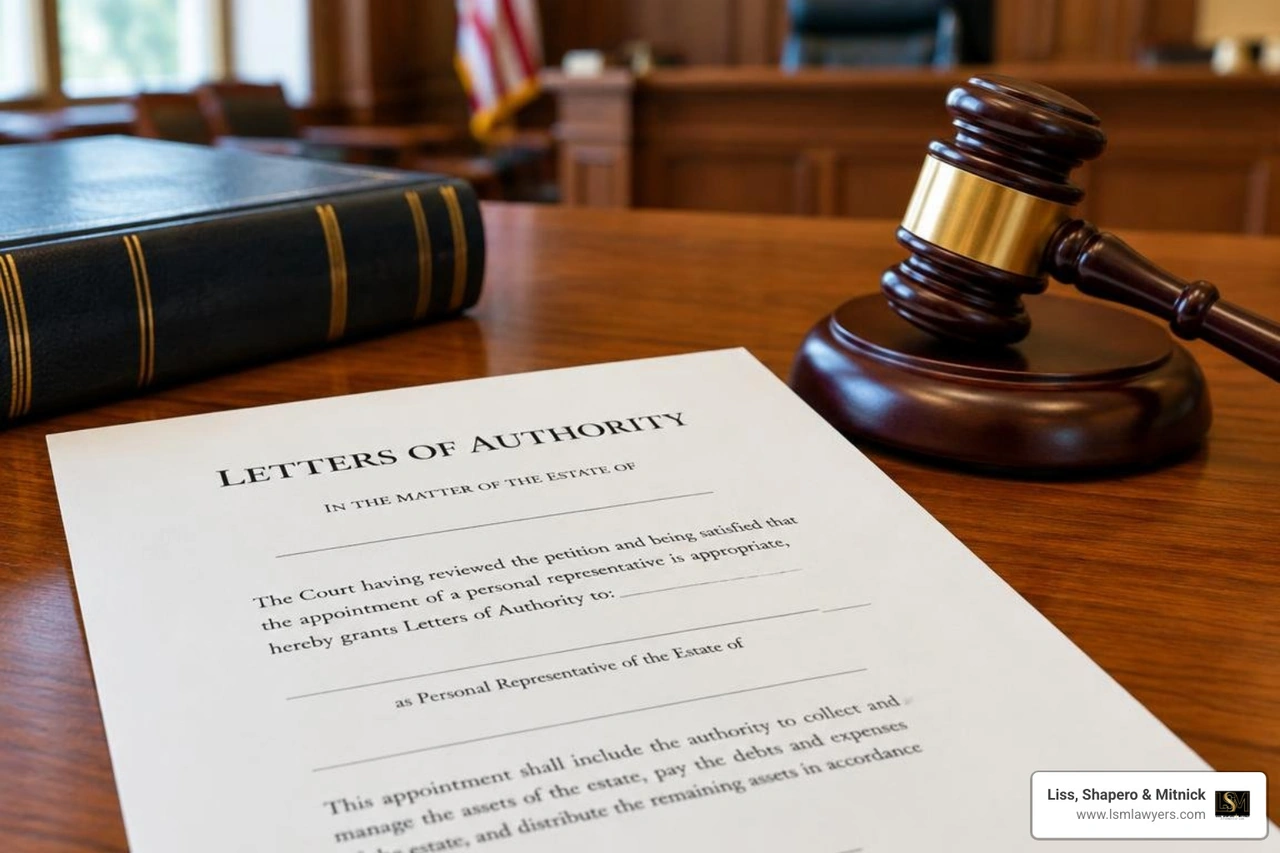
To initiate this, the family must open an estate in the probate court of the county where the deceased resided. The probate judge then issues Letters of Authority, empowering the Personal Representative to retain legal counsel, file pleadings, and manage litigation on behalf of all potential beneficiaries.
Under MCL 600.2922, the statutory beneficiaries eligible to share in any court-approved wrongful death damages include:
- The surviving spouse
- Children and other direct descendants
- Parents and grandparents
- Brothers and sisters
- Persons to whom the deceased's will leaves property
- Stepchildren who suffered financial loss as a result of the death
For an in-depth breakdown of local probate filing steps, consult our Detroit wrongful death guide.
Types of Compensation Available to Surviving Families
Damages in a fatal car accident lawsuit address both tangible monetary losses and the profound personal void left by the victim's absence. The compensation pursued typically includes:
- Economic damages: Lifetime loss of financial support, loss of expected inheritance, and loss of medical and retirement benefits that the deceased would have earned.
- Conscious pain and suffering: Compensation for the physical pain, terror, and mental anguish experienced by the deceased between the moment of impact and their passing.
- Loss of society and companionship: Damages for the loss of love, advice, guidance, protection, and companionship suffered by surviving family members.
- Medical, funeral, and burial costs: Reimbursement for outstanding emergency medical treatment, hospital stays, and final memorial expenses.
To understand how courts assess these elements across different fatal accident scenarios, see our overview of wrongful death claims after preventable incidents in Michigan. Once a settlement or verdict is obtained, the personal representative petitions the probate court for a distribution hearing, where the judge ensures proceeds are allocated fairly among the statutory heirs based on their demonstrated losses.
When to Contact a Michigan Fatal Car Accident Lawyer
The baseline statute of limitations for filing a wrongful death claim in Michigan is three years from the date of the fatal crash. However, relying on generalized timelines can be dangerous. Certain probate rules allow limited tolling periods while letters of authority are granted, but delaying action creates severe risks.
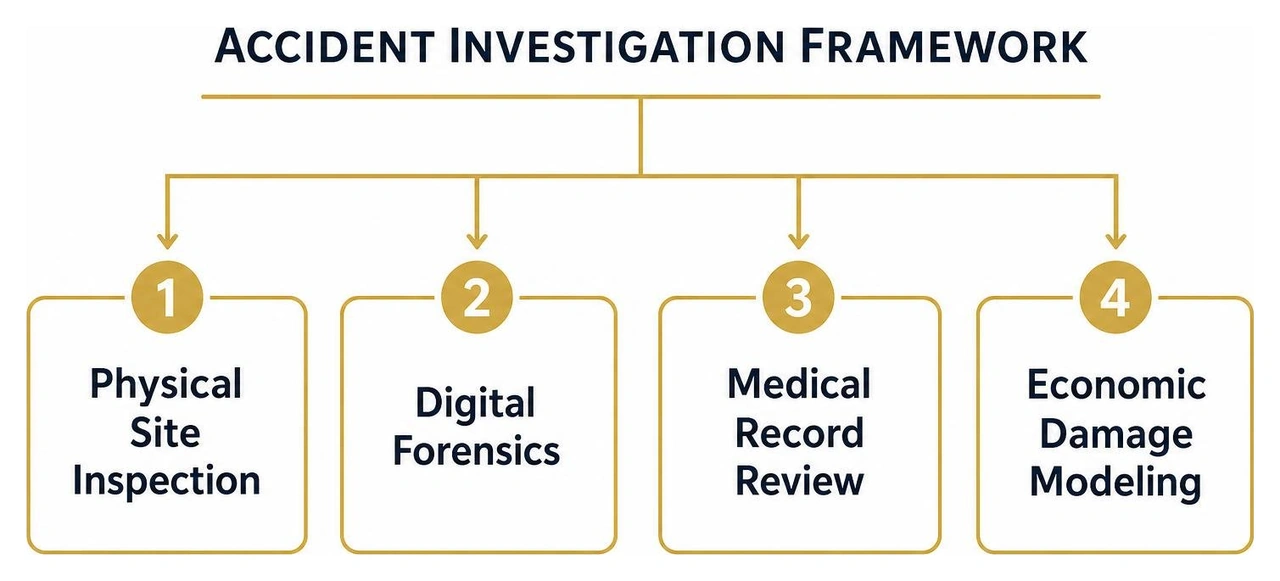
Physical evidence degrades rapidly. Skid marks wash away, commercial vehicles are put back into service, and on-board electronic modules overwrite vital data. Furthermore, early outreach from the at-fault driver's insurance adjuster often involves bad-faith attempts to secure recorded statements or propose undervalued settlements before families understand the full scope of available coverage. Contacting a skilled Michigan accident lawyer immediately ensures that critical proof is protected under formal preservation demands.
Navigating Liability, Comparative Negligence, and Parallel Criminal Proceedings

Proving fault in a fatal collision requires overcoming defensive strategies designed to shift blame. Michigan operates under a modified comparative fault rule (MCL 600.2959). Under this statute:
- If the deceased is found to be 50% or less at fault, their estate can still recover damages, but the total compensation is reduced proportionally by their percentage of fault. For example, if damages equal $1,000,000 and the deceased was 20% responsible, the net recovery is $800,000.
- If the deceased is determined to be 51% or more at fault, the estate is completely barred from recovering any non-economic damages (such as pain and suffering and loss of companionship).
Because insurance companies frequently attempt to place 51% of the blame on the deceased victim—who is no longer here to tell their side of the story—independent accident investigation is critical. Our comprehensive Michigan car accident lawyer guide explains how comparative fault arguments are countered using objective physical evidence.
Additionally, fatal crashes often trigger parallel criminal charges, such as Operating While Intoxicated (OWI) Causing Death or Reckless Driving Causing Death. While county prosecutors seek criminal penalties and restitution, a criminal conviction alone does not provide full civil compensation for a family's lifetime economic loss. The civil wrongful death lawsuit proceeds under a lower burden of proof ("preponderance of the evidence" versus "beyond a reasonable doubt"), allowing our firm to secure civil justice even if criminal charges are plea-bargained or delayed.
Essential Evidence Needed to Prove Negligence
Securing liability against an at-fault driver requires gathering authoritative proof before it can be lost or altered:
- Police crash reports and UD-10 forms: Initial officer observations, diagrammed points of impact, and cited statutory violations.
- Event Data Recorder (EDR) / "Black Box" downloads: Precise metrics recording vehicle speed, throttle position, braking status, steering inputs, and seatbelt usage milliseconds before collision.
- Dashcam, traffic, and commercial surveillance footage: Unvarnished video recording the crash dynamic in real time.
- Cellular device records: Call logs, text timestamps, and application data to establish distracted driving.
- Toxicology reports: Law enforcement blood draws and post-mortem screenings establishing drug or alcohol impairment.
- Accident reconstruction expert analysis: Engineering analyses that model crush deformation, trajectory, and stopping distances to refute insurer defenses.
How a Michigan Fatal Car Accident Lawyer Builds a Winning Case
Building a high-value wrongful death case requires looking beyond basic personal auto insurance minimums. In Michigan, the average settlement for a fatal car accident claim ranges from $500,000 to $1.5 million, but case value depends heavily on identifying all available insurance coverage layers.
We evaluate every potential path of recovery, including:
- Primary bodily injury liability limits of the at-fault driver
- Commercial auto policies and employer liability (if the driver was on the job)
- Commercial umbrella and excess liability policies
- Dram shop claims against bars or restaurants that unlawfully served a visibly intoxicated patron
- Uninsured/Underinsured Motorist (UM/UIM) endorsements on policies within the deceased's household
Having spent years working in insurance defense before representing plaintiffs, our legal team knows precisely how claims adjusters evaluate risk, set loss reserves, and attempt to undervalue complex wrongful death claims. We utilize forensic economists to project exact lifetime earnings and present comprehensive demand packages that force insurers to negotiate in good faith. You can read more about how our firm approaches these claims through our dedicated Michigan wrongful death lawyer practice.
Working with a Michigan Fatal Car Accident Lawyer to Maximize Recovery
When you partner with our team, we handle the entire legal and administrative burden so you can focus on healing:
- Probate Estate Setup: We draft and file the petitions required to open the estate, secure the appointment of the Personal Representative, and obtain Letters of Authority.
- Comprehensive Investigation & Spoliation Letters: We immediately issue formal legal notices preventing insurance companies and commercial fleets from destroying critical black box, video, and maintenance data.
- First-Party No-Fault Recovery: We ensure surviving family members promptly receive all statutory survivor's loss benefits, funeral cost reimbursements, and medical bill coverage without insurance delays.
- Third-Party Tort Litigation: We file suit against all negligent parties, depose witnesses, retain top-tier accident reconstructionists and economists, and build an airtight case for maximum economic and non-economic damages.
- Probate Settlement Approval: Once a fair settlement or jury verdict is reached, we petition the probate court for formal approval and distribute proceeds to family members efficiently.
Frequently Asked Questions About Michigan Fatal Car Accidents
What is the deadline to file a fatal car accident lawsuit in Michigan?
Under Michigan law, the standard statute of limitations for a wrongful death claim is three years from the date of the fatal crash. If a personal representative is appointed within those three years, the law provides an additional grace period of up to two years after the Letters of Authority are issued (subject to an overall cap of five years from the injury date). However, waiting is never advisable because physical evidence and witness memories fade quickly.
How are fatal car accident settlement proceeds distributed among family members?
Wrongful death settlements must receive court approval. The personal representative files a petition for settlement distribution with the probate court, providing formal notice to all statutory beneficiaries (surviving spouse, children, parents, siblings). If all eligible claimants agree on an apportionment, the court typically approves it. If there is a dispute, the probate judge conducts a hearing to evaluate each individual's personal loss and relationship with the deceased, determining a fair and equitable allocation.
Can family members recover damages if the deceased was partially at fault for the crash?
Yes, provided the deceased's share of fault was 50% or less. Under Michigan's modified comparative fault law, your family's overall financial recovery will be reduced by the percentage of fault assigned to your loved one. However, if the deceased is found to have been 51% or more at fault, the estate is barred from recovering non-economic damages like pain, suffering, and loss of companionship.
Conclusion
Losing a loved one to a reckless or negligent driver is an unimaginable tragedy. When you are dealing with profound grief, taking on insurance companies and probate courts should not be your burden.
At Liss, Shapero & Mitnick, our trial attorneys leverage insider insight from our former insurance-defense careers to defeat adjusters' tactics, prove liability, and maximize compensation for surviving families across Berkley, Metro Detroit, and throughout Michigan. We handle all wrongful death claims on a strict contingency fee basis—meaning you pay nothing unless we win your case.
If you have lost a family member in a fatal collision, reach out to Anthony Shapero and our experienced motor vehicle accident attorneys today to protect your family's rights and secure the justice your loved one deserves.