.svg)
What to Do After a Pedestrian Accident

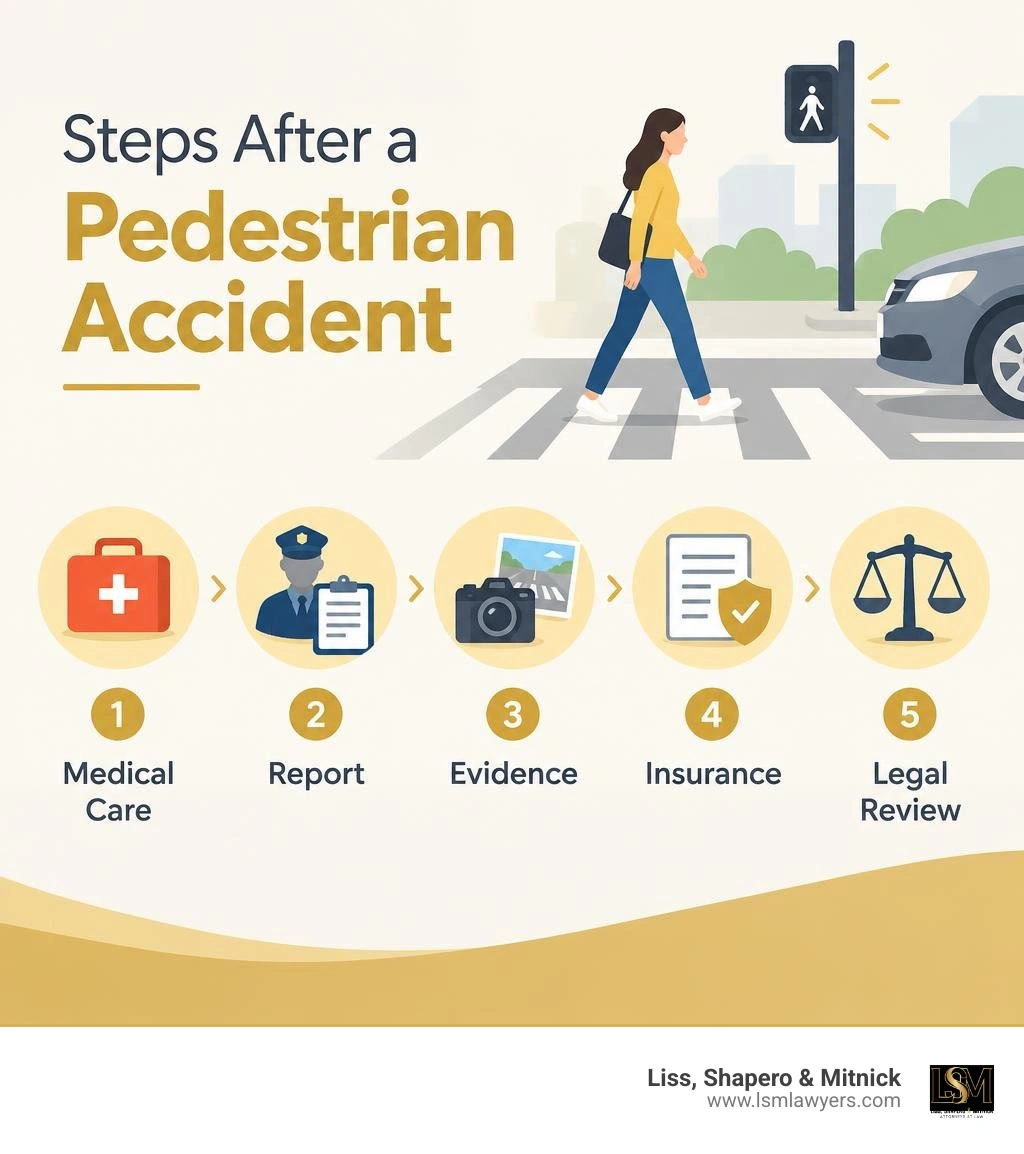
After a pedestrian accident, protect your health first, then protect the facts of the crash. Take these steps as soon as you can:
- Call 911 and get medical care, even if injuries seem minor.
- Ask police to make a crash report.
- Photograph the scene, injuries, vehicle, crosswalks, signals, and road conditions.
- Get the driver's insurance details and witness contact information.
- Save medical records, bills, missed-work information, and all insurance messages.
- Speak with a Michigan pedestrian accident lawyer before giving a recorded statement or accepting a settlement.
A person walking has almost no physical protection in a collision. In 2024, 7,080 pedestrians were killed and more than 71,000 were injured in U.S. traffic crashes. The legal and insurance process can add pressure when you are already dealing with pain, medical bills, and time away from work.
I am Anthony Shapero, Managing Partner at Liss, Shapero & Mitnick. With more than 25 years of injury litigation experience, including prior insurance-defense work, I help people understand the evidence, insurance issues, and legal options that can shape a pedestrian accident claim.
Related content about pedestrian accident:
- how many pedestrians are killed by cars each day
- how many pedestrians are killed each year worldwide
- pedestrian accident attorneys
Understanding the Scale and Leading Causes of a Pedestrian Accident
Pedestrian safety remains one of the most urgent public health concerns across the country. According to federal traffic safety data, a pedestrian was killed every 74 minutes in traffic crashes nationwide in 2024. Just a few years prior in 2022, over 8,000 walkers lost their lives—representing one in every five motor vehicle fatalities—while emergency rooms treated an estimated 140,000 non-fatal crash injuries. Examining pedestrian fatality trends nationwide shows that our roadways present persistent hazards for those traveling on foot.
Several environmental and behavioral factors drive these severe collisions:
- Speed Dynamics: Vehicle velocity directly dictates injury severity. A pedestrian struck at 20 mph has a strong likelihood of survival, but survival rates drop precipitously as speeds climb to 40 mph and beyond.
- Urban Arterials and Road Design: Roughly 83% of pedestrian fatalities occur in urban settings, with 60% happening on high-capacity multi-lane corridors featuring speed limits between 45 and 55 mph.
- Lighting and Timing: Approximately 74% of fatal pedestrian incidents take place in dark conditions. Nighttime risk spikes on weekends, with Saturday and Friday seeing the highest fatality rates.
- Driver and Pedestrian Impairment: Alcohol plays a significant role in traffic trauma, with substance involvement recorded for the driver, pedestrian, or both in nearly 48% of fatal incidents.
- Crowded Commercial Lots: Collisions are not limited to high-speed thoroughfares; as documented in reports on multi-pedestrian crashes, impaired or reckless driving in parking plazas and event venues can lead to multiple severe injuries in an instant.
To combat these dangers, safety officials emphasize the Safe System approach, which focuses on safe road design, redundant safety measures, speed management, and prompt post-crash emergency care.
High-Risk Crash Types and Roadway Factors
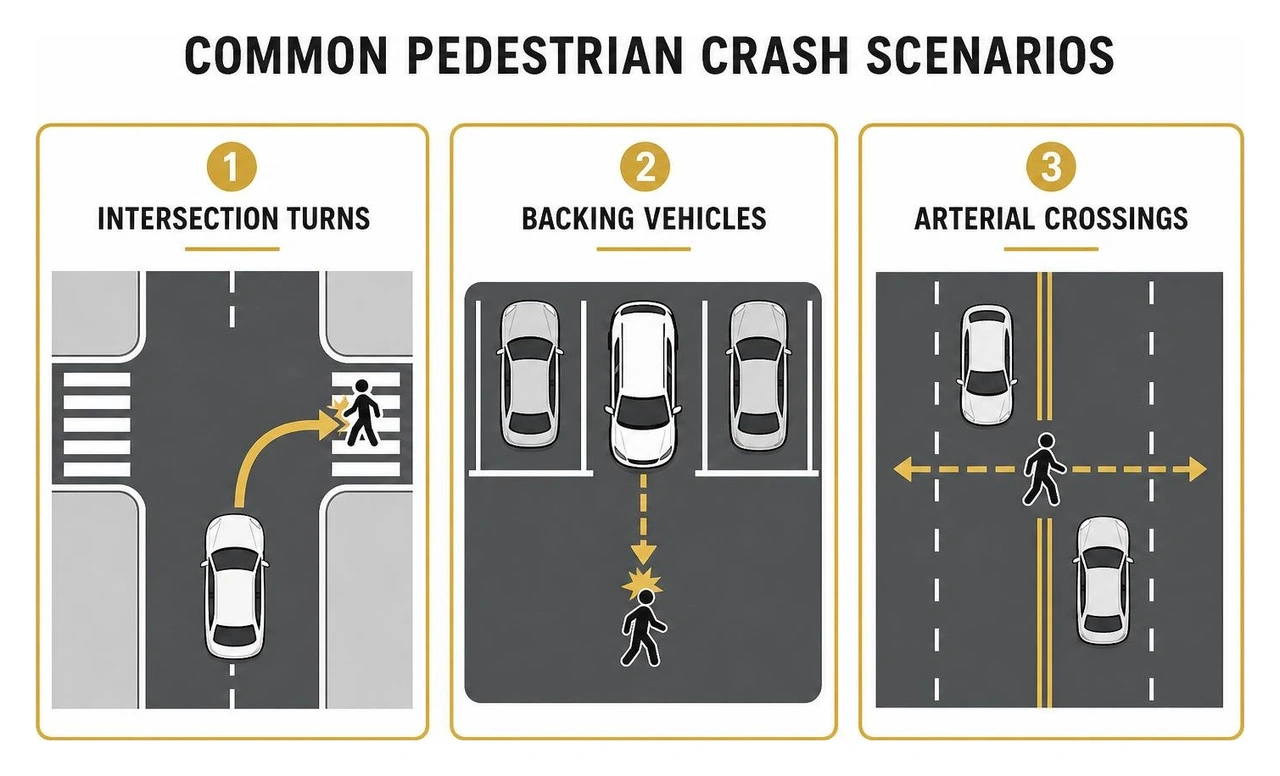
When motor vehicles and individuals on foot share space, certain maneuvers carry heightened danger:
- Intersection Turns: Drivers executing left or right turns frequently focus on oncoming traffic gaps rather than scanning adjacent crosswalks for pedestrians.
- Backing Vehicles: Driveways, alleyways, and parking stalls create blind spots where drivers reversing out fail to detect individuals walking behind them.
- Mid-Block Crossings: Approximately 75% of pedestrian traffic deaths occur on open roadway segments rather than controlled intersections.
- Commercial Corridors and Delivery Zones: High-density retail zones see heavy curb activity, loading trucks, and foot traffic, creating complex environments where visibility is obscured.
High-speed thoroughfares present extreme risks, as demonstrated in fatal arterial corridor collisions where drivers traveling through multi-lane roads fail to perceive crossing pedestrians in low-light environments.
Vulnerable Demographics and Impairment Statistics
Crash data highlights that certain populations face disproportionate risks on public roadways:
- Older Adults: Adults aged 65 and older make up roughly 17% of the total population but account for 22% of all pedestrian fatalities. Slower walking speeds, diminished peripheral vision, and increased physical frailty make seniors especially vulnerable to severe trauma.
- Children and School Commuters: Young children often lack the developmental awareness to gauge vehicle approach speeds accurately. Navigating low-light school commute hazards during early morning hours puts youth at serious risk near neighborhood bus stops.
- Impaired Drivers and Walkers: Intoxication severely degrades reaction times, hazard perception, and motor coordination, making alcohol a primary factor in nearly half of all fatal pedestrian collisions.
Critical Steps to Take Immediately After Being Hit by a Vehicle
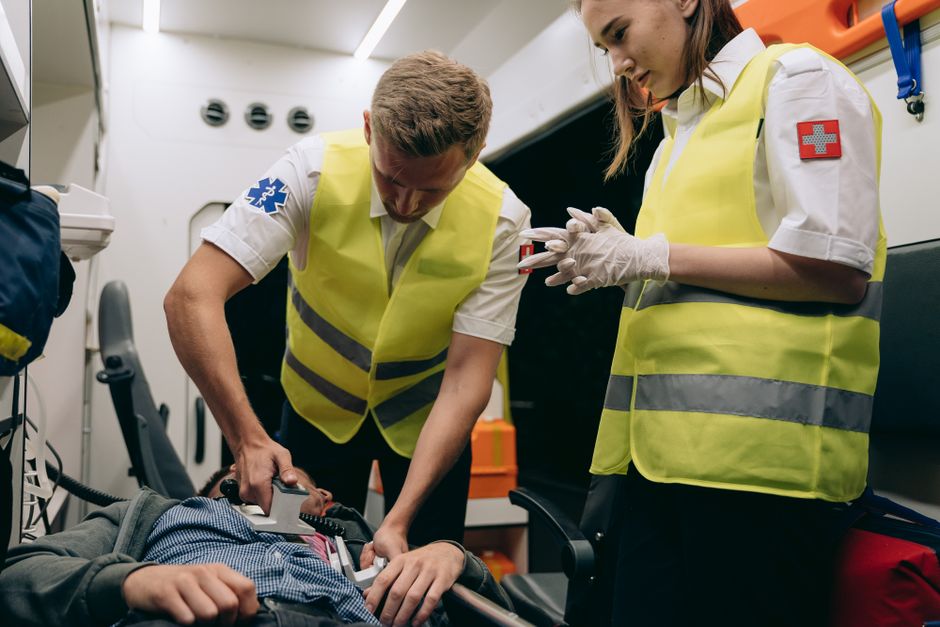
The moments following a crash are overwhelming, but immediate actions can safeguard both your physical well-being and your legal interests:
- Call 911: Request immediate emergency medical services and police response.
- Remain Calm and Safe: Move out of active traffic lanes if you are physically able, but avoid unnecessary movement if you suspect head, neck, or back trauma.
- Obtain Official Documentation: Ensure responding officers file a formal crash report and record the responding officer's name and badge number.
- Collect Driver and Witness Details: Secure the driver’s name, contact details, driver's license number, license plate, and auto insurer information. Gather contact details from any witnesses.
- Seek Emergency Medical Evaluation: Allow paramedics to evaluate you and proceed to an emergency department or urgent care center without delay.
Preserving Evidence and Documenting Scene Details
Physical evidence begins deteriorating immediately after a collision. To ensure vital facts are not lost, know what evidence to preserve after a collision:
- Photographs and Videos: Capture wide-angle images of the intersection or street, traffic signals, crosswalk markings, road debris, skid marks, vehicle impact damage, and visual obstructions like overgrown foliage.
- Surveillance and Dashcam Footage: Identify nearby storefronts, traffic cameras, or residential doorbell systems that may have recorded the incident.
- Personal Effects: Preserve the footwear and clothing worn during the collision without washing or repairing them, as impact marks and tear patterns serve as physical evidence.
- Weather and Lighting Conditions: Note ambient street lighting, precipitation, fog, or roadway surface hazards present at the time of the crash.
Reporting the Collision and Seeking Medical Assessment
Pedestrians hit by motor vehicles often sustain complex, catastrophic physical trauma due to the complete lack of external protection. Common collision injuries include:
- Traumatic Brain Injuries (TBIs): Concussions, skull fractures, subdural hematomas, and diffuse axonal injuries caused by direct head impacts against windshields or pavement.
- Spinal Cord and Vertebral Trauma: Fractured vertebrae, herniated discs, nerve impingement, or severe spinal trauma resulting in partial or complete paralysis.
- Internal Organ Damage: Fractured ribs, punctured lungs, ruptured spleens, internal hemorrhage, and abdominal trauma from blunt-force impact.
- Complex Fractures: Shattered pelves, broken femurs, compound leg fractures, and severe facial bone fractures.
Immediate diagnostic imaging—such as CT scans, MRIs, and X-rays—establishes an objective medical baseline connecting your physical trauma directly to the incident, preventing insurance companies from claiming your injuries were pre-existing.
Navigating Liability, Right-of-Way Laws, and Comparative Fault
Establishing fault after an accident requires a detailed examination of state motor vehicle codes, municipal ordinances, and general negligence principles. Both motorists and pedestrians owe a basic duty of care to navigate roadways responsibly. When evaluating liability, attorneys and insurers analyze establishing driver failure to yield under statutory traffic laws.
Drivers breach their legal duty when engaging in negligent behaviors, including:
- Exceeding posted speed limits or driving too fast for weather conditions.
- Distracted driving, such as texting, adjusting navigation devices, or speaking on mobile phones.
- Driving under the influence of alcohol, cannabis, or illicit drugs.
- Failing to stop at marked crosswalks or running red lights.
Pedestrians must also exercise reasonable vigilance. While state laws afford walkers protections at intersections, safety codes impose restrictions against sudden darting into traffic or entering highways, as highlighted by strict interstate pedestrian restrictions where foot traffic on high-speed expressways is strictly prohibited.
Crosswalk Regulations and Driver Duties of Care
Under standard traffic rules, motorists approaching crosswalks must yield the right-of-way to individuals crossing within marked lines or unmarked street connections. Legal rights and duties are detailed in our analysis of legal protections at pedestrian crosswalks.
When a driver claims an unexpected physical breakdown, courts evaluate the sudden medical emergency defense. Under this rule, a driver is only excused from negligence if the medical event was completely unforeseeable and occurred without prior warning or medical non-compliance. In every scenario, motorists maintain a heightened duty to monitor blind spots and anticipate pedestrian movement near schools, transit stops, and busy retail corridors.
How State Fault Rules Impact a Pedestrian Accident Claim
Insurance claims often involve disputes where insurers attempt to shift blame onto the injured walker. How liability is divided depends entirely on state legal frameworks:
| Legal System | Fault Standard Applied | Impact on Victim's Compensation Recovery |
|---|---|---|
| Pure Comparative Fault | Victim can recover damages regardless of their fault percentage. | Total damages award is reduced by the victim's exact percentage of fault (e.g., 20% fault reduces a $100,000 claim to $80,000). |
| Modified Comparative Fault | Victim can recover damages as long as their fault does not exceed 50% (or 51%, depending on the state). | Damages are reduced proportionally up to the statutory bar; if the victim's fault exceeds the threshold, recovery is barred completely. |
| Contributory Negligence | Strict zero-tolerance standard for victim responsibility. | If the injured pedestrian is found even 1% at fault for the accident, they are completely barred from recovering compensation. |
Because insurance adjusters routinely try to assign inflated fault percentages to pedestrians—claiming improper clothing, walking outside lines, or distraction—having skilled counsel to present concrete crash evidence is essential to protect your recovery.
Choosing the Right Legal Representation for Your Case
Navigating the aftermath of a major crash requires a dedicated legal advocate who understands how to build a trial-ready case. A seasoned attorney will direct a complete investigation, consult accident reconstruction professionals, review electronic control module ("black box") data, and negotiate firmly with insurance carriers. Our comprehensive 2026 pedestrian attorney guide explains how experienced legal representation protects your claim from early insurer settlement traps.
Essential Qualities in a Pedestrian Accident Lawyer
Selecting the right legal team can transform the trajectory of your recovery. Key qualifications to look for include:
- Former Insurance Defense Experience: Lawyers who previously defended insurance companies possess insight into how adjusters evaluate, undervalue, and attempt to deny injury claims.
- Proven Courtroom Track Record: Insurance companies know which lawyers settle cheaply and which ones aggressively prepare every case for trial before a jury.
- Local Court Knowledge: Deep familiarity with local judges, court procedures, and regional traffic corridors in Berkley, Wayne County, and throughout Metro Detroit provides a distinct tactical advantage.
- Contingency Fee Structure: Reputable personal injury firms operate on a contingency basis, meaning clients pay no upfront legal fees unless money is successfully recovered.
- Direct, Transparent Communication: Your legal counsel should provide clear updates and compassionate guidance throughout every stage of your recovery.
Pursuing Economic and Non-Economic Compensation
Victims of negligent drivers are entitled to seek compensation covering both measurable financial losses and personal trauma:
- Economic Damages:
- Emergency room fees, surgical interventions, and intensive care stays.
- Ongoing physical therapy, occupational therapy, and specialized rehabilitation.
- Prescriptions, assistive medical equipment, and home modifications.
- Lost wages from missed work and diminished future earning capacity.
- Non-Economic Damages:
- Physical pain, chronic discomfort, and physical suffering.
- Emotional distress, post-traumatic stress disorder (PTSD), and anxiety.
- Loss of enjoyment of life and inability to engage in favored activities.
- Permanent scarring, disfigurement, or physical impairment.
- Wrongful Death Claims: Surviving family members who lose a loved one may pursue funeral expenses, loss of financial support, and loss of companionship.
- Uninsured/Underinsured Motorist Coverage (UM/UIM): If the at-fault driver fled the scene or lacks sufficient insurance limits, your own auto policy may provide critical compensation.
Frequently Asked Questions About Pedestrian Collisions
Who pays medical bills after a pedestrian collision?
Medical expense coverage depends on the applicable insurance priority rules. If you are injured in a crash, you may have access to personal injury protection and medical coverage. In no-fault states like Michigan, your own auto insurer typically pays primary medical benefits and wage loss, regardless of who caused the accident.
If you do not own a vehicle or carry auto coverage, benefits may flow through a resident relative's policy, the Michigan Automobile Insurance Placement Facility (MAIPF), or health insurance. Serious injuries exceeding no-fault thresholds can be pursued through a bodily injury liability claim against the negligent driver.
How does comparative negligence affect compensation?
Comparative negligence reduces your financial compensation by the percentage of fault assigned to you by a jury or insurance settlement agreement. For example, if your total damages equal $200,000 but investigators find you 15% responsible due to crossing against a signal, your net payout would be reduced to $170,000. Insurers frequently use comparative negligence arguments to minimize claim value, which is why an experienced attorney will gather surveillance footage, witness statements, and expert analysis to refute unfounded claims of pedestrian fault.
What is the deadline for filing an injury claim?
Every state establishes strict deadlines known as statutes of limitations for filing personal injury lawsuits. In Michigan, the standard statute of limitations for personal injury and wrongful death lawsuits is three years from the date of the collision. However, statutory notice periods are often much shorter—sometimes requiring formal notice within 30 to 60 days if the collision involved a government-owned vehicle, road defect, or public transit bus. Missing these mandatory deadlines will permanently bar your right to seek financial recovery.
Conclusion
A pedestrian collision can disrupt every aspect of your life, leaving you with mounting medical bills, physical pain, and severe financial stress. Taking prompt action to protect your health, document the crash scene, and understand your legal rights puts you in the best position to secure full financial recovery.
At Liss, Shapero & Mitnick, our legal team leverages decades of courtroom experience and valuable former insurance-defense insight to fight for injured pedestrians across Berkley, Wayne County, Oakland County, and Metro Detroit. If you or a family member has been struck by a negligent driver, reach out to explore our Liss, Shapero & Mitnick pedestrian accident representation and get the dedicated legal advocacy you deserve.