
How to Estimate Bike Crash Compensation in Michigan
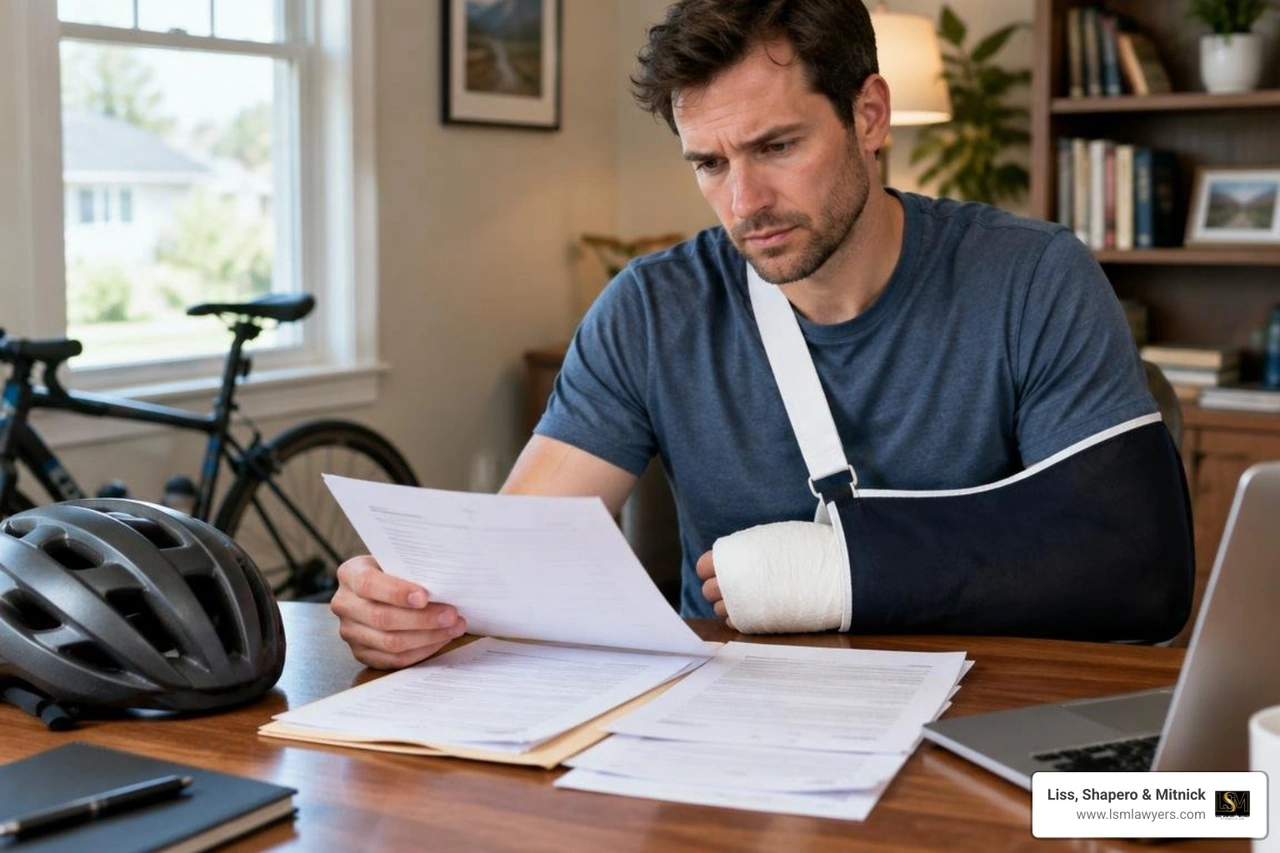
Bike crash compensation starts with your losses: medical care, missed income, bike and gear damage, and the ways your injuries affect daily life. Add documented costs and reasonable future needs, then consider who caused the crash and which insurance policies apply. In Michigan, a cyclist hit by a motor vehicle may qualify for No-Fault benefits even before fault is settled. A separate claim may cover losses those benefits do not.
Do not judge an adjuster's offer by your bills alone. Save medical records, pay stubs, repair estimates, and photos. Get a clear picture of your recovery before signing a settlement release.
I'm Anthony Shapero, managing partner at Liss, Shapero & Mitnick. I once defended insurers; now I use that experience to challenge how they value Bike crash compensation claims for injured people in Michigan.

Glossary for Bike crash compensation:
What Types of Bike Crash Compensation Can You Claim?
When an unexpected collision throws you from your bicycle, the physical and financial consequences accumulate rapidly. Securing fair bicycle accident compensation requires looking past immediate emergency room invoices to quantify the full scope of your harm.
Compensatory damages fall into three distinct legal categories: economic damages, non-economic damages, and property losses. In cases involving gross negligence or reckless conduct, punitive damages may also be evaluated, though standard civil recovery focuses on making the victim whole.
Economic Damages and Medical Recovery
Economic damages represent your direct out-of-pocket financial losses resulting from the collision. These damages must be substantiated through formal documentation, such as medical bills, pharmacy receipts, wage verification forms, and expert economic projections.
Key components of economic recovery include:
- Past Medical Expenses: Ambulance transport, emergency room trauma care, surgical interventions, diagnostic imaging (MRIs, CT scans, X-rays), and hospitalization stays.
- Future Rehabilitation and Care: Anticipated physical therapy, chiropractic treatments, home modifications, prescription medications, and durable medical equipment required throughout your recovery.
- Lost Income: Past wages missed while you were physically unable to perform your occupational duties.
- Diminished Earning Capacity: The long-term reduction in your lifetime earning potential if permanent impairments force you into a lower-paying role or prevent you from working altogether.
For riders injured throughout Metro Detroit and Berkley, navigating who pays medical bills after a bike crash involves understanding the specific order of priority established under state insurance rules.
Non-Economic Damages and Pain and Suffering
Non-economic damages compensate you for subjective, intangible harms that lack a direct invoice. While an insurance claims adjuster can easily sum up hospital bills, they routinely downplay non-economic recovery because it is less straightforward to calculate.
These damages account for:
- Physical pain and chronic discomfort
- Emotional distress, post-traumatic stress disorder (PTSD), and anxiety
- Loss of enjoyment of life (e.g., inability to engage in recreational cycling, hobbies, or family activities)
- Permanent physical impairment, scarring, or disfigurement
Insurance companies frequently utilize the multiplier method to estimate non-economic harm, applying a number (typically ranging from 1.5 to 5) to total economic losses based on injury severity.
| Damage Category | Examples of Recoverable Losses | Calculation / Proof Method |
|---|---|---|
| Economic Damages | ER visits, surgeries, physical therapy, lost wages | Itemized medical invoices, employer wage forms |
| Non-Economic Damages | Chronic pain, mental anguish, loss of mobility | Multiplier method, medical prognosis, daily journals |
| Property Damages | Bike frame, custom carbon wheels, helmet, kit | Professional repair estimates, replacement receipts |
Bicycle and Gear Property Damage Calculations
Bicycles, particularly modern carbon fiber road bikes, gravel rigs, and commuter e-bikes, represent substantial financial investments. After a collision, property recovery goes beyond the bike frame itself.
Your claim should account for:
- Full Replacement Value: If a custom or high-end model is discontinued, the current market cost of an equivalent modern build serves as the baseline.
- Aftermarket Components: Custom pedals, power meters, electronic shifting units, saddles, and cycling computers.
- Safety Gear and Apparel: Damaged helmets, torn cycling bibs, scuffed shoes, and high-visibility jackets.
Never reuse a helmet involved in an impact, as internal foam degradation destroys its structural integrity. Preserve all damaged gear in its uncleaned, post-crash condition to serve as physical evidence during property valuation negotiations.
How Insurance Policies and Fault Rules Impact Your Settlement
The total financial recovery you receive depends heavily on state negligence standards, available insurance policy layers, and the unique circumstances surrounding how the crash occurred.
Comparative Negligence and Fault Determination
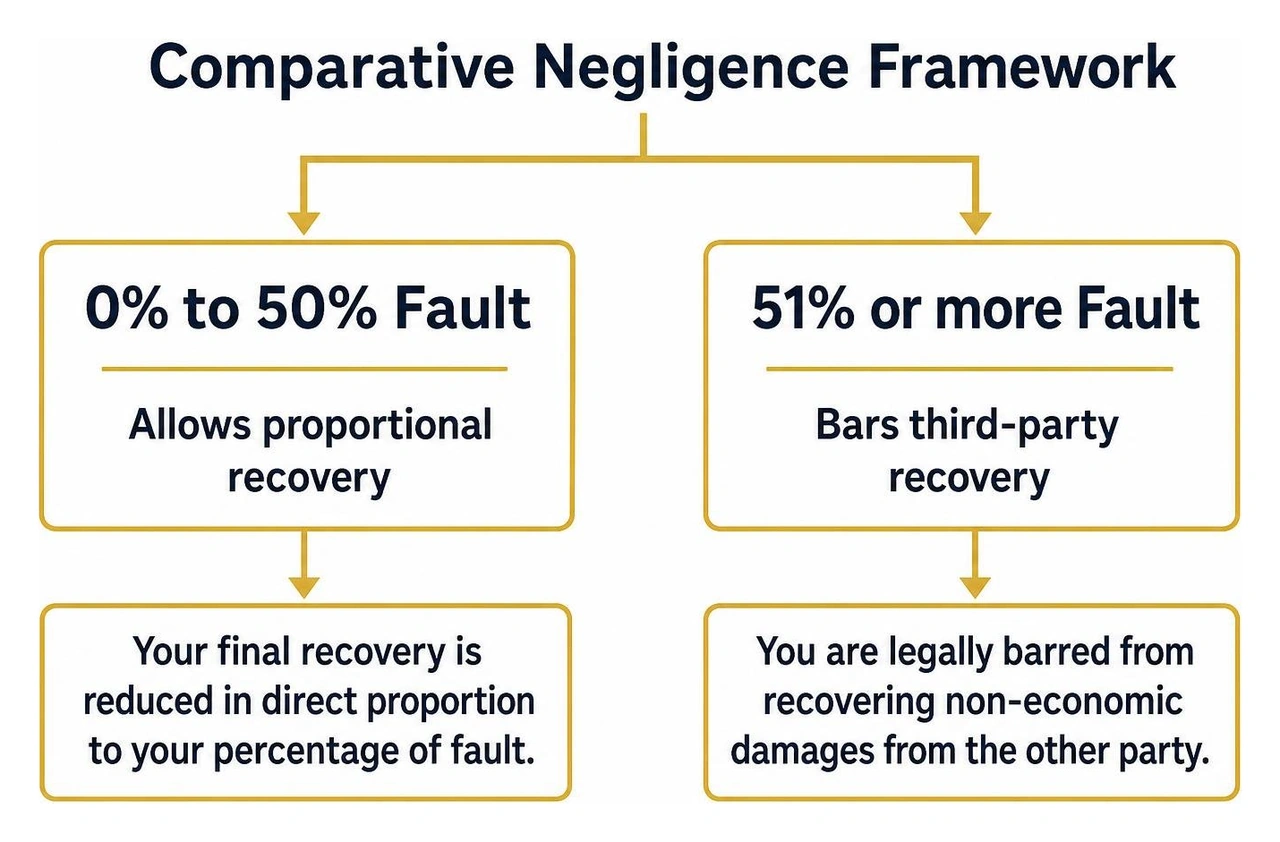
Fault allocation directly dictates how much money an injured cyclist recovers. In Michigan, personal injury claims against an at-fault driver operate under a modified comparative fault system. Under this rule:
- You can recover damages as long as you were 50% or less to blame for the crash.
- Your final financial recovery is reduced in direct proportion to your assigned percentage of fault.
- If you are found to be 51% or more at fault, you are legally barred from recovering non-economic damages from the other party.
Insurance adjusters frequently try to shift blame onto riders by arguing comparative fault—such as alleging you lacked proper illumination at dusk or failed to wear a helmet. Knowing the legal standard for assessing bike crash fault in Michigan allows you to push back against baseless attempts to diminish your payout.
Insurance Policy Layers: Auto, PIP, and Umbrella Coverage
Multiple insurance policies often interact following a bicycle-motor vehicle collision. Reviewing all available policies helps ensure no potential avenue for recovery is overlooked.
- Michigan No-Fault Personal Injury Protection (PIP): When a motor vehicle is involved in a bicycle wreck, injured cyclists may access PIP benefits under Michigan No-Fault laws. These benefits cover allowable medical expenses, a percentage of lost wages, and replacement services regardless of who caused the collision.
- Third-Party Bodily Injury Liability: If the at-fault driver's negligence caused your injuries, you pursue a third-party tort claim against their auto liability policy for non-economic pain and suffering and excess economic damages.
- Uninsured/Underinsured Motorist (UM/UIM) Coverage: If the motorist who hit you lacks sufficient insurance—or flees the scene in a hit-and-run—your own auto policy's UM/UIM coverage can step in to cover your damages.
- Homeowners or Renters Personal Liability: When an incident involves another cyclist or a pedestrian rather than a motor vehicle, personal liability policies from homeowners or renters insurance often provide primary liability coverage.
Single-Vehicle and Road Defect Liability Claims
Not all bike wrecks involve a negligent driver. Severe crashes often occur when cyclists strike deep potholes, unpainted road hazards, or defective municipal infrastructure.
Holding a government agency accountable for hazardous road conditions is uniquely challenging. Government entities are shielded by sovereign immunity, requiring claimants to satisfy strict statutory notice windows—often as brief as 60 to 120 days—and prove the agency had prior notice of the defect. Highlighting the difficulty of these actions, historical insurer data indicates that only approximately 22% of highway defect claims result in a direct settlement payout.
Step-by-Step Guide: Protecting Your Claim from Insurance Adjuster Tactics
The actions you take immediately following a collision dictate the evidentiary strength of your subsequent insurance claim.

Critical Steps at the Crash Scene
In the chaotic aftermath of a wreck, adrenaline can mask significant soft-tissue trauma or concussions. Remaining calm and executing a methodical checklist protects your safety and legal rights:
- Contact Law Enforcement Immediately: Ensure police dispatch responds to the scene so an official traffic crash report is filed.
- Exchange Details: Gather the driver's full name, address, phone number, driver's license number, license plate, and auto insurance policy information.
- Document the Scene: Photograph vehicle positions, skid marks, road conditions, traffic signage, damaged bicycle parts, and your visible bodily injuries.
- Gather Eyewitness Information: Request contact details from bystanders or nearby shop owners before they leave the area.
- Preserve Digital Footage: If you or a nearby driver had a camera or bike computer active, immediately back up the files to prevent data from being overwritten.
To avoid inadvertently damaging your claim, review what evidence to save after a bicycle accident, including untouched safety gear and apparel.
Navigating Common Crash Scenarios: Dooring and Right-Hook Collisions
Urban and suburban cycling environments present specific hazard patterns where motorists frequently fail to yield or keep a proper lookout:
- Dooring Collisions: Occur when an occupant of a parked vehicle opens their car door directly into an oncoming cyclist's path without checking side mirrors. In these cases, our Detroit area bike dooring injury attorneys establish clear driver liability under local failure-to-yield laws.
- Right-Hook Collisions: Happen when a vehicle overtakes a cyclist and abruptly turns right across the bike lane or shoulder, cutting off the rider.
- Left-Cross Collisions: Occur when an oncoming driver turns left at an intersection directly into a cyclist traveling straight.
- Crosswalk and Trail Crossings: Motorists frequently focus only on vehicle traffic when pulling out of driveways or turning at intersections, failing to yield to cyclists crossing designated trailways or sidewalks, as detailed in our guide to bicycle and pedestrian safety near trail crossings.
Resisting Lowball Offers and Adjuster Traps
Insurance adjusters operate with one primary goal: minimizing the financial payout made by their employer. Having worked on the defense side earlier in my career, I know the exact playbook adjusters use to devalue cycling claims.

Be alert for these common insurance tactics:
- The Rush Settlement: Adjusters often extend a quick settlement offer within days of the crash, hoping you sign a full liability release before you understand the long-term prognosis of your injuries.
- Recorded Statement Requests: Adjusters ask carefully phrased questions designed to get you to downplay your pain or admit partial fault. You are not legally required to provide a recorded statement to the at-fault driver's insurer.
- Disputing Medical Causation: Insurers routinely claim that soft-tissue neck, back, or joint injuries are related to pre-existing conditions rather than the force of the collision.
Never sign a settlement release until you have reached Maximum Medical Improvement (MMI)—the point at which your treating physicians confirm your condition has fully stabilized and any permanent impairments are documented. Furthermore, be mindful of the strict 3-year statute of limitations in Michigan for personal injury lawsuits; missing this hard deadline permanently bars your right to compensation.
Calculating Your Bike Crash Compensation Value
Bicycle accident settlement values vary widely based on injury severity, available insurance limits, and clear liability. While minor soft-tissue cases may settle between $10,000 and $25,000, severe or catastrophic collisions regularly settle between $50,000, $100,000, or well beyond policy maximums.
Key factors that directly increase settlement valuation include:
- Surgical Intervention: Injuries requiring orthopedic hardware, spinal fusions, or joint reconstruction dramatically increase economic expenses and demonstrate objective physical trauma.
- Duration of Treatment: Months of physical therapy, occupational rehabilitation, and pain management substantiate significant ongoing pain and suffering.
- Permanent Impairment or Disfigurement: Traumatic brain injuries (TBIs), severe road rash scarring, or lost joint mobility justify higher multiplier valuations.
- Medical Liens and Subrogation: Health insurers, ERISA employer plans, and Medicare may claim subrogation rights against your final settlement to recoup costs they paid. An experienced attorney negotiates these liens down, leaving more money in your pocket.
- Tax Status: Under Internal Revenue Code (IRC) § 104, compensatory settlements recovered for personal physical injuries or sickness are generally exempt from federal and state income taxes.
Maximizing Your Bike Crash Compensation with Legal Representation
Attempting to negotiate directly with an experienced insurance adjuster puts unrepresented cyclists at a major disadvantage. Leveling the playing field requires legal counsel equipped to uncover every layer of available coverage and build an airtight case for full damages.
Our firm handles bicycle collision claims on a contingency fee basis, meaning:
- You pay zero upfront retainers or out-of-pocket hourly rates.
- Case investigation costs, accident reconstruction fees, and expert witness retainers are fully covered by the firm.
- Attorney fees are collected only as an agreed-upon percentage of the final financial recovery we secure on your behalf.
By consulting a dedicated cycling accident attorney, you ensure that physical evidence is preserved, medical documentation is properly structured, and insurers are forced to take your losses seriously.
Frequently Asked Questions About Bike Crash Compensation
How long does it take to settle a bicycle accident claim?
Most straightforward bicycle crash claims resolve through negotiated settlement within 6 to 18 months. However, cases involving severe or catastrophic injuries, contested liability, or complex litigation that proceeds to a formal court trial can take 2 to 3 years to reach a final resolution.
Can I recover compensation if no car was involved in my bike wreck?
Yes. If your crash resulted from an unaddressed municipal road defect, hazardous construction debris, or a sudden mechanical component failure on your bicycle, you may hold the municipal entity or equipment manufacturer legally liable. That claims against government entities involve strict notice deadlines that require immediate action.
What happens if the driver who hit me is uninsured or underinsured?
If the at-fault driver carries only state-minimum liability limits or possesses no auto insurance at all, you can file a claim under the Uninsured/Underinsured Motorist (UM/UIM) provisions of your own auto policy. This coverage applies even when you are hit while riding a bicycle.
Conclusion
Recovering from a bicycle crash is grueling enough without being forced to battle insurance companies attempting to devalue your legitimate losses. At Liss, Shapero & Mitnick, our legal team leverages prior insurance-defense insight to anticipate adjuster strategies, build compelling evidentiary records, and fight for the maximum compensation our clients deserve across Metro Detroit, Berkley, and throughout Michigan.
If you or a loved one was injured in a collision, contact our team today to take the first step toward securing your full bicycle accident compensation.
— Anthony Shapero