
What Michigan Bike Crashes Reveal About Rider Safety

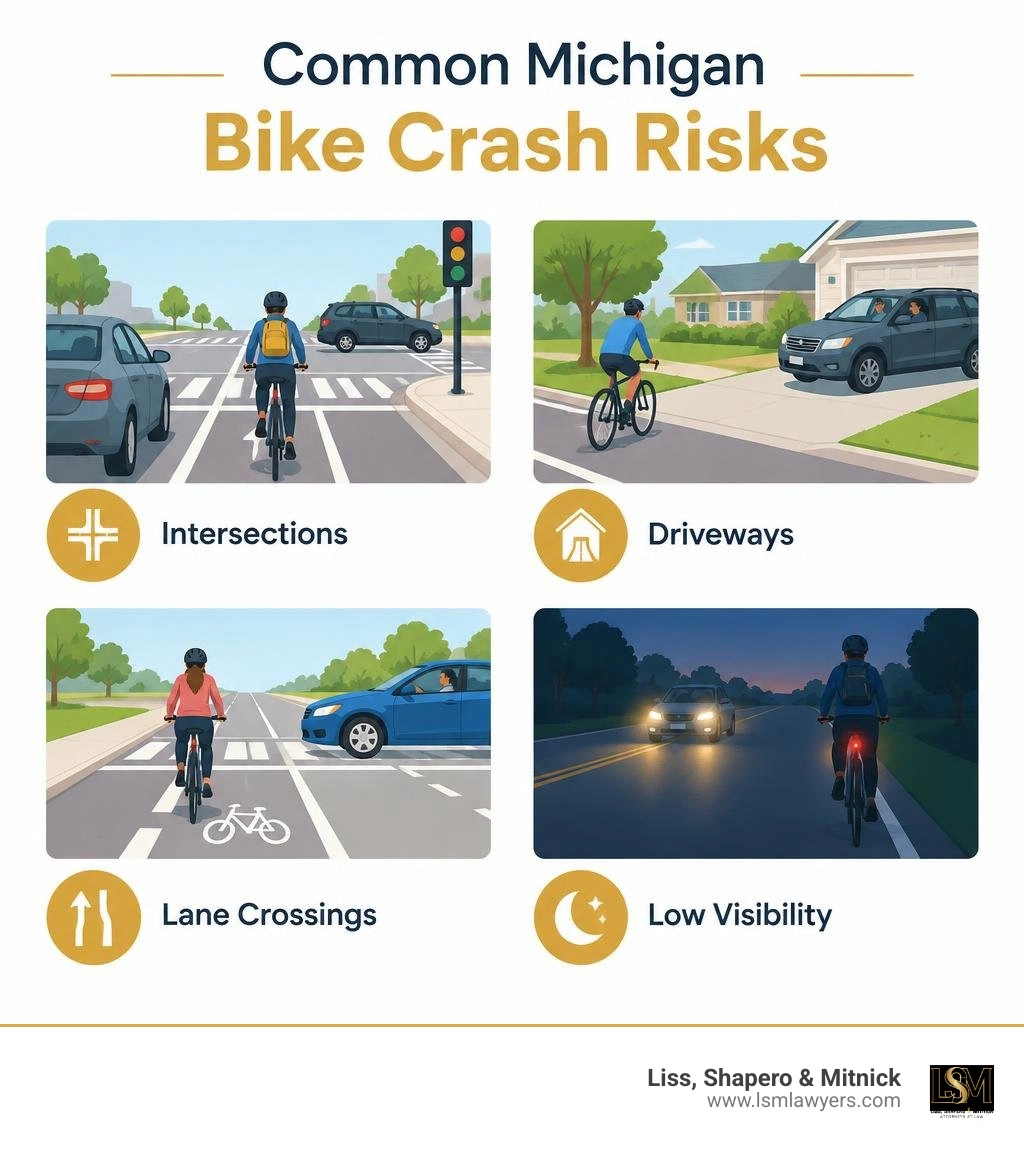
Recent Michigan bike crashes point to recurring risks: collisions at intersections and driveways, drivers crossing into a rider's path, and poor visibility after dark. The people hurt range from children on bicycles to older adults on e-bikes. These reports show where riders are vulnerable, but they do not, on their own, prove that crashes are rising statewide.
A helmet can reduce the risk of head injury, but it cannot stop a vehicle from striking a rider. Safer crossings, clearer sightlines, and more space between bikes and cars matter, too. When a crash happens, the police findings, medical costs, and available insurance all deserve a close look.
I'm Anthony Shapero, managing partner at Liss, Shapero & Mitnick. My work on Michigan bike crash claims draws on years representing injured people and my earlier experience defending insurance companies.
Similar topics to Michigan bike crash:
Recent Trends and Key Statistics in Michigan Bike Crash Incidents
Evaluating roadway safety requires examining both aggregate statistical data and localized patterns. Overall, statewide road safety metrics reveal that the total number of fatal motor vehicle collisions in Michigan declined by 5.2 percent in recent reporting periods. However, this broad improvement does not automatically translate into safety for vulnerable non-motorized road users. Cyclists, pedestrians, and micromobility users continue to face severe dangers along high-speed corridors and suburban thoroughfares.
A catastrophic Michigan bike crash frequently occurs when multi-ton motor vehicles interact with unprotected riders on mixed-use roadways. From devastating mass-casualty events—such as when a driver mows down elite college cycling team members during group rides—to isolated collisions on quiet residential streets, cyclists face disproportionate physical consequences. Our legal team regularly analyzes Michigan bike accident data across Metro Detroit and Oakland County to identify underlying liability factors and confront the tactics insurance adjusters use to minimize payout obligations.
Factors Contributing to a Serious Michigan Bike Crash
Severe cycling collisions rarely stem from purely random misfortune; they routinely involve distinct driver errors and environmental hazards. Among the leading causes identified by law enforcement crash reconstruction teams are:
- Distracted Driving and Inattention: Motorists checking mobile devices or navigating digital displays frequently fail to perceive narrower non-motorized profiles.
- Failure to Maintain Lane Integrity: Drivers drifting over solid white fog lines or encroaching into designated bicycle lanes create immediate collision hazards.
- Excessive Speed: Higher vehicle velocity dramatically narrows a driver's peripheral field of vision and multiplies impact forces exponentially upon contact.
- Low-Light and Nighttime Conditions: Limited roadway lighting substantially reduces contrast, rendering bicyclists nearly invisible to motorists who fail to use high-beam headlamps prudently.
Tragic events underscore these hazards across Michigan communities. For example, an 87-year-old man died after an e-bike crash in Grand Blanc Twp. when turning at an intersection. When a rider is hurt due to a motorist's carelessness, consulting an experienced biker hit by car attorney in Oakland County is vital to securing critical witness testimony, vehicle telematics, and police reconstruction reports before evidence degrades.
High-Risk Demographics and Vulnerable Age Groups
The physical vulnerability of bicycle riders extends across all age demographics, yet children and older adults bear the heaviest brunt of traumatic impacts. Younger riders frequently lack the developed spatial awareness needed to anticipate aggressive turns by motorists, while senior riders often suffer catastrophic secondary complications from blunt-force impacts.
A heartbreaking example occurred in Leroy Township, where a family suffered utter despair as their 13-year-old daughter died in the hospital days after a bicycle crash that also killed her 12-year-old brother. Both siblings were wearing properly fitted safety helmets while riding along the roadway shoulder when an SUV struck them. This devastating incident emphasizes that safety gear alone cannot protect youth from negligent vehicle operations. Educating neighborhood youth on roadway hazards remains critical, as outlined in our review of summer safety guidance for Berkley families.
Road Design, Dangerous Intersections, and Crash Patterns
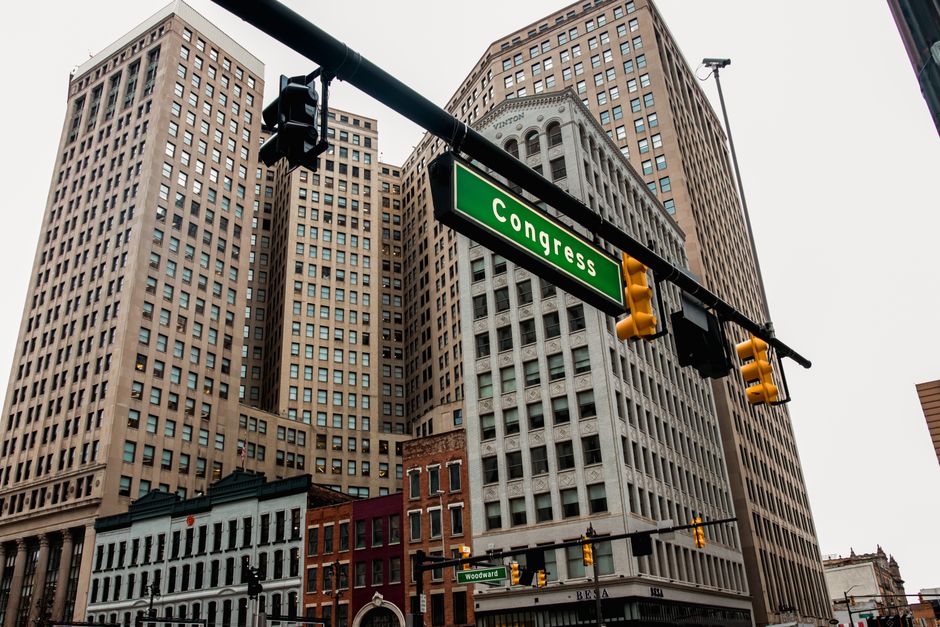
Roadway architecture plays a fundamental role in bicycle collision frequency. Many suburban arterial routes throughout Metro Detroit were engineered exclusively for high-volume motorized transit, leaving non-motorized travelers exposed to complex conflict zones.
High-density commercial corridors featuring numerous curb cuts, strip mall entrances, and service driveways create continuous blind spots. Motorists turning across traffic frequently focus exclusively on oncoming automobiles, neglecting to check adjacent sidewalks or bike lanes for approaching cyclists. The fatal Ferndale e-bike crash on Woodward Avenue illustrated how mixed-use corridors—combining on-street parking, sidewalk traffic, and commercial driveways—generate fatal visibility traps. When municipal planning fails to protect riders, our Oakland County bike lane crash lawyers scrutinize road geometry and sightline obstructions to hold all negligent parties accountable, drawing from insights on crosswalks, trail crossings, and right hooks.
Intersection Hazards and Crosswalk Safety
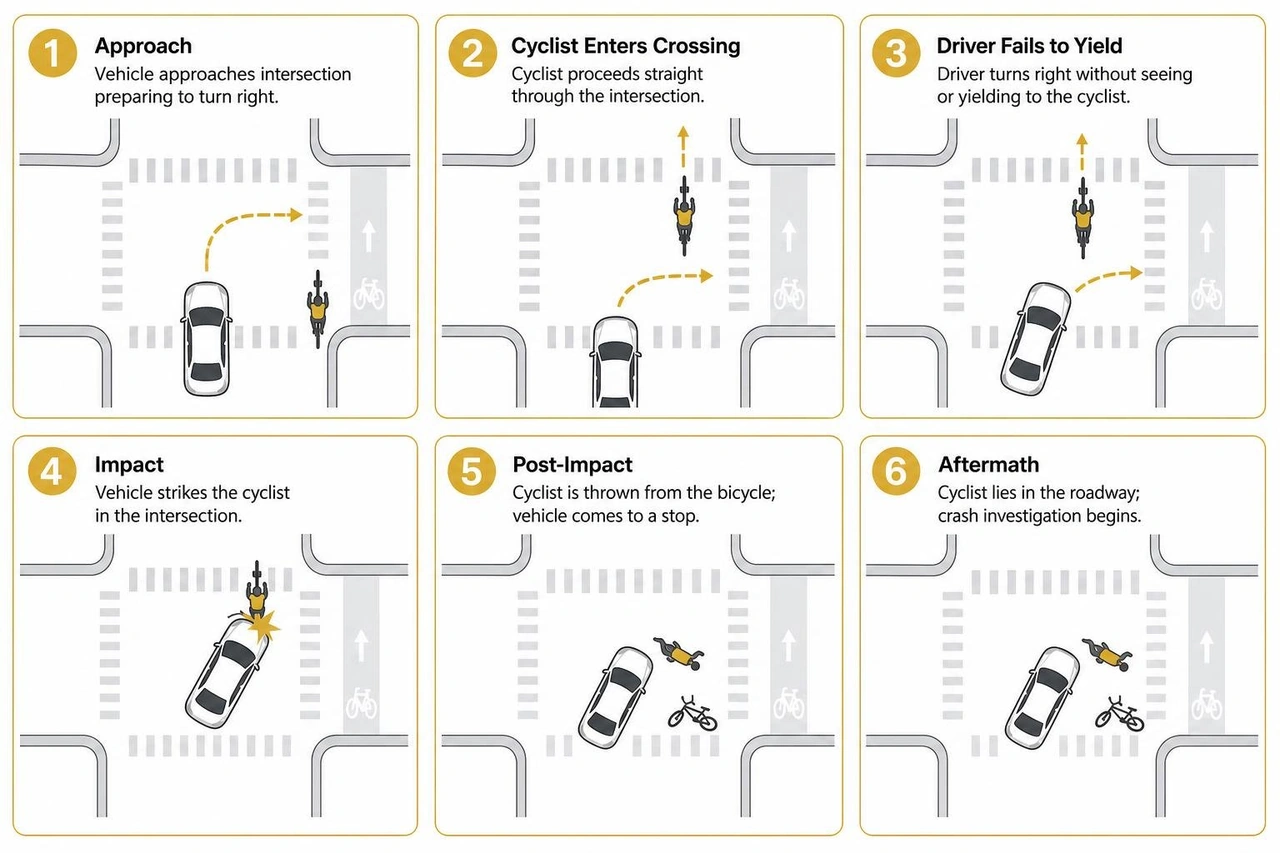
Intersections represent the single most dangerous roadway environment for Michigan bicyclists. Unsignalized crossings, wide turning radiuses that encourage fast vehicle turns, and obstructed sightlines create severe collision vectors.
In Redford Township, a 64-year-old bicyclist was fatally hit by a car while attempting to navigate across multi-lane traffic at night. Proving liability in intersection crashes requires demonstrating the motorist's duty of care, which we detail in our analysis of how to prove a driver failed to yield in Michigan.
Infrastructure Advocacy and Community Responses
In the wake of high-profile incidents, grassroots advocacy groups and municipal planners have pushed for modern infrastructure modernizations. The historic Kalamazoo bicycle crash galvanized statewide calls for protected non-motorized transit corridors and stricter motorist accountability.
Community safety initiatives now actively advocate for:
- Physically Separated Bike Lanes: Replacing painted buffer lines with concrete curbs, bollards, or grade-separated paths to eliminate vehicular encroachment.
- Road Diets: Reconfiguring four-lane undivided roadways into three lanes (two travel lanes plus a dedicated center turn lane and bike lanes) to slow vehicle speeds and reduce turning conflicts.
- Trail System Expansions: Connecting local residential neighborhoods to regional paved trail networks, separating commuter cyclists from high-speed commercial traffic.
When local infrastructure lags behind traffic volume, consulting an experienced Berkley pedestrian accident lawyer ensures that crash victims understand their full scope of municipal and private liability protections under Michigan law.
E-Bike Emergence: Safety Regulations, Speed, and Unique Risks
The rapid adoption of electric bicycles (e-bikes) across Michigan has transformed personal mobility while introducing new safety variables. Because e-bikes travel at substantially higher speeds than traditional pedal bicycles, collisions result in greater kinetic energy transfers, leading to severe traumatic brain injuries, organ lacerations, and complex orthopedic fractures.
| E-Bike Classification | Motor Assist Type | Maximum Assisted Speed | Operational Throttle | Michigan Helmet & Age Mandates |
|---|---|---|---|---|
| Class 1 | Pedal-assist only | 20 mph | No | Helmet required under age 18; permitted on paved trails |
| Class 2 | Throttle or pedal-assist | 20 mph | Yes | Helmet required under age 18; permitted on most shared paths |
| Class 3 | Pedal-assist only | 28 mph | No | Helmet required for all riders; rider must be at least 14 years old; banned on non-motorized state trails |
The severe bodily harm associated with e-bike impacts was highlighted when a car hit two teenagers on an e-bike in Redford, leaving a 13-year-old child unresponsive with traumatic brain trauma and internal bleeding. Understanding the applicable recovery mechanisms requires navigating insurance coverage rules for e-bike and scooter accidents, alongside mitigating unique seasonal risks detailed in our guide on winter riding visibility and insurance gaps.
Michigan E-Bike Laws and Trail Restrictions
Michigan statutory law classifies electric bicycles under the Michigan Vehicle Code (MCL 257.657), establishing clear operational rules:
- Riding Privileges: Class 1, 2, and 3 e-bikes may operate on public roadways and bike lanes wherever traditional bicycles are permitted, unless a local municipality has passed a specific prohibitive ordinance.
- Trail Restrictions: Class 3 e-bikes—capable of motor-assisted speeds up to 28 mph—are prohibited from operating on natural-surface non-motorized trails and linear state trails unless specifically authorized by local governing agencies.
- Age and Equipment Mandates: Operators of Class 3 e-bikes must be at least 14 years of age, and all operators and passengers under 18 years of age must wear an approved, properly fitted bicycle helmet.
Tragically, collisions involving younger riders continue to occur throughout Michigan. When a teen girl riding an electric bike died after being hit by a car in Port Huron, it highlighted how rapidly high-speed traffic conflicts develop. Retaining a seasoned bicycle accident lawyer in Berkley, Michigan ensures that the complex interplay between municipal cycling ordinances and vehicle code rules is skillfully navigated.
Navigating Fault, Medical Bills, and Legal Claims
Michigan’s unique auto insurance landscape requires specialized legal knowledge. When an automobile strikes a cyclist or e-bike rider, the claim falls squarely under the Michigan No-Fault Insurance Act. This entitles the injured rider to Personal Injury Protection (PIP) benefits regardless of who caused the collision.
PIP benefits provide essential financial relief, including:
- Allowable Medical Expenses: Coverage for hospital stays, surgeries, physical therapy, diagnostic imaging, and long-term rehabilitation.
- Lost Wages: Reimbursement for up to 85% of gross lost income for up to three years following the crash.
- Replacement Services: Up to $20 per day to hire assistance for domestic tasks the injured cyclist can no longer perform.
- Attendant Care: Payment for around-the-clock nursing care or family-provided assistance required for catastrophic injuries.
Understanding the order of priority is critical to recovering benefits without delay. Our resources on medical bill responsibility after a Michigan bike accident and e-bike accident medical claims outline how these statutory claims proceed.
What to Do Immediately After a Michigan Bike Crash
The actions you take immediately following a collision dictate the success of any subsequent insurance claim or third-party negligence lawsuit.
- Contact Emergency Medical Services and Police: Never allow an at-fault driver to convince you to avoid calling 911. A formal police crash report provides objective documentation of the scene.
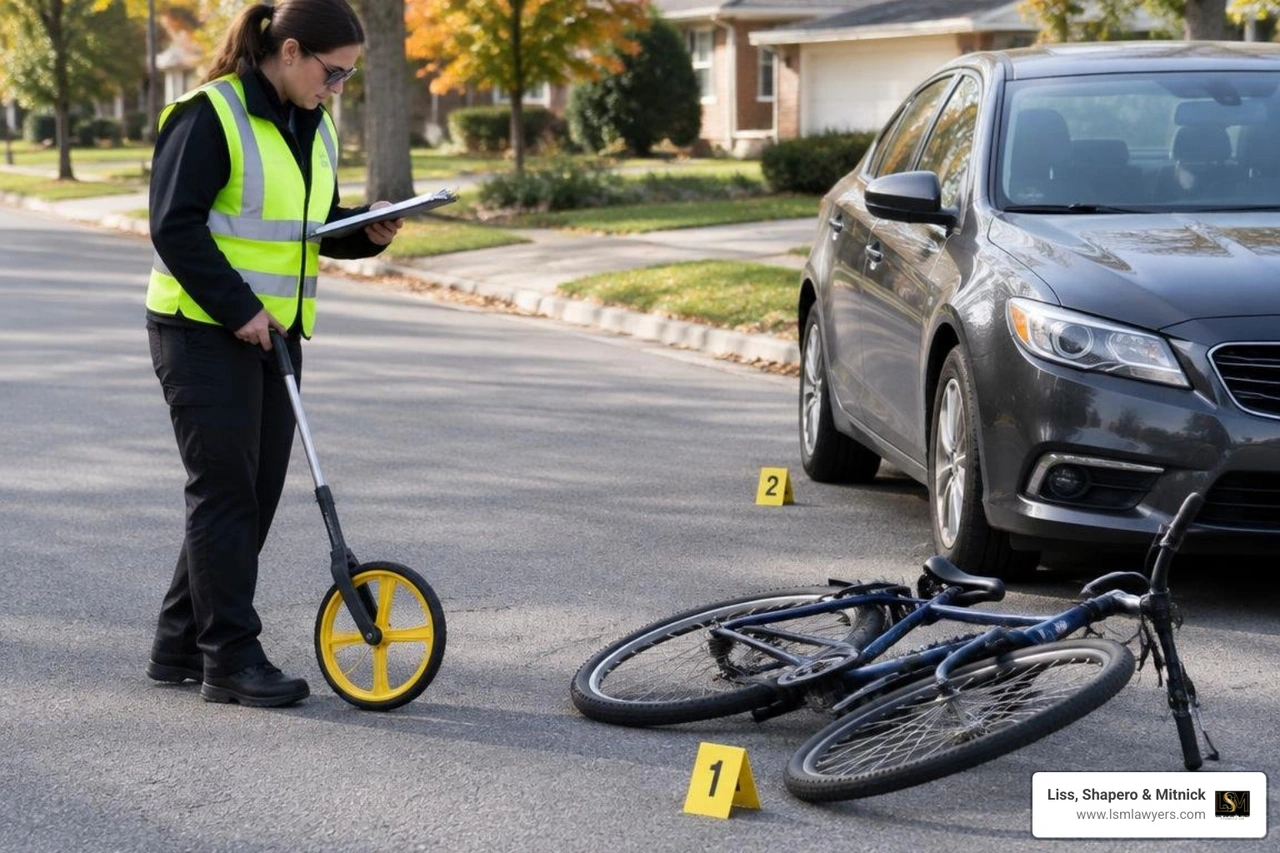
- Document Scene Evidence and Road Hazards: Photograph vehicle resting positions, paint transfers, skid marks, road conditions, and traffic control signs.
- Preserve Your Physical Equipment: Do not attempt to repair, discard, or clean your damaged bicycle, e-bike, helmet, or torn clothing. These items serve as vital physical evidence for crash reconstructionists.
- Identify Witnesses: Collect full names, phone numbers, and addresses of all bystanders before they leave the vicinity.
- Seek Specialized Legal Guidance: Consult our comprehensive checklist regarding evidence preservation after a Metro Detroit pedestrian or cycling accident and speak directly with a dedicated cycling accident attorney.
Frequently Asked Questions About Michigan Bicycle Crashes
Who pays medical bills if I am hit by a car while riding a bicycle in Michigan?
Under the Michigan No-Fault system, your medical expenses are paid through Personal Injury Protection (PIP) coverage. The claim follows a strict statutory "Order of Priority":
- Your own auto insurance policy.
- The auto insurance policy of your spouse or a resident relative.
- If no auto insurance exists in your household, the claim is submitted to the Michigan Assigned Claims Plan (MACP), which assigns an auto insurer to cover your allowable medical costs up to statutory limits.
For a detailed walkthrough of this process, see our complete guide on who pays medical bills after a bicycle crash in Michigan.
What insurance covers injuries from an e-bike or electric scooter accident?
If a motor vehicle (car, truck, or SUV) is involved in the collision with your e-bike or electric scooter, the standard Michigan No-Fault PIP hierarchy applies, providing medical coverage through the appropriate auto insurer.
However, if the accident is a solo crash or involves only another non-motorized cyclist or pedestrian, No-Fault auto benefits generally do not apply. In those scenarios, medical bills must be processed through your primary health insurance, with third-party liability claims handled through homeowner's or renter's liability policies. Review our analysis of insurance coverage for e-bike and scooter accidents for specific claim strategies.
Are bicyclists required to wear helmets under Michigan traffic law?
Michigan law does not mandate bicycle helmet use for adult riders of traditional non-motorized bicycles. However, riders and passengers under the age of 18 operating or riding on Class 1, 2, or 3 electric bicycles are legally required to wear a properly fitted and fastened helmet.
In personal injury litigation, an insurance company cannot completely deny your claim simply because you were not wearing a helmet if the law did not require one. Under Michigan's comparative fault rules, insurance adjusters often attempt to argue comparative negligence to reduce your damage recovery, making strategic legal representation essential. For further details on roadway safety rules, consult our 2026 pedestrian and cyclist accident guide.
Conclusion
Every Michigan bicyclist deserves to use public roadways without fear of catastrophic harm caused by reckless or distracted motorists. Safe riding practices, roadway infrastructure upgrades, and comprehensive driver education are vital steps toward eliminating preventable collisions across Metro Detroit.
When a driver's negligence disrupts your life, you should not have to fight insurance adjusters alone. At Liss, Shapero & Mitnick, we leverage our former insurance-defense background to anticipate carrier defense tactics and demand maximum financial recovery for medical care, lost income, and pain and suffering.
If you or a loved one has suffered injuries in a cycling or e-bike collision, contact Anthony Shapero and the experienced team of Michigan bicycle accident lawyers at Liss, Shapero & Mitnick for a free, comprehensive consultation to protect your legal rights.