
How to Find Affordable Commercial Auto Insurance Without Leaving Gaps

To find affordable commercial auto insurance, get at least three quotes using the same liability limits, deductibles, vehicles, and drivers. Ask about discounts for safe driving, multiple policies, and fleet safety programs. Then check what each quote does not cover. The lowest price is no bargain if a delivery trip or employee-driven car falls outside the policy.
In Michigan, pay close attention to liability coverage and no-fault personal injury protection (PIP). Both matter when a crash leaves someone facing medical bills or lost income.
I’m Anthony Shapero, a Michigan personal injury lawyer who previously represented insurers. That experience shapes how I explain affordable commercial auto insurance: look past the premium and check what protection you can count on after a crash.

Easy affordable commercial auto insurance glossary:
Understanding Commercial Auto Insurance and Fleet Requirements
When operating a business in Metro Detroit, Berkley, or anywhere across Michigan, keeping your vehicles on the road is vital to keeping your doors open. Commercial auto insurance is specialized protection designed to shield businesses from the catastrophic financial fallout of motor vehicle accidents, property damage, and legal liability.
Many small business owners assume that commercial coverage is an optional luxury or an unnecessary expense. In reality, commercial vehicle insurance is a legal and operational safeguard. Nationally, the median monthly cost for business auto insurance sits around $207 per month (with an average of $276 per month), while contractors pay a median of roughly $203 per month. Among small business policyholders nationwide, about 40% pay less than $200 per month, while 49% pay between $200 and $400 per month. Finding cheap commercial vehicle insurance without gutting your actual protection requires understanding what you are buying.
| Policy Feature | Personal Auto Insurance | Commercial Auto Insurance |
|---|---|---|
| Primary Purpose | Personal errands, daily commuting, pleasure driving | Transporting goods, hauling tools, client transit, business tasks |
| Named Insured | Individual policyholder and resident relatives | Business entity, LLC, corporation, or sole proprietor |
| Liability Limits | Typically lower statutory minimums ($50k–$250k) | Higher business thresholds (often $500k to $1M+ CSL) |
| Driver Coverage | Listed household members and permissive users | Listed employees, authorized staff, hired drivers |
| Business-Use Exclusions | Strict exclusions for commercial delivery, livery, hauling | Fully covers business operations and commercial transit |
| Specialized Add-ons | Roadside assistance, rental reimbursement | Cargo coverage, inland marine, hired and non-owned auto |
Commercial vs Personal Policies for Business Vehicles
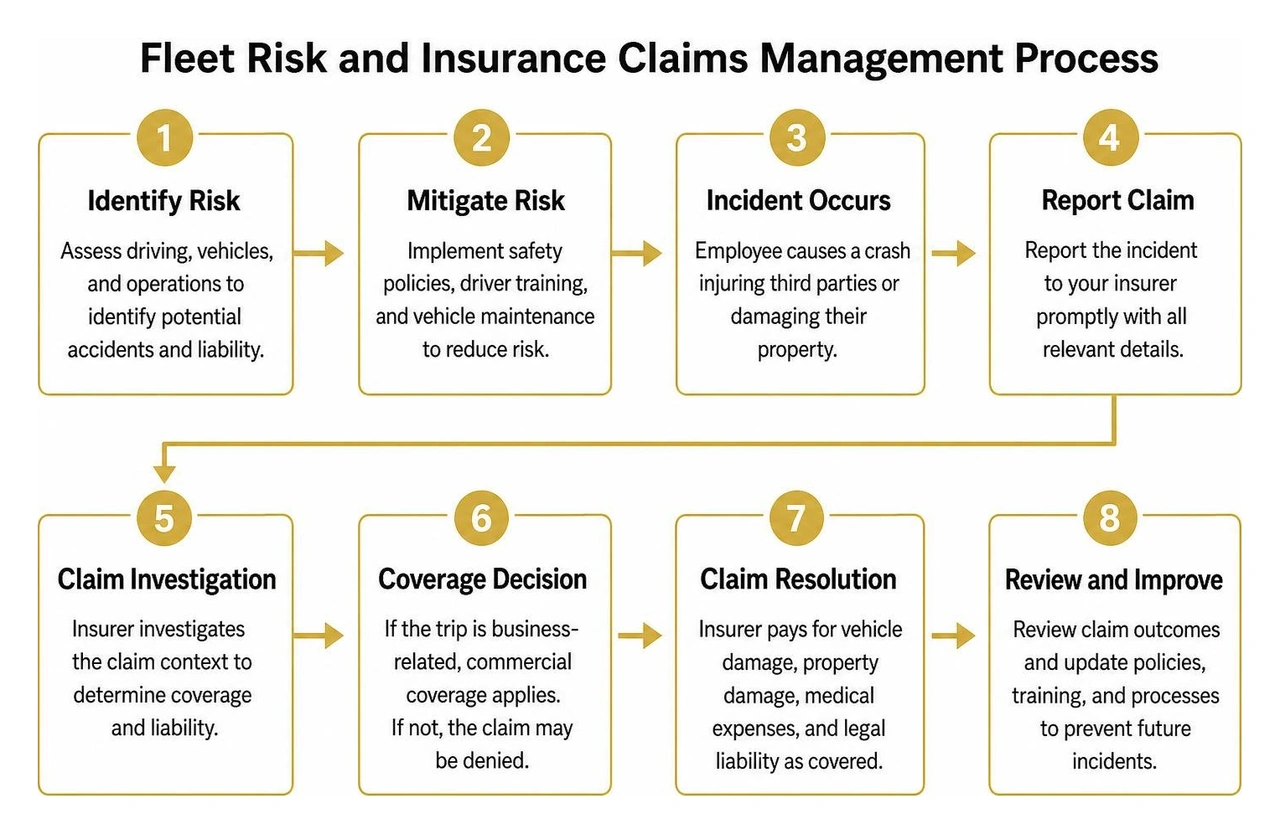
The single biggest trap for small business owners is relying on personal auto insurance for vehicles used in daily operations. Standard personal auto contracts contain strict "business-use exclusions." If an employee is delivering supplies, driving between job sites, or transporting paying clients and causes a crash, the insurer will investigate the claim's context.
Once the claims adjuster establishes that the trip was business-related, they can deny the claim entirely. That leaves the business entity and owner personally liable for vehicle damage, property destruction, and catastrophic medical claims. Establishing dedicated auto coverage ensures that company-owned autos and work vehicles have enforceable liability limits that protect business assets.
Essential Coverages Within Affordable Commercial Auto Insurance Policies
A robust yet affordable commercial auto policy is built on core coverage components:
- Liability Protection: Composed of bodily injury and property damage liability, this shields your business if an employee causes a crash injuring third parties or damaging their property. Given the legal exposure of commercial operations, carrying a $1,000,000 Combined Single Limit (CSL) is standard practice.
- Physical Damage Coverages: Encompassing collision and comprehensive policies, auto physical damage insurance pays to repair or replace your business vehicles after traffic accidents, theft, vandalism, weather events, or falling objects.
- Uninsured and Underinsured Motorist (UM/UIM) Coverage: More than one in seven drivers across the United States are completely uninsured. If an uninsured or underinsured driver strikes your commercial vehicle, UM/UIM steps in to pay for vehicle damage and serious driver injuries. For complex crash scenarios, consulting an uninsured and underinsured motorist lawyer in Michigan can help clarify recovery rights.
- Medical Payments or Personal Injury Protection (PIP): Covers necessary medical expenses and rehabilitation costs for drivers and passengers injured in a work vehicle crash, regardless of fault.
What Factors Drive Commercial Vehicle Insurance Rates?
Commercial auto insurance premiums are not assigned randomly. Underwriters calculate rates based on actuarial risk assessments specific to your operations.

Industry Risk and Driver History
Your industry classification heavily influences baseline rates. A local consulting firm driving sedans to client meetings represents far lower risk than a roofing contractor hauling heavy trailers or an HVAC business operating continuous daily routes.
Beyond industry classifications, your employees' Motor Vehicle Records (MVRs) represent a primary pricing lever. Drivers with speeding violations, moving infractions, or past at-fault collisions dramatically elevate your risk profile. Establishing strict driver vetting standards and pulling regular MVR checks keeps your risk level low and qualifies your fleet for preferred tier pricing.
Geographic Location and State Mandates
Where your vehicles operate and park overnight directly impacts your premiums. High-density traffic corridors in Metro Detroit encounter higher claim frequencies and elevated rates compared to rural areas.
Furthermore, state statutory requirements dictate baseline pricing. Navigating Michigan auto laws requires accounting for no-fault insurance statutes, unique property protection thresholds, and mandatory liability minimums.
Key Strategies to Secure Affordable Commercial Auto Insurance
Lowering commercial fleet premiums does not require stripping away essential legal protections. Strategic management of your policies and operations yields sustainable savings.

- Bundle Commercial Coverages: Combining commercial auto with a Business Owner’s Policy (BOP), general liability, or commercial property coverage with the same carrier often yields discounts between 10% and 15%.
- Adjust Deductibles Responsibly: Raising collision and comprehensive deductibles from $500 to $1,000 or $2,500 immediately lowers monthly premiums. Ensure your business maintains liquid emergency reserves to cover out-of-pocket costs if a loss occurs.
- Pay Premiums Annually: Paying your policy in full upfront avoids installment fees and qualifies your business for paid-in-full discounts.
- Maintain Continuous Coverage: Avoiding gaps in commercial auto history preserves your rating tier and prevents expensive underwriting surcharges.
Fleet Safety Programs and Telematics Discounts
Modern commercial insurers offer significant rate reductions to businesses that actively manage risk through telematics and driver training programs. Telematics tools, such as Snapshot ProView, track real-time driving metrics including speed, braking force, cornering, and route hours.
Enrolling in usage-based telematics can deliver immediate savings of roughly 9% for small commercial vehicle fleets, with top-tier safe driving data producing long-term discounts up to 15%. Equipping vehicles with GPS tracking, forward-facing dashcams, and automated collision-avoidance systems directly suppresses claim frequency. Looking into cheapest commercial auto insurance rating factors shows that insurers heavily reward fleets with documented safety programs and verifiable loss-prevention tools.
Structuring Affordable Commercial Auto Insurance for Mixed Fleets
For businesses operating multiple vehicle classes—such as combining sales sedans, cargo vans, and heavy-duty utility trucks—structuring coverage under a master blanket commercial policy simplifies administration and reduces per-vehicle overhead.
Ensure each vehicle's primary usage code is accurate. Misclassifying an administrative vehicle as a heavy transport truck inflates premiums, while under-declaring usage risks claim denials. For fleets exceeding 10 vehicles, commercial fleet insurance structures offer administrative volume discounts and unified deductible management.
State-Specific Considerations and Specialized Fleet Support
Understanding state-level legal frameworks is essential when structuring commercial auto policies, particularly in states with unique statutory frameworks.
State Mandates and No-Fault Frameworks
Michigan operates under an extensive no-fault insurance system that governs both personal and commercial vehicles. Commercial policies must provide mandatory Personal Injury Protection (PIP) medical coverage, Property Protection Insurance (PPI), and Residual Bodily Injury and Property Damage Liability. Understanding the difference between no-fault PIP benefits and liability claims helps business owners structure adequate liability limits that protect company assets against third-party lawsuits.
When serious accidents occur, injured employees and third parties must navigate Michigan's strict injury thresholds. Detailed legal insights are outlined in our car accident lawyer Michigan guide for 2026. When commercial vehicle owners purchase coverage, they must execute statutory commercial selection documents, such as the Michigan DIFS commercial PIP medical selection form, to align medical benefits with their business structure.
Targeted Transit and Subsidy Initiatives
Specialized passenger fleets, commuter vans, and shared transit operators face strict regulatory standards. In dense urban regions, specialized state and municipal programs assist transit operators in securing mandatory insurance.
For instance, operators seeking compliance often rely on targeted subsidy programs; initiatives like the Commuter Van Stabilization Program insurance support provide up to $42,000 annually to help operators afford mandatory licensing and regulatory insurance coverage while implementing vehicle safety upgrades.
Frequently Asked Questions About Commercial Fleet Coverage
Do gig workers and independent delivery drivers need commercial auto insurance?
Yes. Personal auto policies almost universally exclude fee-based delivery services, courier routes, and commercial livery. While app-based delivery platforms provide limited contingent liability coverage while actively on a trip, large coverage gaps exist while drivers are waiting for dispatch. Gig drivers and couriers require a commercial auto policy or a specific business-use endorsement on their personal coverage to avoid claim denials.
What is hired and non-owned auto (HNOA) insurance?
Hired and Non-Owned Auto (HNOA) insurance is an endorsement that provides liability protection when your business utilizes vehicles it does not own. This includes:
- Employees running company errands or visiting clients in their personal vehicles.
- Rented, leased, or borrowed vehicles used temporarily for business operations.
HNOA coverage pays for third-party bodily injury and property damage if an employee causes a collision while driving a personal or rented vehicle on company business, shielding your enterprise from vicarious liability.
How does filing an accident claim affect commercial vehicle premiums?
Filing a commercial auto claim can impact renewal pricing, but rate adjustments depend on several factors:
- Fault Determination: Non-fault comprehensive claims (e.g., windshield damage, storm events) typically carry minimal rate impact compared to at-fault liability claims.
- Claim Severity and Frequency: Multiple claims within a 36-month period signal operational risk to underwriters and lead to surcharges.
- Loss History: Insurers evaluate your overall loss ratio over time.
For an in-depth breakdown of post-accident rate factors, explore our guide on will making a claim raise insurance rates.
Conclusion
Securing affordable commercial auto insurance for your small business fleet is about balancing cost control with complete legal and financial protection. By leveraging telematics discounts, maintaining strict driver hiring standards, adjusting deductibles, and eliminating coverage gaps like hired and non-owned exposures, your business can keep overhead low without leaving your enterprise vulnerable.
When accidents happen on the road, knowing your legal rights and policy obligations is critical. We at Liss, Shapero & Mitnick leverage our deep background in insurance defense to level the playing field for accident victims and small business operators across Michigan. From reviewing policy terms to navigating complex post-accident claims and coordinating health and auto insurance coverages, our team is here to protect what you have built.
— Anthony Shapero, Liss, Shapero & Mitnick